
Office Vending Feedback from Visitors: Ask About the Purchase Journey
Regular staff can become so familiar with office vending that they stop noticing confusing instructions. A visitor encounters the service without that background knowledge. Their feedback can help identify practical questions about finding the machine, choosing an item and understanding what to do if something goes wrong.
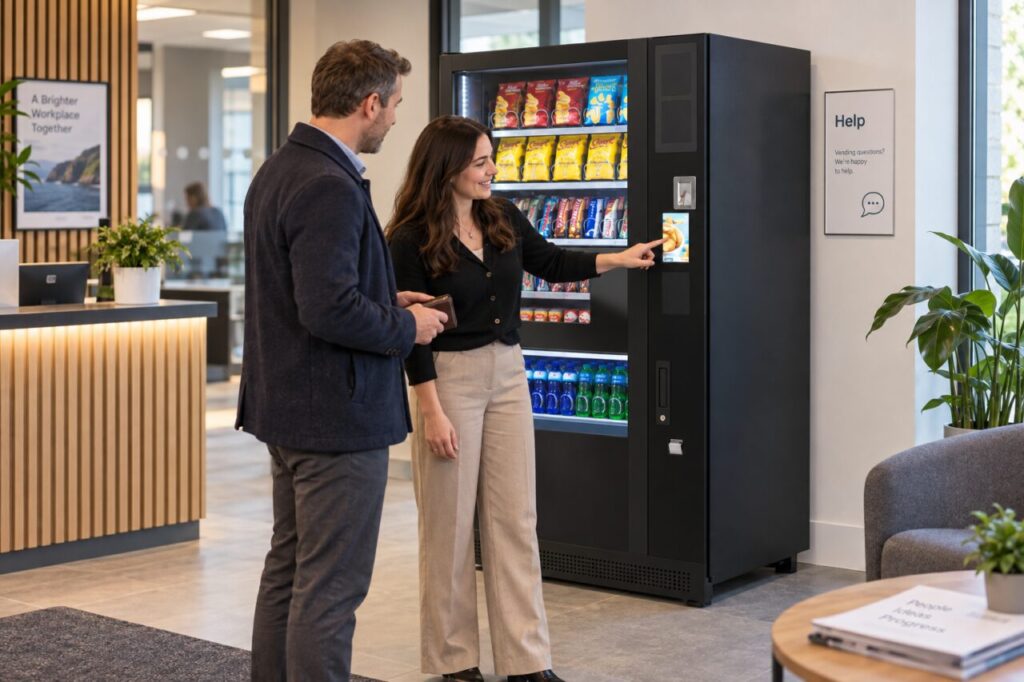
Keep the exercise simple and voluntary. The aim is to improve the purchase journey, not to build a profile of visitors or turn reception into a survey desk. A few specific observations can be more useful than a long questionnaire asking people to score every aspect of the workplace.
Choose a narrow question
Decide what you want to learn before asking for feedback. For example, you might want to know whether a visitor could identify the payment method or find the collection opening without assistance. Keep the question about the experience rather than asking the visitor to diagnose equipment or evaluate technical features.
Avoid combining several issues into one question such as whether the machine was easy, affordable and well stocked. A positive answer would not tell you which part worked. Ask about one step, then allow a short comment if the person wants to explain a difficulty in their own words.
Observe without interfering
If a visitor asks for help, provide it rather than withholding assistance to preserve a test. Afterwards, note which instruction needed explaining. Do not record card details, private payment screens or identifiable purchase histories. The useful observation is the point of confusion, not a record of who bought what.
Keep normal reception and accessibility support available. A visitor may have a specific need that should be handled respectfully without being treated as a general design problem. Ask what would help them complete the purchase, and refer equipment or payment questions to the appropriate support contact when necessary.
Separate first-use issues from faults
Classify comments carefully. Not finding the help number is different from a product failing to dispense. A confusing instruction may need clearer wording; an operational problem needs the established support process. Do not use a feedback exercise as a substitute for reporting an actual issue promptly to the operator.
Also distinguish personal product preferences from difficulty using the machine. Both can matter, but they lead to different decisions. A visitor wanting a particular drink does not necessarily mean the interface is unclear. Keep those observations in separate parts of the review so the team can respond appropriately.
Make one improvement and recheck
Review repeated comments with the site contact and supplier. Choose a proportionate change, such as clarifying a nearby instruction or making the support route easier to find. Confirm that any added notice is accurate and does not cover equipment information. Then ask the same focused question during a later review.
Our article on language and vending instructions explains another part of first-use clarity. Use it to frame questions about the supplied interface, without assuming that every language setting is available. The supplier should confirm the options for the equipment actually installed at your site.
When reviewing office vending arrangements, include visitors alongside regular users where they are intended customers. Keep the findings anonymous and practical: which step caused a pause, what help was needed and whether the change made the journey clearer. This produces a useful service improvement record without turning a quick workplace purchase into an intrusive research exercise.
Discuss your office vending setup with our team if the customer journey needs clarification.