
Office Vending During a Staff Survey: Ask About Missed Purchases as Well as Favourites
A workplace vending survey often asks which snacks people would like. That is useful, but it misses the person who wanted to buy something and left without making a purchase. Ask about those missed occasions as well. The answer may reveal an access, availability or information problem that adding another product would not solve. Keep the survey short enough for staff to describe a real recent experience.
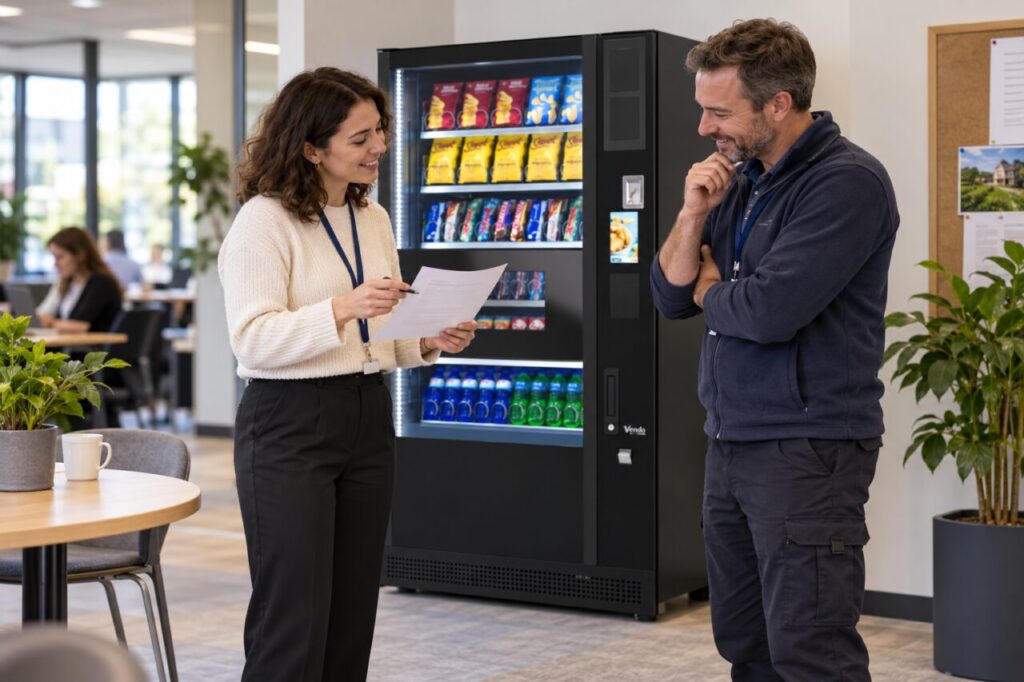
Ask about an occasion, not just a favourite
Invite respondents to think about their most recent visit to the machine. Ask whether they bought something, what they intended to buy and what stopped them if they left empty-handed. Offer a small set of practical reasons with an option to explain something else. Avoid assuming that every non-purchase means the range was unsuitable.
Someone might have found their usual item sold out, been unsure of the price or had too little time before a meeting. Another person may simply have changed their mind. These are different observations. Keep the questions neutral so respondents are not pushed towards the explanation the facilities team already suspects. Do not describe a hypothetical preference as an actual missed sale.
Make room for people who rarely visit
Ask occasional users whether they know where the machine is and when they can reach it. A range survey distributed only beside the cabinet may mostly reach existing customers. Consider the normal staff communication route so people on different shifts or floors can respond without being singled out. Explain what the survey will be used for and avoid collecting names unless there is a clear reason.
Keep personal dietary or health information out of a general facilities survey. People can describe the type of choice they want without disclosing medical details. For specific product-information questions, direct them to the appropriate current information and support route. A preference questionnaire should not become an informal source of allergy advice.
Compare answers with operating records
Match the survey period with the refill and availability records where those are available. If several people mention an empty selection, check whether it was unavailable during their likely visit times. That does not prove every missed purchase was caused by stock, but it gives the operator a specific pattern to investigate. Keep uncertain dates and recollections clearly labelled.
Consider a hypothetical survey where six respondents mention a missing favourite and two request an entirely new snack. It would be premature to use that small response set as a precise demand forecast. It may, however, justify checking the existing item’s refill pattern before expanding the range. Report the actual number of responses and avoid presenting a small voluntary sample as the view of the whole workforce.
Turn findings into a limited test
Choose a manageable change linked to the strongest practical finding. That might be clearer information, a revised refill discussion or a small product trial. State what you expect to observe and when you will review it. Changing several things at once can make it difficult to understand why customers respond differently afterwards.
Tell staff what was learned and what action is being tested. Do not promise that every requested product will be stocked. Where an idea cannot be adopted, a short explanation helps people understand the decision. Revisit the same practical question after the change rather than repeatedly asking for a fresh wish list.
The office vending service page provides a starting point for discussing a workplace arrangement. Bring evidence about missed buying occasions to that discussion alongside favourite products. It helps distinguish a range opportunity from a customer journey that needs attention.
Related guidance: Vending Trial Results: Separate First-Day Curiosity from Repeat Demand.
Planning vending at your site? Contact the team with your location and requirements.