
Vending Trial Results: Separate First-Day Curiosity from Repeat Demand
A newly installed vending machine can attract people who simply want to see what has arrived. That interest is welcome, but it should not automatically become the forecast for every ordinary working day. When reviewing a trial, separate the launch circumstances from the later pattern of use. The aim is to understand whether the service meets an ongoing need, without dismissing the first day or overstating what a short trial proves.
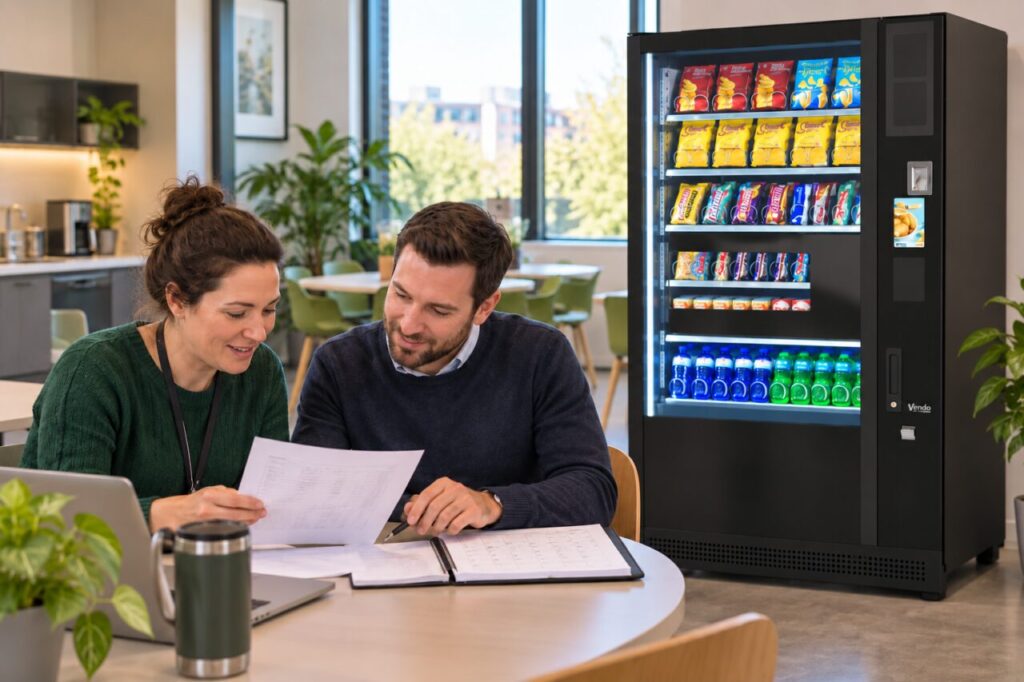
Record what made the launch unusual
Note whether staff received an announcement, demonstration or special invitation to try the machine. Record unusual attendance, meetings or opening hours during the first few days. Keep these notes factual and brief. You do not need to identify individual purchasers to explain that a launch event brought more people into the refreshment area than usual.
Ask whether the launch range and purchasing arrangement will continue. A temporary offer or sample distribution should not be combined silently with ordinary paid sales. Describe what the figures represent before drawing a conclusion. A count of items handed out during an introduction answers a different question from a count of products bought during an ordinary week.
Choose comparable periods for the review
Use periods with reasonably similar site access and working patterns wherever possible. If attendance varies, show that context alongside the results. Do not manufacture a precise adjustment when the underlying information is too limited. It is better to say the periods differ than to present an apparently exact growth rate that rests on a guess.
Include availability in the comparison. If the machine or a key product was unavailable for part of the later period, lower sales do not by themselves establish lower interest. Ask the operator what reliable records exist and what remains uncertain. Keep a product stock gap separate from a change in customer preference so the response addresses the right issue.
Ask about the continuing customer occasion
Invite practical feedback about when people find the service useful. Are they buying a drink after a meeting, choosing a snack between meals or using the machine when another facility is closed? These questions explain the role of the range more clearly than asking whether everyone likes the new machine. Include people who tried it once and have not returned, without assuming their reason.
Avoid turning a small set of comments into a claim about the entire workforce. Record recurring themes and specific problems, then discuss feasible changes with the provider. A request for a different pack size or clearer instructions may be actionable even when it comes from only a few people. Treat feedback as evidence to investigate, not a guaranteed sales forecast.
Make a measured decision at the agreed point
Review the ordinary-period results, availability and feedback together. Decide whether to continue, adjust the range or extend the assessment with a defined question. An extension should explain what additional evidence is needed rather than postponing the decision indefinitely. Keep any change in trial terms or service scope agreed with the provider.
When considering vending equipment and services, ask how a trial will be reviewed before it begins. Set a useful review date and identify the records that can realistically be supplied. The result should be a decision grounded in the site’s continuing needs, with launch-day enthusiasm recognised as one part of the picture rather than the whole business case.
Discuss your trial objectives through our enquiry page.
Related guidance: Vending Service Review: Separate a One-Off Event from a Recurring Pattern.