
How to serve office staff who bring lunch but buy one extra item
An office can have a full fridge of lunchboxes and still have a clear use for vending. The purchase might be a drink to go with a sandwich, something savoury to add to leftovers, or a snack for the journey home. Before ordering a machine around the assumption that everyone wants lunch, find out which part of the meal staff already bring and which part they regularly buy.
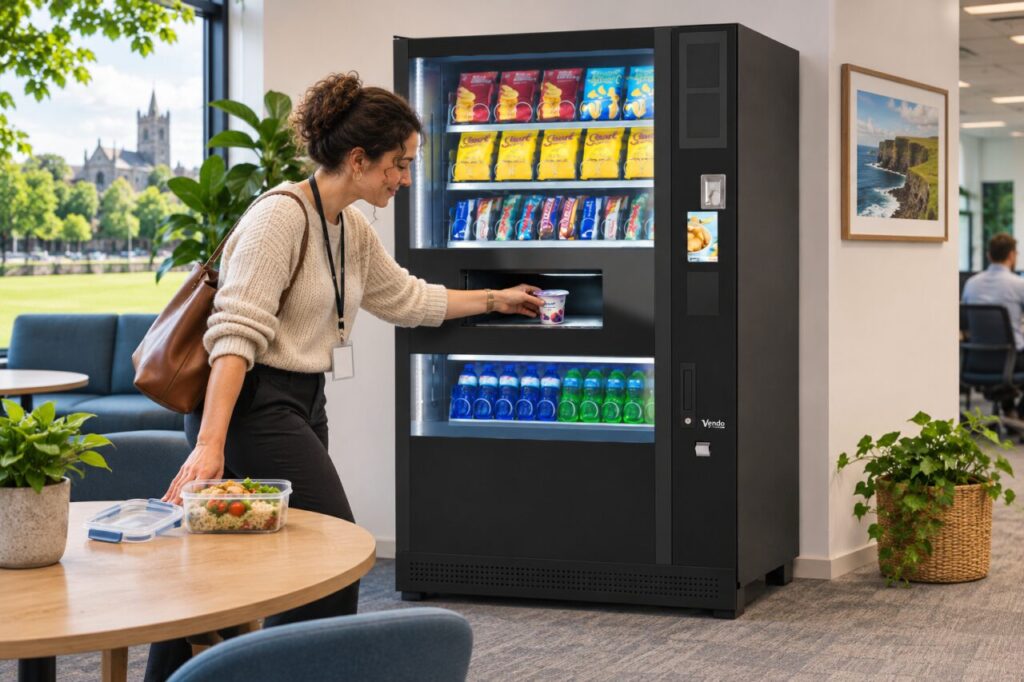
Ask about an actual lunch
A question such as ‘Would you use vending?’ gives little guidance on the opening range. Ask what people brought on their last day in the office and whether they bought anything to go with it. Include a choice for people who bought nothing. Ask when they made the purchase and whether they would have wanted the same product at the price being considered.
Separate the people who usually bring lunch from those who buy a complete meal. A request for yoghurt, a piece of fruit or a cold drink could represent an addition to a meal rather than demand for a sandwich replacement. Keep the responses anonymous and look for recurring buying occasions. There is no need to collect anyone’s diet or individual purchase history to plan a trial range.
Select a few additions people can recognise
Use the answers to define a small trial with clear prices and pack sizes. For example, choose a drink, a savoury addition and a sweeter choice if those categories actually appear in the feedback. Leave room for affordable options and check that individual portions can be identified from the front of the machine. A sharing pack may have the wrong size and price for someone who already has a main meal.
If a proposed item needs refrigeration, ask the operator to confirm the machine and service arrangements suit the actual food. Consider how it will be eaten. A sealed pot can be an inconvenient addition if staff cannot get a spoon or a place to sit. The guide to comparing snack portions can help distinguish the amount bought from a manufacturer’s serving suggestion.
Observe when the extra purchase happens
Some people visit the machine before taking their lunchbox out of the fridge. Others decide they want something extra only after eating. Watch sales across the whole lunch period and the following break, rather than taking a single reading at noon. Note office attendance, exceptional meetings and occasions when a team lunch is provided. Those events change the opportunity to buy an addition.
Ask the operator to record when a trial line was unavailable. No sales after one o’clock can mean nobody wanted the product, or that the line sold out at twelve thirty. A brief anonymous question during the trial can help distinguish those explanations before you replace the wrong product.
Decide what the trial supports
Compare units bought, availability, waste and staff feedback for the same period. Consider whether a smaller fresh range with reliable replenishment would serve customers better than filling more selections with similar items. If requests for full meals persist, investigate that need separately with evidence about shift times and food preparation facilities.
When planning office vending, describe the lunch facilities people already use. A supplier can then propose a range that earns its place alongside the fridge and microwave by supplying the specific things staff leave out of their lunchboxes.