
Office Shift Overlap: Count Who Uses Vending at the Same Time
An office may have modest daily attendance but a busy vending area when two shifts overlap. Counting employees alone can miss that short period of concentrated use. For a useful planning brief, record when people are present together, when breaks fall and what happens at the machine during those windows. Distinguish the number of people on site from the number who actually choose to buy something.
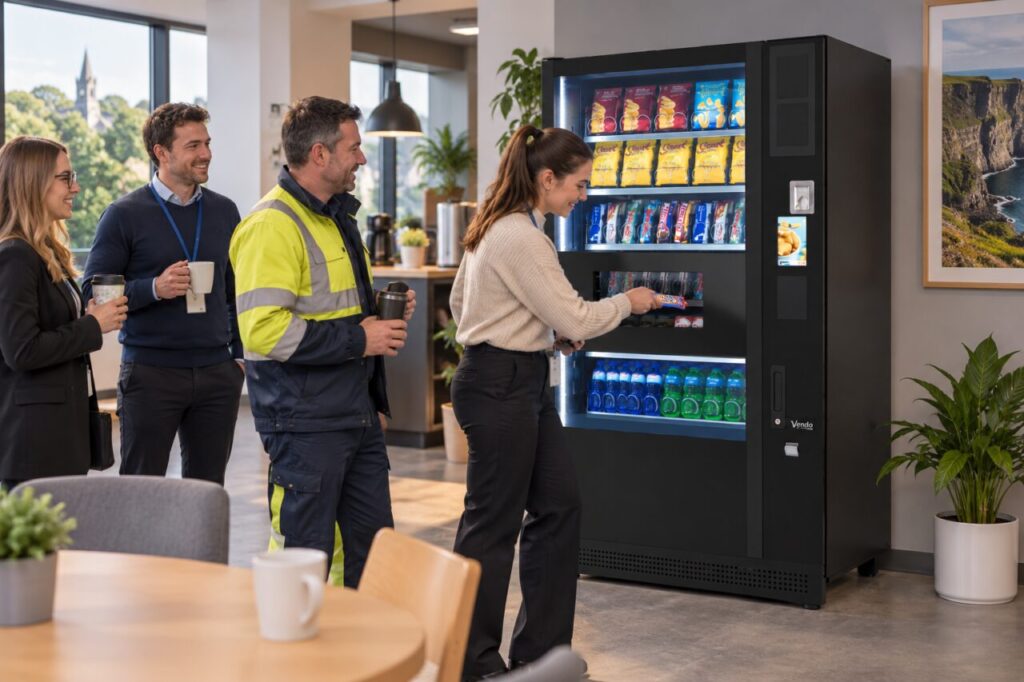
Map the overlap before estimating demand
Start with the normal shift and break pattern, including teams whose schedules differ. Note whether incoming and outgoing staff share the same kitchen or break space. An overlap on a staffing spreadsheet does not necessarily create an overlap at vending: one group may be working while another takes a break. Observe the routine or ask the relevant supervisors rather than converting the entire overlap headcount into assumed sales.
Include variation across the week. Training, handovers or occasional meetings may create a different pattern from a normal working day. Label those observations so they are not mistaken for an everyday peak. A short, representative record of when the area becomes busy is a better starting point than one unusually crowded morning remembered by the site host several weeks after it happened.
Separate stock availability from waiting
Ask what the users experience during the overlap. They may find their preferred product unavailable, wait behind other customers or have difficulty moving away after collection. These are different problems and do not all require the same response. Record the time, the observed issue and the products involved without assuming that a longer queue automatically means the cabinet is too small for the site.
Discuss the actual equipment and service arrangement with the provider. Do not calculate queue clearance using an invented transaction time or a model’s appearance. Buying behaviour, payment interaction and collection all affect the experience in practice. Where performance information is needed, ask for a relevant demonstration or observation of the proposed setup and be clear about the conditions under which it was assessed.
Review the refill plan around real use
A machine that appears well stocked before the first shift may have a different range available when the next group arrives. Ask the operator how stock information and customer feedback should be reported. Keep observations about availability linked to time rather than simply saying that a product sells well. This helps distinguish a short peak from sustained demand throughout the day.
Avoid promising an extra visit or larger allocation until the responsible provider has reviewed feasibility. Space within the machine must be considered alongside the whole range and the actual operating arrangement. A change that benefits one shift should be assessed for the others too. Record what was changed and review the same overlap period afterwards so the site can see whether the original problem improved.
Keep the shared space workable
Observe where people wait, collect purchases and meet colleagues. An informal conversation beside the machine can make the area look busier than the purchasing queue itself. Consider the surrounding furniture and routes through the site’s normal facilities process. Any layout change should preserve the requirements for access and equipment operation confirmed by the responsible people, rather than being improvised during a busy break.
When planning office vending, include the shift-overlap pattern in the initial brief. Give the provider actual attendance information, observed peak periods and the problem you want to solve. This produces a more useful discussion than asking for a machine for a particular headcount alone. The aim is an appropriate range and practical service for the people who use the space at the same time.
Contact our team to discuss your office’s working pattern and vending needs.
Related guidance: Staggered Staff Breaks: Observe Vending Queues Before Adding Equipment.