Office Vending Feedback Changes After a Team Moves Floors: Check Who Now Uses the Machine
Office vending preferences can change after a team moves to another floor, even when the machine and product range stay the same. Before changing stock in response to new feedback, check who now uses the location and which people are no longer represented. A change in the customer group can explain results that otherwise look inconsistent.
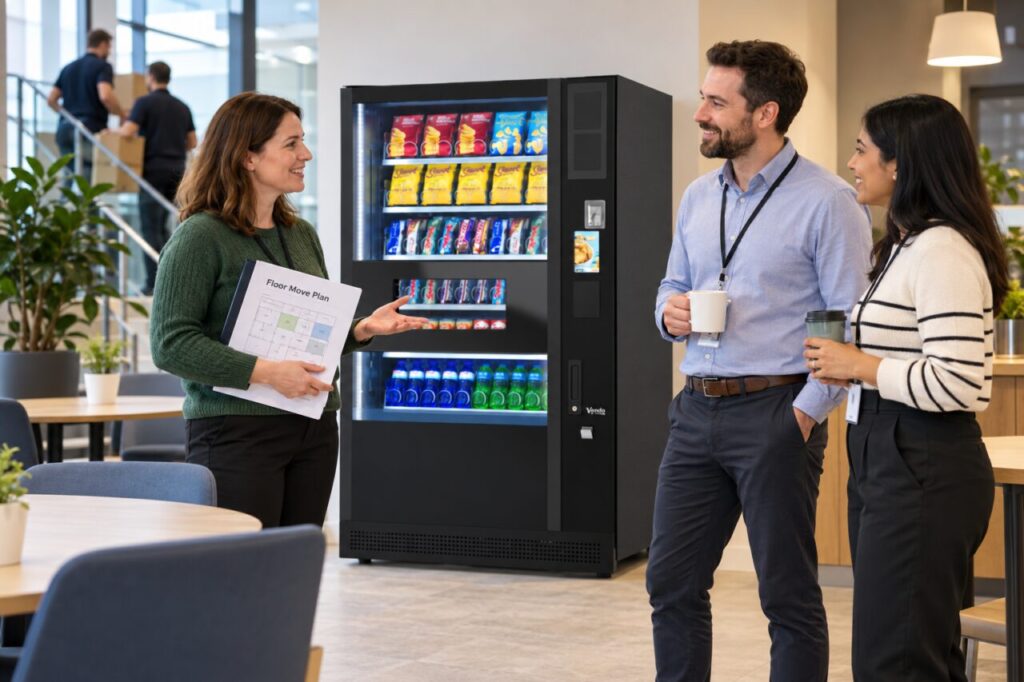
Start with the actual move rather than a general headcount. Some employees may still visit their old break area, while others may now use a different machine or buy elsewhere. The useful question is who can and does reach this machine during ordinary breaks, not simply how many names appear on the floor’s seating plan.
Describe the before-and-after situation
Record the move date, the teams affected and any change to break routines or access. Keep the description proportionate; you do not need personal purchase histories to understand a workplace move. Ask the coordinator what has changed in the shared space and whether the current arrangement is permanent, temporary or still being adjusted.
Compare equivalent periods where possible. A first week of moving desks, unpacking equipment and attending induction meetings may not represent normal demand. If the available sales information covers a disrupted period, label that limitation. Do not explain every change as a product preference when the opportunity to use the machine has also changed.
Include the current users in feedback
Ask a short set of questions about availability, preferred product types and the practical purchase experience. Include people who now pass the machine but do not use it. Their reason may concern timing, access or alternatives rather than the snack range. Keep comments about those different issues separate so the response can address the right problem.
Do not discard feedback from the previous team automatically. Their experience may still identify a service issue that affects everyone. Instead, note whether a comment describes a continuing problem or a preference from a group that has moved. This prevents the new range from being designed entirely around customers who are no longer at the location.
Discuss a measured range adjustment
Share the changed audience and the relevant observations with the operator. Ask which product changes are practical for the installed configuration and service arrangement. A requested item is not automatically suitable for the machine, and one enthusiastic comment is not evidence of sufficient regular demand. Agree a small, reviewable change where the evidence supports it.
Keep a record of what changed and when. If the operator alters several products, explain that the later result reflects the combined range rather than proving which single item caused a change in sales. Avoid changing price, promotion and access at the same time without recording those differences as part of the review.
Revisit the location after routines settle
Choose a review point with the operator once the new team’s normal attendance and break habits are clearer. Look at availability, waste, complaints and practical access alongside sales. If use is lower, ask whether the location still serves the intended audience before treating the result as proof that employees do not want vending.
When planning office vending, tell the supplier about expected team moves and changes to shared spaces. Equipment choice and service planning are easier when the likely users are understood. A simple record of the move, feedback and subsequent adjustment keeps the decision grounded in the workplace’s current situation.
For a proposal suited to your site, contact our team with the location, expected users and your main requirements.
Related guidance: Office Vending on Different Floors: Check Who Can Reach Each Machine; Office Vending Feedback Is All from One Team: Ask Who Has Not Been Heard.