
Office Vending During Training Courses: Plan for the Scheduled Break
A training course can bring a group to the vending area at a time when the office is normally quiet. The useful planning question is not simply how many delegates will attend. Ask what refreshments are already provided, when the break happens and whether delegates are expected to buy their own snacks or drinks. That context helps the site and operator prepare without treating every attendee as a guaranteed customer.
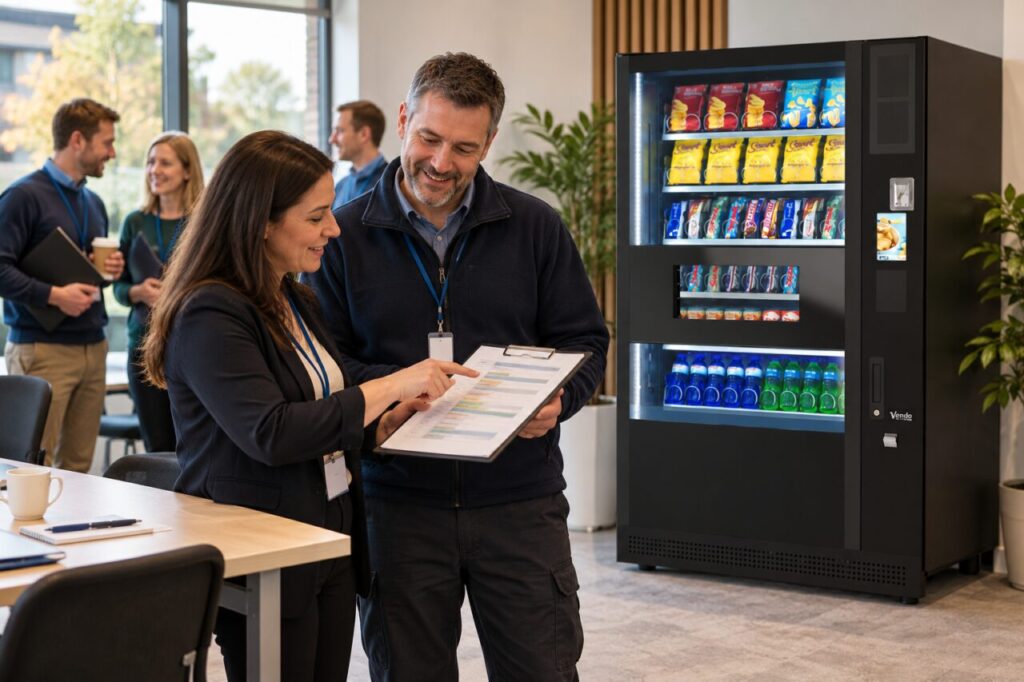
Start with the course arrangements
Confirm the number of expected attendees, the course dates and the planned break times. Identify whether the group includes external visitors who need directions or an introduction to the building. Tell the operator if the event is a one-off session or a recurring programme. A single busy afternoon should not automatically become the new baseline for ordinary office demand.
Ask the organiser what is included in the course. If refreshments are supplied separately, vending may offer an optional extra rather than the main break provision. Avoid telling delegates that items are included or complimentary unless the organiser and service provider have confirmed that arrangement. Clear information prevents people arriving at the machine with different expectations about payment.
Walk the route within the available break
Consider the journey from the training room to the machine and back. Include any access arrangements and the fact that several people may arrive together. Do not judge the setup only by the time of one demonstrated purchase. The room layout and the group’s movement can matter just as much to whether the break feels practical.
Ask the organiser to give accurate directions before the session starts. If delegates may use another refreshment point, explain the options without promising identical products or prices. Keep the instructions proportionate: people need to find the service and understand how to use it, not read a long operational briefing during a short break.
Share a useful demand note with the operator
Provide the attendance and timetable as planning information, explicitly distinguishing expected visitors from expected sales. Mention known product requests if the organiser has collected them, but do not present those requests as firm orders unless that has been agreed. The operator can then discuss what preparation is realistic for the existing equipment and service schedule.
If a specific range or additional provision is important, raise it early enough for a proper discussion. A last-minute request to support a large group should not be treated as confirmation that the service can change immediately. Record what has actually been agreed and tell the organiser about any limits before they communicate the refreshment arrangements to delegates.
Review the event as an event
After the course, ask whether delegates found the machine, understood the purchase process and had time to use it. Record availability issues separately from product preferences. A group may have liked the range but lacked time to buy, or found the route unclear despite adequate stock. Those situations call for different improvements before the next session.
For recurring training, retain a short event note rather than rebuilding the plan each time. Update it when the room, timetable or audience changes. When discussing office vending arrangements, include regular training activity alongside everyday staff use. This gives the provider a more complete view of the workplace while keeping exceptional demand in its proper context.
Discuss upcoming workplace events through our enquiry page.
Related guidance: Office Vending for a New Department: Introduce the Range Without Assuming Preferences.