
Open Snack Cases at Stocktake: Count Units Before Reordering
An open snack case is not a full case of stock. That sounds obvious, yet a quick stocktake can easily record “three boxes” when one box is partly empty and another contains a different flavour. Count in individual saleable units before using the figure to place a vending order. The purpose is to establish what is actually available, not simply how many cartons happen to be on the shelf.
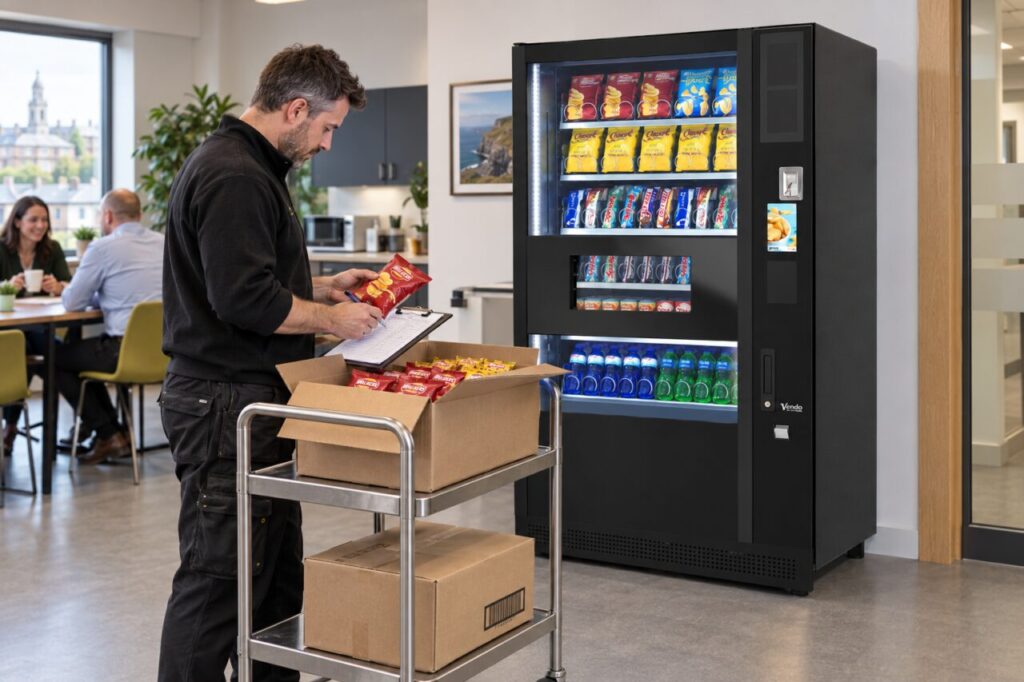
Set the counting unit before starting
Choose the unit in which the product is sold or loaded and use it consistently in the stock record. Record full cases with their confirmed conversion to individual packs, and count open cases separately. If a supplier has changed the number of packs per case, update that conversion first. An accurate physical count can still become an inaccurate reorder if the worksheet applies an outdated case quantity.
For illustration, two complete cases of twelve packs plus an open case containing five packs total twenty-nine units. They do not total three full cases or thirty-six units. Keep the calculation visible so another operator can understand it. These figures are an example only; use the quantity stated for the actual product and count the remaining packs rather than estimating a partly filled carton by eye.
Keep product identities separate
Check the exact item, flavour and pack size before adding quantities together. Similar outer cartons can contain different products, especially where an open box has been used temporarily to hold loose stock. Do not merge those counts merely because the packs share a brand or colour. A reorder needs to show which product is available, and a refill record needs to identify what will be loaded into each selection.
Preserve the product and batch information required by your traceability process when handling open cases. The Food Safety Authority of Ireland’s traceability guidance explains the need for appropriate supplier and product records. An internal stock count should work with that process. Do not discard useful identification simply to make the shelf look tidier or move loose packs into an unlabelled container that nobody can identify later.
Separate available stock from stock on hold
Identify packs that are not available for loading under your normal procedures, such as damaged items awaiting an authorised decision. Record them separately rather than including them in the usable balance. Follow the site’s food-safety and stock-handling process for those items. A total that includes unavailable stock can cause the next refill order to be too small even if every physical pack has been counted correctly.
Record where the counted stock is held. Packs in the store, on a route trolley and already loaded in a machine are different locations. Avoid counting the same packs once on the shelf and again after they have been moved. Where stock moves during the count, use an agreed cut-off or record the movement clearly so the final balance can be reconciled without guessing which version is current.
Turn the count into a considered order
Compare the usable balance with the intended refill requirement and deliveries already ordered. Do not order again simply because the open-case count looks low if a confirmed shipment is due before the stock is needed. Equally, do not treat an unconfirmed supplier request as stock you can rely on. Keep the expected delivery date and ordering status visible beside the quantity calculation.
For anyone setting up a vending business, a consistent unit count is a useful operating habit from the first route. It helps purchasing, loading and later reconciliation use the same quantities. Review recurring differences between recorded and actual stock with the people handling it, looking for conversion errors or unrecorded movements before assuming that every discrepancy has the same explanation.
Contact our team to discuss equipment for your vending operation.
Related guidance: Partly Refilled Vending Selections: Keep Different Stock Dates Traceable.