
The barcode is unchanged. Will the redesigned snack packet still vend?
A case arrives with the expected product name and a barcode your system recognises, but the snack packet looks different. Before filling a whole vending selection, compare the new pack with the one it replaces and test it in the actual configuration. The stock record identifies an item. It cannot demonstrate that the new packet shape, finish or sealed edge will travel through the cabinet in the same way.
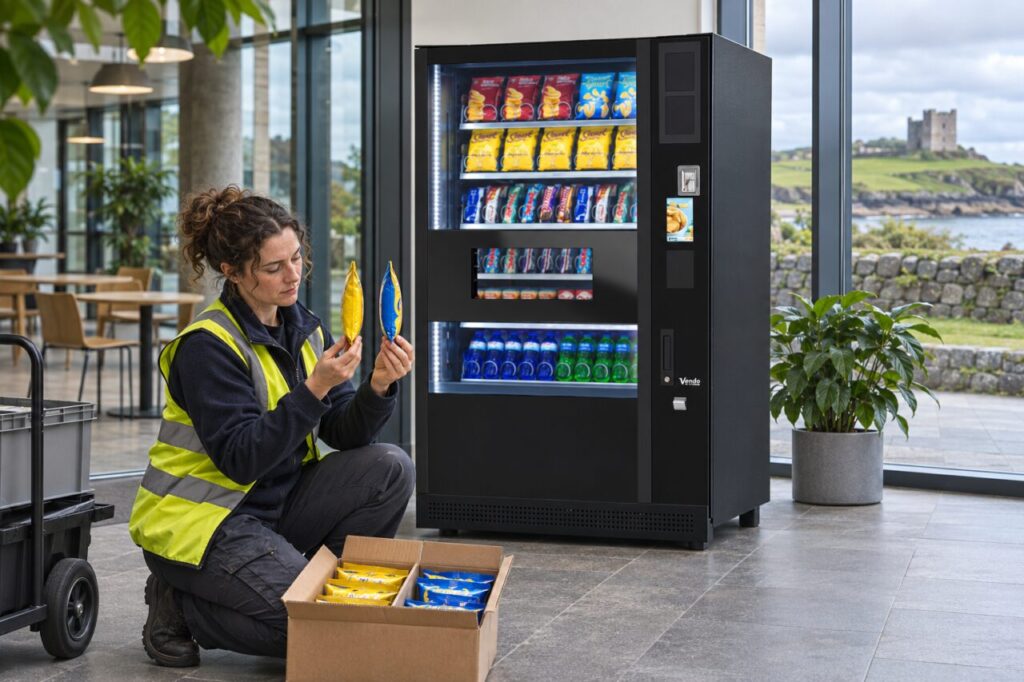
Start with what physically changed
Place an unopened old pack beside an unopened new pack. Record their declared weights, external dimensions, orientation and the shape of the sealed edges. Does one sit upright where the other folds over? Is a new fin seal wider or stiffer? Does the printed front now face the wrong way when the pack is placed in the orientation the operator uses?
Ask the supplier whether the change affects other cases arriving under the same order description. Confirm the code on the individual saleable pack as well as the outer case. GS1 publishes rules on changes to trade items and their identifiers. A match at the scanner is useful for receiving stock, but the physical vending trial answers a separate question.
Check the customer information as well as fit
Read the current ingredients, allergen information, pack size and product description. Do not assume an unchanged brand or identifier proves every statement on an old shelf card remains accurate. Ask the responsible food business to review any product information shown before purchase. Keep the new and old suppliers’ details available until the changeover is complete.
If the artwork has changed substantially, a customer might think the product behind the glass is a different flavour. Check the actual selection label and price against the stocked item. During a mixed-stock period, avoid using a picture that confidently promises the old pack when either pack might come out. Explain an approved change accurately and briefly.
Run a small controlled trial
Ask the authorised operator to load a small quantity using the approved configuration. Observe the pack at rest, the movement of the selected item and the customer’s ability to collect it intact. Record which pack version, selection and orientation were tested. A successful delivery from one shelf position does not prove the result for every position or for a different thickness of packet.
If it catches, stop the trial and refer the issue to the operator or supplier. Avoid forcing packs into a space, trimming sealed packaging or improvising mechanical adjustments. Keep any damaged test units separate from saleable stock. The guide to a changed product barcode covers the related situation in which the code itself also changes.
Release stock in a traceable order
Agree which sites can take the new pack, which still need testing and who updates the product record. Mark the first refill using the revised packaging and review the next few service reports. If a problem appears, identify the exact version and location before changing every machine on the route.
For anyone comparing vending equipment and stocking arrangements, include a sample of the pack that will actually be supplied. A demonstration with yesterday’s packet can be a useful starting point, but the customer needs consistent delivery from the one arriving in the next case.