
Replacing Your Vending Machine: Can You Keep the Existing Card Reader?
A working card reader can look like an obvious item to keep when replacing a vending machine. However, a reader that works on the old cabinet is not automatically ready for the replacement. Treat reuse as a question to resolve with the equipment supplier and payment provider before the machine order is finalised.
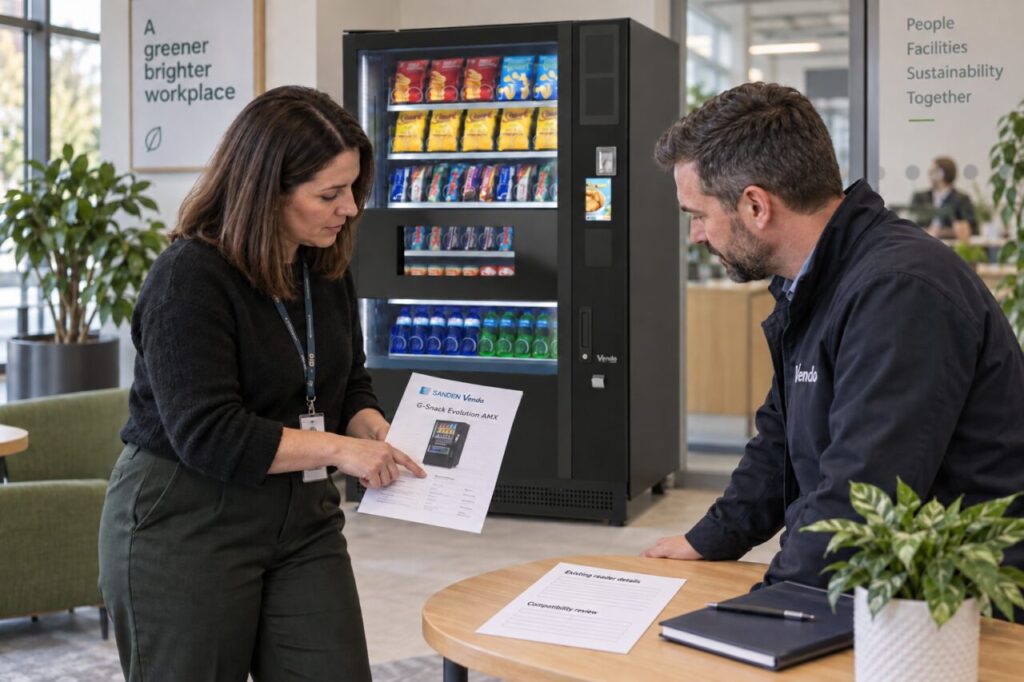
The aim is to avoid buying duplicate equipment or discovering an unplanned setup job on delivery day. Your decision should cover the physical equipment, the payment account and who will make the complete system work at its final location.
Identify exactly what you already have
Record the reader model, its identification details and the machine on which it currently operates. Use the existing service record or ask the authorised operator to identify it. A photograph of the front can help start the conversation, but appearance alone should not be treated as a compatibility assessment.
Also establish who owns the reader. It may belong to your business, the vending operator or another provider under the current agreement. Ask whether it can be transferred before including it as an available asset in the purchase budget. Do not remove equipment while that responsibility remains unclear.
Ask about the proposed configuration
Send the reader details alongside the exact proposed machine configuration. Ask the supplier and payment provider what they need to check, whether additional equipment or configuration is required, and whether they will support the combination. Request a written answer that identifies the equipment rather than a general assurance that the brand is compatible.
Separate a possible technical connection from a supported installation. The relevant question is whether the supplied arrangement can complete your intended customer transactions and be maintained by the agreed service team. Do not open cabinets, alter wiring or attempt a connection merely to find out whether it fits.
Keep the account transfer separate
A physical reader and the account used to manage payments are different parts of the project. Ask the payment provider what happens to the device record, reporting location and settlement arrangements when it moves. Keep any private account information within the provider’s authorised process.
If the old machine will remain in use temporarily, agree which reader serves each machine during the changeover. A period with two machines does not necessarily mean one payment setup can simply serve both. Record the changeover date and who will confirm that each active machine is correctly identified.
Put reuse into the quotation
The machine quotation should clearly state whether a new reader is included, whether your existing reader is assumed, and who pays for any agreed installation work. Ask what happens if the compatibility assessment finds that reuse is unsuitable. Resolve the fallback before delivery rather than relying on an informal promise.
Compare the complete supported options through the vending equipment range. Keeping an existing component may be useful, but the decision should include setup, support and continuity rather than the price of one device alone.
Test the final customer journey
After authorised installation, arrange an agreed test at the machine’s actual position. Check selection, payment, delivery and the correct reporting identity with the service team. Use the site’s approved test process and record any unresolved issue before announcing normal service.
Our guide to testing payments at the final machine position covers the location part of that handover. Keep the final equipment and account responsibility record with your machine documents so the next service contact does not have to reconstruct the decision.
For a replacement proposal, contact the team with the machine and reader details you can safely share.