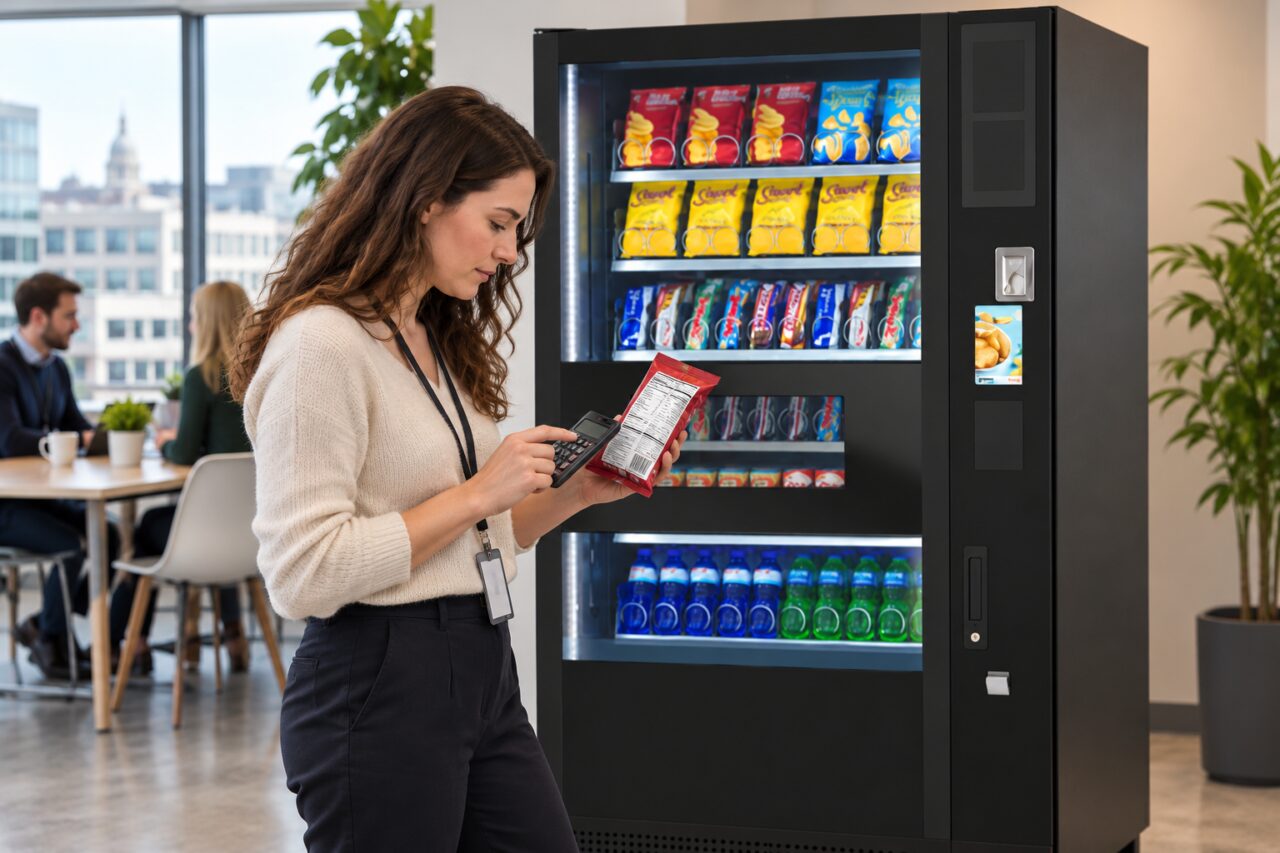
Salt per 100g or per pack: how salty is a vending snack?
Use salt per 100g to compare the recipes of two vending snacks. Then check the weight of the packet you intend to eat. In Safefood’s guide to reading food labels, more than 1.5g of salt per 100g counts as high for food. A value of 0.3g or less counts as low. These figures describe the concentration of salt in the food. The amount you get from a packet also depends on its size.
Find the right column first
Take a packet of crisps and look for the nutrition table. Follow the salt row across to the column headed per 100g. If another column gives a figure per serving, check what weight the manufacturer calls a serving. A serving can be smaller than the pack in your hand. The Safefood guide to nutrition labels explains the figures and how to read the colour bands for different nutrients.
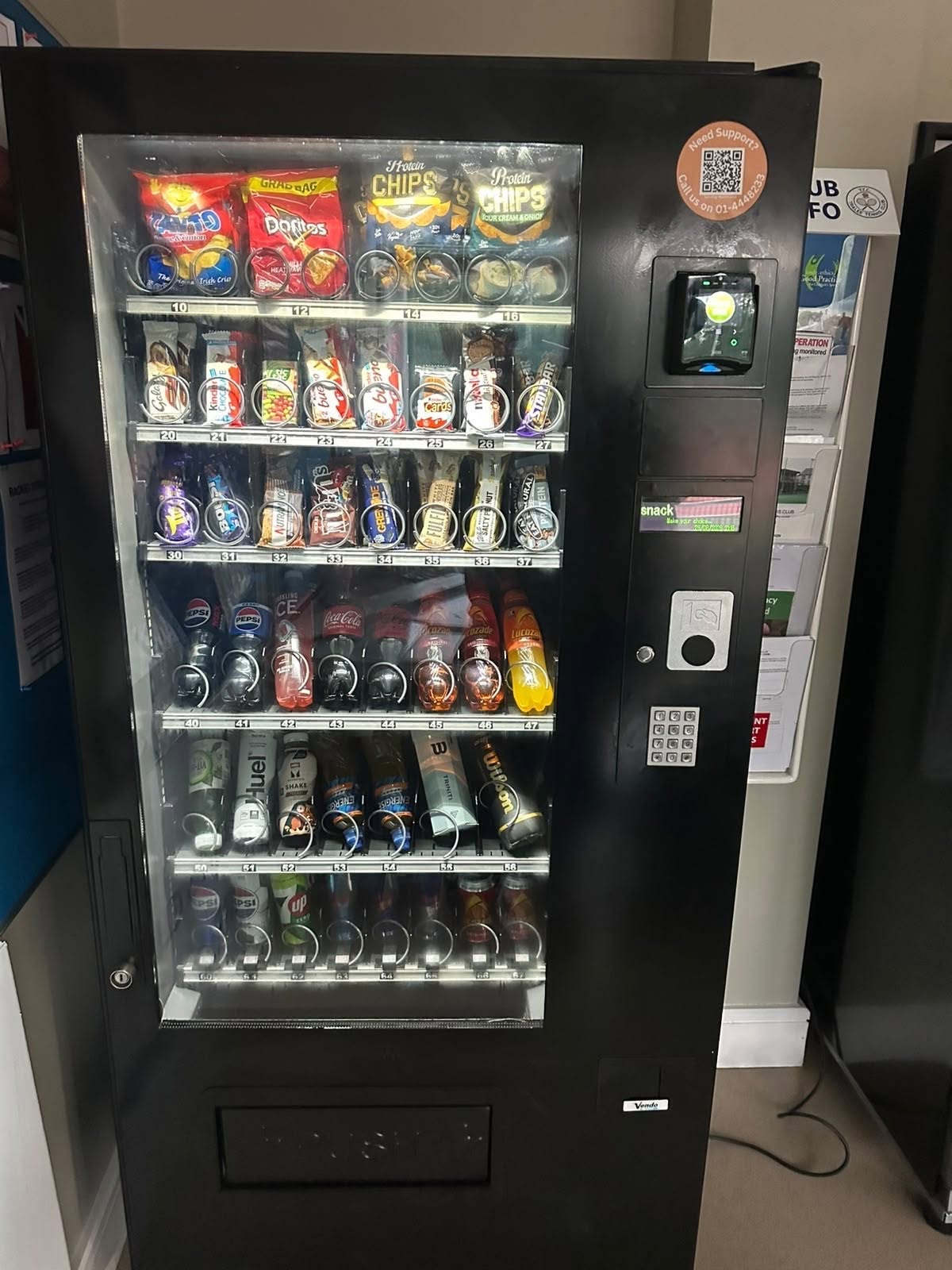
At a machine, the packet usually faces forwards. The price card might identify the flavour and weight without showing the back panel. If the machine displays nutrition details, check that the name and size match the packet in the row. A larger bag of the same flavour may look almost identical from behind the glass. If you cannot see the figures, ask the operator for the current product sheet.
Turn salt per 100g into salt per packet
Multiply the salt figure by the weight of the packet in grams, then divide by 100. Imagine a 25g packet with 1.6g of salt per 100g. A quarter of 100g gives a quarter of 1.6g, so the whole packet contains 0.4g of salt. These are example figures for doing the calculation. Use the numbers printed on the product you are considering.
Now compare a 50g pack with 1.2g of salt per 100g. Its recipe contains less salt for the same weight of food. However, eating the whole bag gives you 0.6g. That is more than the smaller packet in the first example. Both comparisons are valid. One tells you about the recipe and the other tells you about the portion you will actually eat.
Compare like with like when buying for a workplace
If you are choosing stock, ask each supplier for the net weight and the nutrition declaration for the exact product offered. Put each flavour on its own line. A mixed case might include several recipes under one brand. Copying one set of values across the whole case can give staff the wrong impression about their choice.
Keep a column for salt per packet alongside the manufacturer’s value per 100g. Make the units visible in both headings. If you compare a replacement pack after a price change, check both columns again. A change in pack size can alter the result even when the recipe stays the same. Keep the date and source of the information beside the figures so the next buyer can check them.
Lastly, look at the choices available at the same price and break time. A useful comparison for the afternoon shift is between two products they can actually buy. If the preferred option is regularly empty, note the selection number and ask the operator to review the refill quantity. For other information that can be hard to read behind the glass, see our guide to checking allergen wording on vending snacks. Ask about snack vending for your workplace if you would like to review your range.
See also why milk allergens still matter in lactose-free vending snacks.