
Adding a Second Vending Site: Check Who Owns the Extra Working Hours
A second vending site brings more than another machine to refill. Someone must order the extra stock, prepare the route, answer queries and keep the records current. Before accepting the location, decide who will perform the additional work and when it fits into the week.
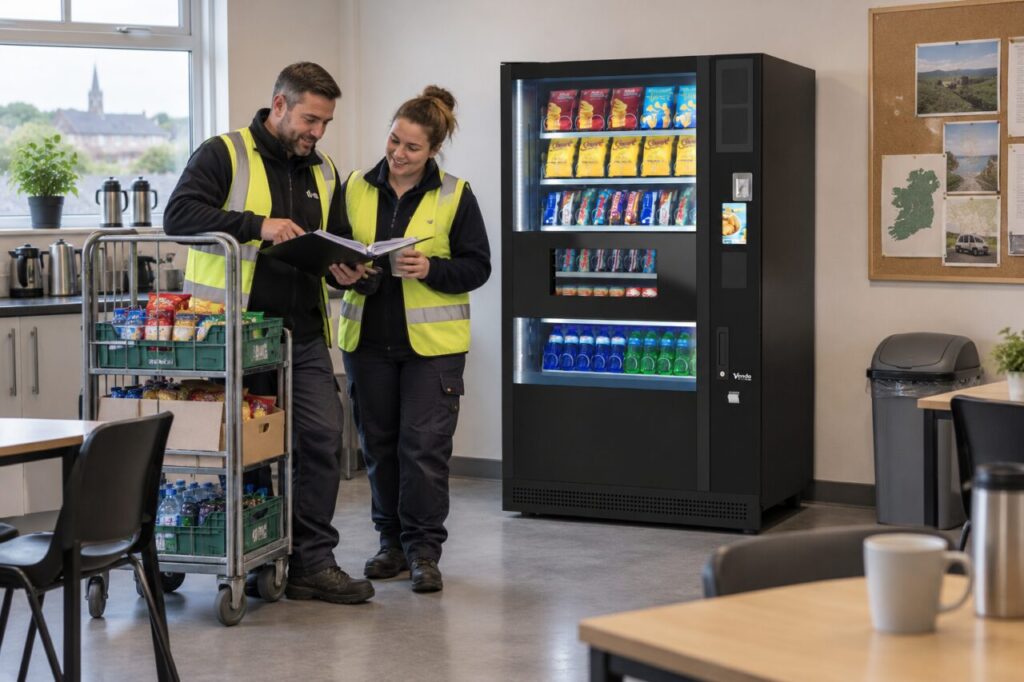
This is different from estimating travel time alone. A route can look geographically convenient while adding tasks that fall outside the hours the owner or a colleague has actually agreed to provide.
List the work by person
Write down the routine tasks for the proposed site, from stock preparation through the visit to the end-of-day records. Give each task an owner and an estimated duration. If the same person already performs it for the first site, ask whether the second location adds a small increment or a separate piece of work.
Include communication and administration. A new site may have a different access contact, reporting preference or order cycle. These details take time even when the machine is close to an existing stop. Avoid placing them in a vague category called spare time, where they disappear from the expansion decision.
Test the weekly calendar
Put the proposed tasks into an ordinary week alongside the existing route and other commitments. Look for tasks that must happen at a particular time rather than anywhere in the day. A refill requiring an escort may be less flexible than stock preparation that can be completed earlier.
For illustration, three extra hours of weekly work require three hours of capacity somewhere in the plan; they do not disappear because the owner is not paying themselves an hourly wage. Use your own observed durations and a realistic allowance for variation. This is a capacity exercise, not an estimate of typical vending labour requirements.
Agree cover and decision authority
If a colleague will help, define what they are responsible for and which decisions remain with the owner. Confirm training, access and the reporting route before they attend alone. Do not assume that access to the first site or familiarity with its machine automatically applies to the second location.
Plan what happens when the normal person is unavailable. Cover should include stock preparation and customer follow-up as well as the physical visit. Record the limits of the arrangement so a relief colleague is not expected to authorise purchases, change equipment settings or resolve unfamiliar faults without support.
Check the busiest week as well as an average week. Supplier deliveries, stocktaking and site reviews may coincide. Record those occasional tasks so the expansion does not depend on every week being the simplest possible version of the route.
Revisit the business case with the full workload
Add the cost or capacity effect of the extra work to the proposed site’s forecast. The Local Enterprise Office business-plan guide encourages financial planning based on stated assumptions. Keep the labour assumption visible beside sales, stock and travel rather than judging the opportunity only by expected revenue.
Use the completed schedule when reviewing your vending business plan. If the work does not fit, consider a different service arrangement, timing or expansion decision before committing. After launch, compare actual hours with the plan and ask the people doing the work what was omitted. A second site is easier to manage when responsibilities are agreed in advance and the existing customer’s service is included in the capacity check.
Related guidance: A New Vending Route Takes Longer Than Expected: Time the Work Before Adding Sites.
Planning or reviewing vending at your site? Contact the team with your location, equipment details and the question you would like to resolve.