
Two Retail Operators in One Break Area: Make the Checkout Boundary Clear
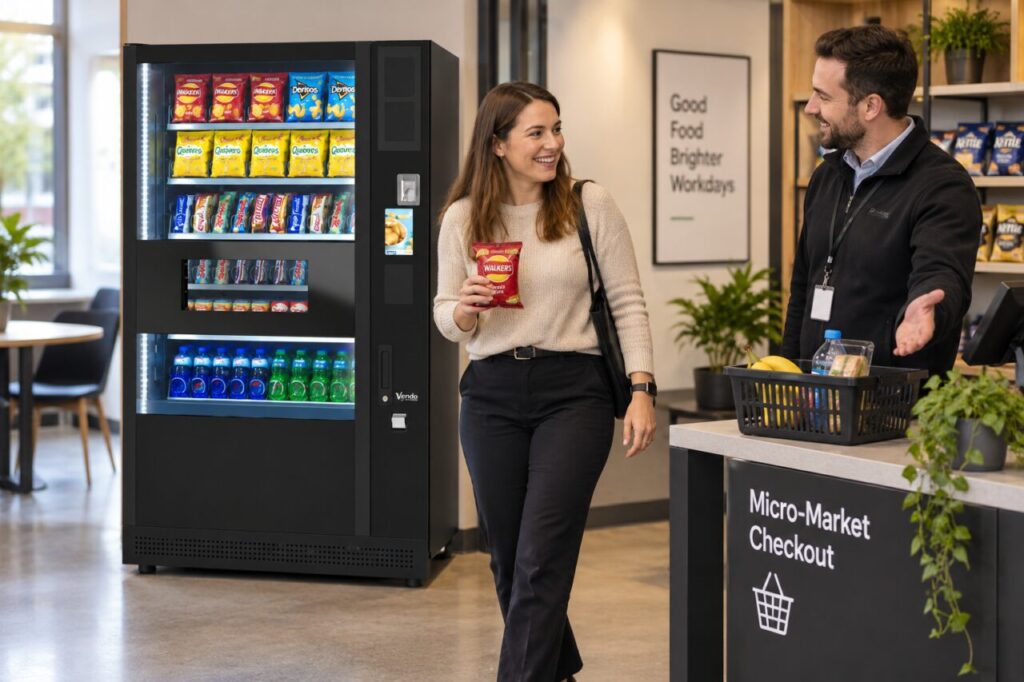
A shared break area can contain a vending machine, an open-shelf retail service and another supplier’s food offer. Customers may see one convenient space while the services have separate purchase and support arrangements. Make those boundaries clear before launch. The aim is to help someone pay for the right goods at the right point without needing to understand the contracts behind the room.
Map one purchase for each service
Walk through the customer journey separately for the vending machine and each other retail offer. Identify where the product is selected, where payment takes place and where the customer finds help. Do not assume that a nearby checkout accepts every item in the area. Ask each operator to confirm the actual arrangement and any shared process that has genuinely been agreed.
Use ordinary examples during the walkthrough. Someone may buy a bottle from the machine and then choose a snack from an open shelf. Establish what they need to do for each purchase and whether separate evidence of payment is available. Do not describe them as one basket or one receipt unless that is how the confirmed setup works.
Put the boundary where customers choose
Use simple, consistent names for the purchase points and keep the relevant instructions close to the goods. A small notice at a distant checkout may be too late to explain that an item belongs to another service. Ask first-time users to describe where they would pay without prompting them. Their uncertainty is useful evidence that the layout or wording needs attention.
Avoid placing identical-looking promotional signs across separate services if they imply a shared offer that does not exist. Check any staff discount, allowance or promotion against the actual applicable products and operator. Keep the explanation short and visible. A long policy document cannot compensate for an ambiguous shelf or a sign suggesting that one payment covers everything in the room.
Keep support and returns understandable
Customers should be able to identify the contact responsible for their particular purchase. A vending fault, an open-shelf checkout problem and a query about a staffed counter may need different routes. Agree what reception or the site host should say when approached. They can direct the customer without making promises on behalf of an operator whose process they do not manage.
Discuss how an item selected in error should be handled under each operator’s procedure. Do not encourage customers to leave goods beside the wrong checkout or place a returned item into a vending collection area. Where food condition or handling is uncertain, the responsible operator needs to decide the next step. Keep customer guidance aligned with that agreed process.
Recheck after a range or layout change
Moving a shelf, adding a supplier or changing a payment point can make a previously clear boundary confusing. Repeat the mixed-purchase walkthrough when that happens. Ask whether the signage, product labels and support contacts still describe the current arrangement. Remove superseded material through the site’s normal process so customers are not choosing between conflicting versions.
When considering a micro market alongside vending, review the relationship between the purchase journeys as well as the range. Record the agreed responsibilities in the site handover and give new colleagues the same explanation. A shared room can remain convenient while making separate transactions clear, provided the customer-facing information matches the way the services actually operate.
Discuss your proposed break-area layout with the team.
Related guidance: Micro-Market Checkout: Explain How to Start a Separate Purchase.