
Two Similar Vending Machines on One Site: Make Reports Unambiguous
Two vending machines on the same site can look almost identical while serving different rooms or customer routes. A report saying the vending machine is not working may therefore leave the operator unsure which equipment needs attention. Give each service point a clear location reference and use it consistently when raising questions.
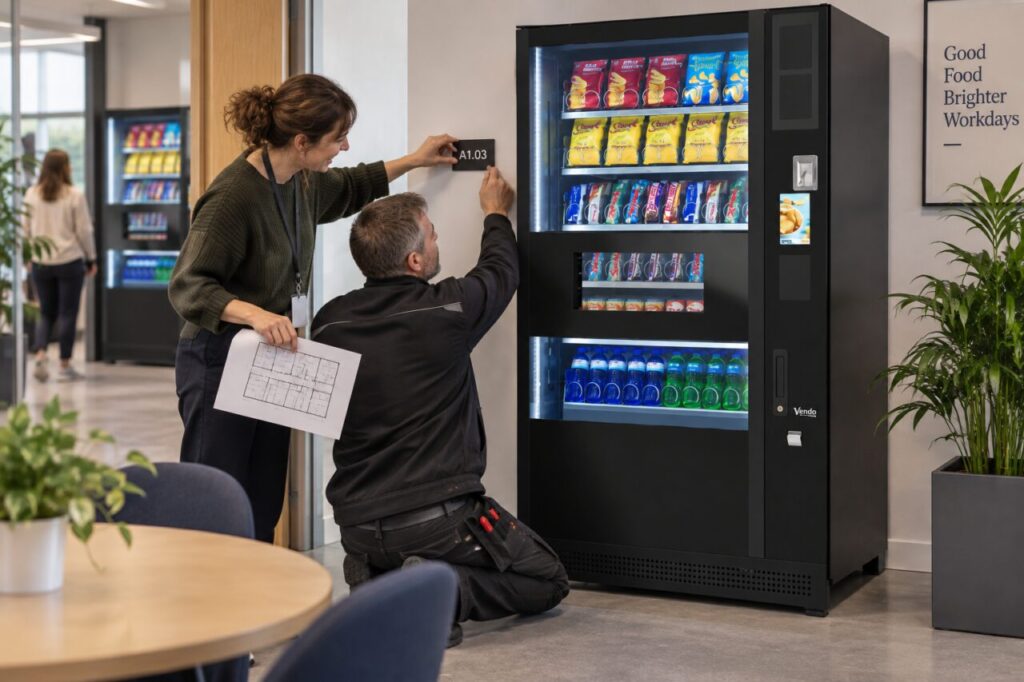
This does not require customers to learn an internal asset register. A plain location description can help them identify the machine they used, while the operator keeps the technical identifiers in the appropriate service record. Connect the two so the site host can pass on an unambiguous report without asking customers to inspect equipment labels they cannot easily find.
Choose descriptions people recognise
Use building and room names that customers actually see on site. A description such as reception break area may be clearer than an internal code known only to facilities. If two machines share the same area, agree a distinguishing reference that remains understandable from the customer’s normal position in front of them.
Avoid relying only on left and right without stating the viewpoint. People approaching from different doors may interpret those words differently. A small agreed location label or another clear reference can help, provided it does not cover controls, product information or the supplier’s instructions and is approved through the normal site process.
Connect customer names to operator records
Ask the operator to associate the customer-facing location reference with the correct equipment record. This helps the support team translate a simple description into the machine they service. Do not assume that an internal asset number, payment-terminal reference and public location name are interchangeable or already linked in every system.
Keep the connection current if machines are moved or exchanged. A familiar location name may remain useful, but the equipment behind it can change. Tell the responsible operator and update the site record so a later report does not lead someone to investigate the former unit or an obsolete payment reference.
Ask for the location early in a report
Include the location in the first support question, alongside the issue and approximate time. This is particularly useful when customers report through reception or a shared workplace channel. The host can then pass the information to the right operator without repeatedly asking the person to return to the machine for clarification.
Keep other information proportionate to the issue. A stock report needs the relevant product or selection; a payment issue may require the operator’s secure support process. Do not collect full card details in a general message. Clear machine identification improves the report without creating a reason to gather unnecessary personal information.
Check the arrangement after changes
After an equipment move, room rename or operator change, walk the customer route and check the references still make sense. Old notices can remain in place even when the machine has changed. Remove or update superseded information through the authorised process so customers are not directed to a support route that no longer applies.
Review a small sample of subsequent reports with the site contact. If the operator can identify the machine without additional clarification, the reference is doing its job. If ambiguity continues, simplify the wording rather than adding more competing codes and labels that make the front of the machine harder to understand.
For vending services across a shared site, identification supports both customer help and maintenance coordination. The correct-operator support guide addresses who handles the issue; a clear location reference identifies which machine that operator should investigate when several similar units are present.
Discuss your site’s vending layout and how customers will identify each service point.