
Before Removing a Slow-Selling Vending Snack, Check the Trial
A low sales total does not always mean customers rejected a vending snack. The item may have been unavailable, difficult to identify or placed in a selection that was not working correctly. Before removing it, check whether it had a fair opportunity to sell and decide what evidence would justify a replacement.
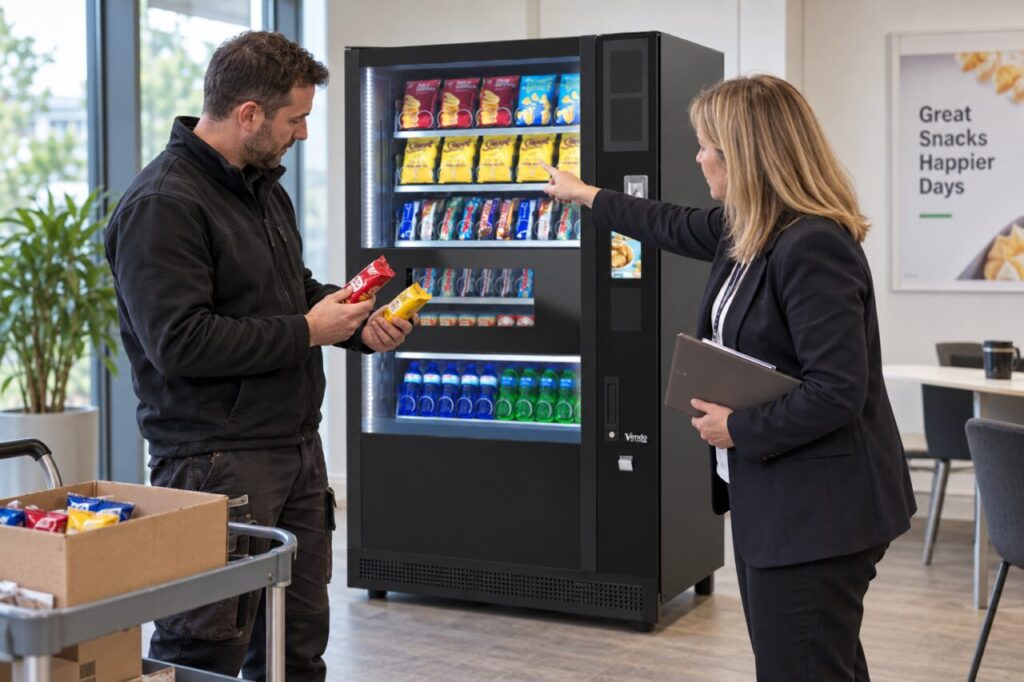
Check the trial conditions
Write down when the product was first loaded, where it was placed and whether the displayed description and price were correct. Record any days when it was sold out or the machine was unavailable. Confirm that the physical pack matched the product shown to customers.
A product available for two working days should not be compared casually with one available for a whole month. Note holidays, changed shift patterns or a closed building. Choose a review period that reflects the site’s normal trading pattern, rather than applying an arbitrary rule to every location.
Confirm the selection works
Ask the operator to investigate any delivery complaints or selection errors. A mechanical or configuration problem needs resolving before the sales result can tell you much about demand. Do not encourage staff to keep buying from a selection reported as faulty.
Our pack-fit testing guide covers the separate question of whether the product can vend reliably. Keep the test record with the trial notes so a future reviewer can see whether low sales coincided with a known issue.
Compare useful measures
Review units sold during comparable available periods, remaining stock and any waste or removals. If supported by your system, check the product-level report rather than relying on total machine turnover. Nayax’s reporting guide distinguishes product logs and sales-analysis tools; available reports depend on the installation and account.
Ask a focused customer question about the choice they wanted but could not find. One enthusiastic request is useful feedback, but it is not proof of sustained demand. Keep commercial factors such as pack cost and shelf life alongside the availability evidence.
Make a small, documented decision
Decide whether to retain the item, correct the trial conditions or replace it. If replacing it, change a limited part of the range and record the start date, allocation and review date. Check ingredients, labelling and pack suitability before the new product goes live.
Agree what to do with remaining stock rather than letting it disappear from the records. Review the replacement under similarly fair conditions. Speak to our team about a product-range review based on your site’s actual purchases and customer needs.