
Can a small vending machine share reserve stock with a staffed counter?
A compact vending machine beside a staffed counter can draw from the same reserve cases if the parties agree who owns the goods, who may move them and how they will be counted. The practical problem is that a snack lifted from the store can have two different destinations. It might be sold across the counter immediately or loaded into the cabinet for a later vending sale.
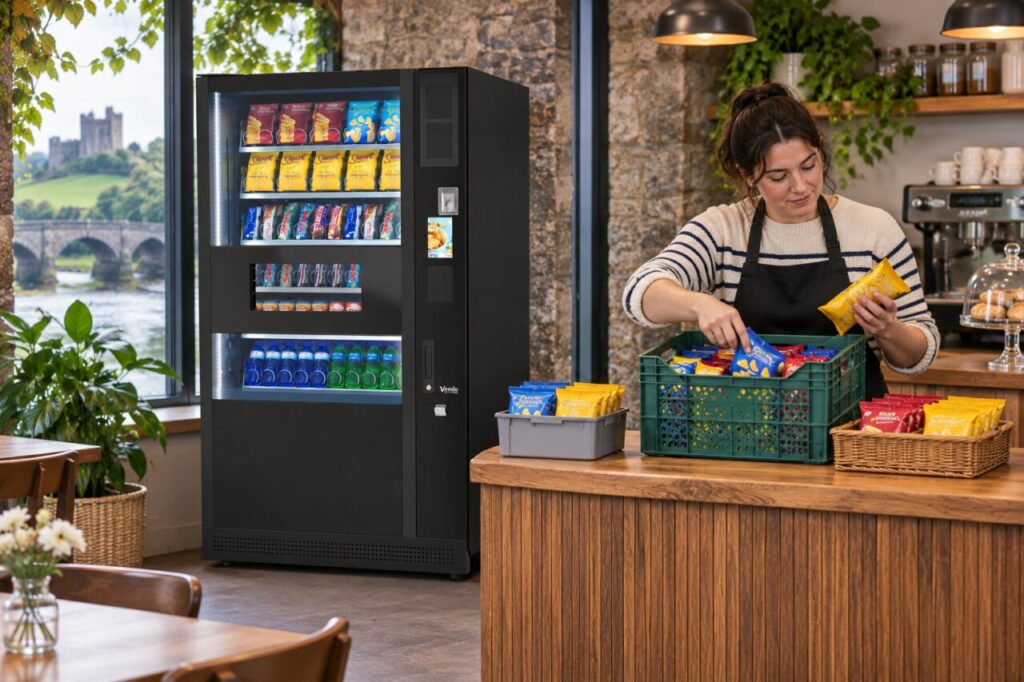
Check ownership before sharing a case
Identify who buys the counter stock and who owns the products inside the machine. If the same business owns both, a transfer between locations can usually be managed as an internal stock movement under its own procedures. If an independent operator owns one range, agree the supply and transfer arrangements first. A shared storeroom does not establish a shared right to use every case in it.
Check the actual packs too. The counter may sell a larger format, a multipack or a product that does not dispense reliably. Give each saleable size its own identity in the stock record. Confirm any temperature, date and traceability requirements with the responsible food business before moving food between the two channels.
Follow a case through both locations
Suppose a case contains twenty-four identical snack packs. Eight are loaded into the vending machine and six are placed on the counter display. Ten remain in reserve. At that moment there are still twenty-four packs on site if none has been sold or removed. The eight loaded into the machine are not eight customer purchases.
If the counter subsequently sells four and the machine sells three, seventeen packs remain in total: five in the machine, two on the counter and ten in reserve. This invented example gives staff a simple test of their recording method. If their report shows a different balance, check whether loading a selection has accidentally been entered as a sale or whether the display stock was counted twice.
Make the transfer easy to record
Choose a named source location, destination, product, quantity, time and responsible person. A small site may use a simple dated sheet while another uses stock software. Keep the entry practical enough to complete during a busy service. Label reserve totes by destination if that helps, but record the transfer when the goods actually move.
Agree what happens if the counter needs the last six packs already earmarked for the machine. Decide who can change the allocation and how they tell the next refill operator. The guide to sizing a compact cabinet around its best seller explains why a seemingly small transfer can leave the busiest selection short before the next visit.
Reconcile each channel at closing
Ask the counter team for counter sales and the operator for vending sales over the same interval. Count the physical stock in each place and investigate differences before making any adjustment. Keep damaged goods, samples and authorised withdrawals separate from sales. This makes it easier to see whether shared stock is saving work or simply hiding a shortage.
When comparing small vending machines, show the supplier the pack list, counter opening times and reserve storage. The arrangement should still work when the counter closes and the machine becomes the only way customers can buy.