
A small vending range needs one slow seller: how much space should it get?
A compact vending range may include a product that sells slowly but serves a genuine need. Removing it solely because it is last in the sales ranking can reduce the usefulness of the whole service. The better question is how much suitable space it needs, how often it should be reviewed and whether the remaining capacity can support popular products without repeated stockouts.
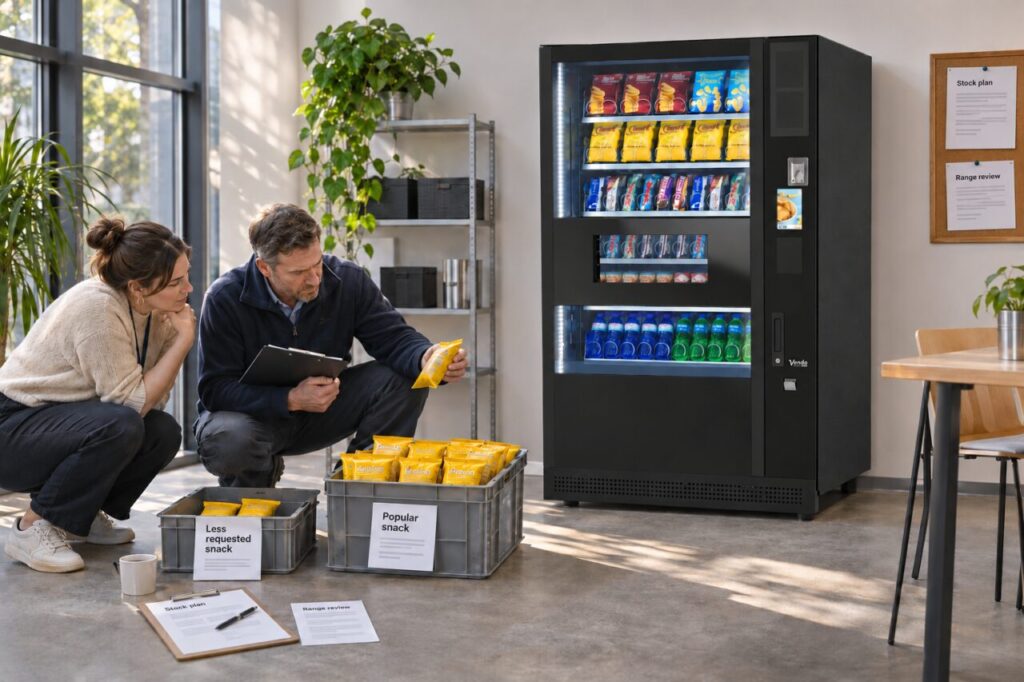
Understand why the product is included
Ask what role the item plays in the agreed range. It might offer a particular flavour, pack size or dietary choice that staff have requested. Verify the relevant product information rather than assuming a label makes it suitable for every customer. Record the purpose in practical terms so a future stock review does not judge the item against an unstated expectation.
Check whether low sales reflect weak demand or poor availability. An item that was absent, hard to identify or incorrectly priced did not receive a fair test. Review the days it was actually available and any customer comments. Avoid treating a short quiet period as proof that nobody wants it, particularly where attendance changes across shifts or weekdays.
Calculate the quantity between refills
Use observed demand over a relevant period to propose a small replenishment quantity. Consider delivery frequency, remaining shelf life and the supplier’s case size. Keep reserve stock and stock physically in the machine separate. A product can occupy only a small selection in the cabinet while a large unopened case creates the greater storage and expiry problem elsewhere.
Ask the supplier what approved loading options the exact machine supports. Do not reduce quantities in a way that prevents reliable dispensing or use an untested divider to squeeze in another item. For small vending equipment, usable capacity depends on the actual products and configuration, not just a headline number of selections.
Compare the space with the whole service outcome
A hypothetical slow seller moving three packs between visits may need less stock than a popular snack moving thirty. That does not establish the right physical allocation by itself. The machine’s approved arrangement, pack dimensions and replenishment process still determine what is practical. Treat the numbers as a prompt for a supplier discussion rather than a loading instruction.
Consider whether retaining the product prevents a group of users from having no suitable option. Ask whether another verified product could serve the same role with better demand or a more manageable case size. Keep the decision open to evidence. A protected place in the range should have a clear reason and a review date, rather than remaining forever because it was ordered once.
Run a defined, reversible trial
Agree the proposed quantity, review period and what will count as success. Track availability, purchases and waste together. Explain a temporary change to customers where useful, and provide a way to request the item if it runs out. Do not promise that every requested product can always be stocked in a cabinet with limited capacity.
The guide to shared reserve stock offers another way to think about replenishment where a staffed counter exists. Keep the final decision focused on the site’s complete refreshment service: reliable popular lines, a justified breadth of choice and stock levels the operator can maintain without avoidable waste.