
Choosing vending for a theatre interval when everybody arrives at once
A theatre can have hundreds of seats and still give a vending machine only a few minutes of meaningful trading time. Audience members leave their seats together, decide between the bar, toilets and snacks, and need to return before the performance resumes. For a foyer proposal, start with the usable buying window and the movement of people through it. Seat capacity alone cannot tell you how many purchases one machine can serve.
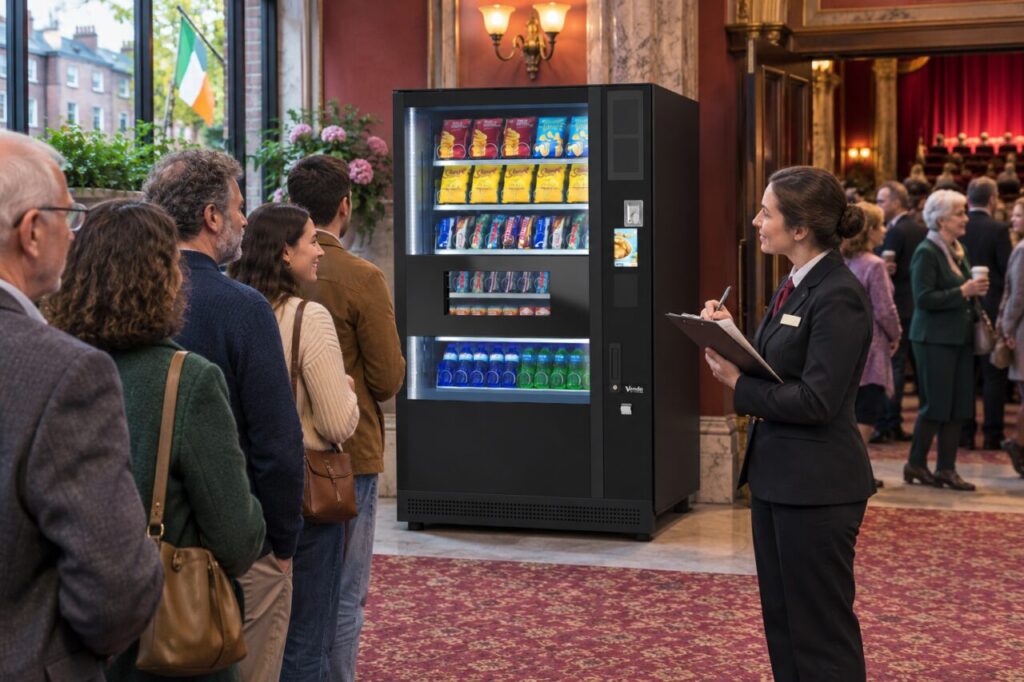
Time the interval from the customer’s perspective
Ask front-of-house staff when the first customers reach the proposed position and when the return-to-seat call changes their behaviour. Observe an ordinary performance and a busy one. If an interval lasts twenty minutes but it takes several minutes to reach the foyer, browse and return upstairs, the available buying window may be considerably shorter.
Measure the full sequence for a few representative purchases with the operator. Include reading the range, selecting, paying, waiting for delivery, collecting the item and stepping away. An experienced staff member who already knows the selection code will give a different result from a visitor making a first purchase. Capture that variation without recording names or card details.
Turn the observation into a capacity check
Suppose that for planning purposes you allow ten usable minutes and observe an average of forty seconds from one customer taking the position to the next taking over. Six hundred seconds divided by forty gives fifteen completed purchase sequences under those assumptions. It is a theoretical illustration. A payment retry, indecision, several items or an interruption can reduce the number served.
Compare that figure with the number who actually want vending during the busiest minutes. A second cabinet only helps if there is a second usable buying position and both can offer the products people seek. Two machines with queues crossing the same doorway may simply move the difficulty. Our queue observation guide provides another example of watching short peaks before adding equipment.
Choose a position with front-of-house staff
Walk the proposed queue with the people responsible for venue access and circulation. Include visitors who need more space to approach, reach the controls or collect an item. Check the route at the same time that bar and toilet queues form. Keep emergency routes and other required access arrangements under the venue’s normal safety review.
Decide what visitors can see before joining the queue. Clear product choices and prices can shorten the decision at the controls, provided they accurately reflect the stock inside. Agree what happens when a popular line sells out during an interval. Staff should have a simple answer that does not require stopping the next customer for a lengthy explanation.
Refill between performances
Arrange the refill around the venue’s quiet periods. Check who can reach reserve stock, when service doors can open and whether empty packaging will accumulate where the audience needs to stand. If the matinee and evening audiences prefer different products, record them separately before changing the range.
When assessing vending options for an Irish venue, send a foyer plan and two or three observed interval timings. A supplier can use those details to compare layouts against the actual number of people the theatre wants to serve before the second half begins.