
Buying Two Smaller Vending Machines or One Larger Unit: Compare the Whole Site
Two smaller vending machines and one larger unit can look similar when a quotation simply adds up the available selections. The more useful comparison starts with your building: where people take breaks, when demand occurs and how the equipment will be stocked. Extra cabinets do not automatically provide better access, and one large cabinet does not automatically provide the lowest operating cost.
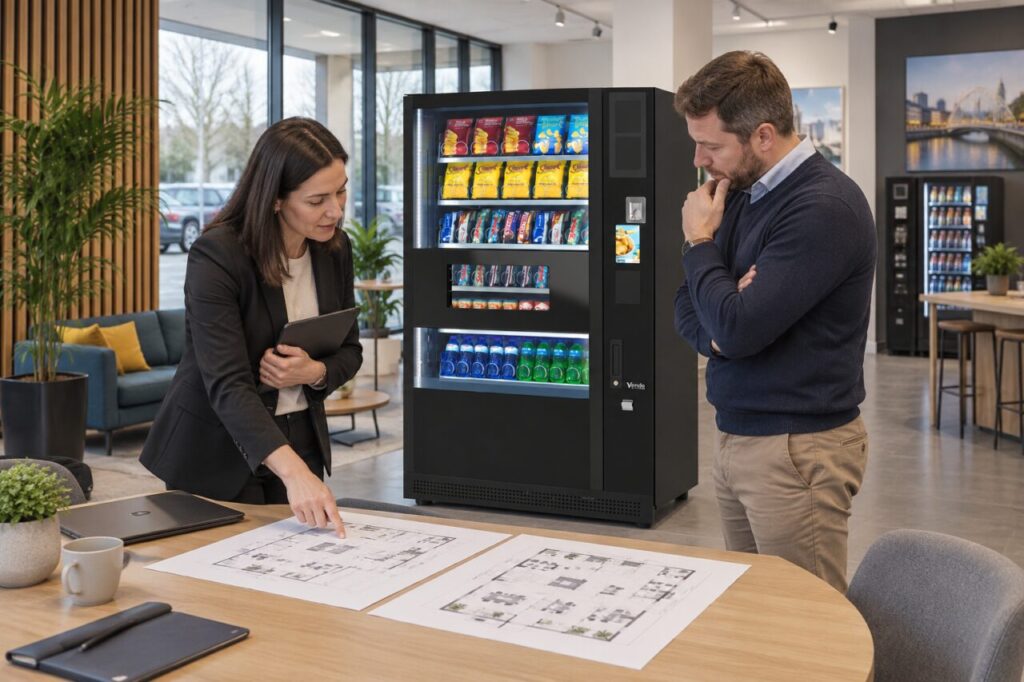
Map the journeys before comparing capacity
Draw the places where customers actually spend their breaks. Include opening hours, stairs, access-controlled doors and the route from each work area. A machine close to one department may be inconvenient for another even when the building looks compact on a plan. Ask a representative from each shift to walk the proposed journey rather than estimating convenience from a desk.
Two smaller units may let you serve separate areas, but that advantage depends on both areas having enough regular demand. Dividing a modest customer base can leave slow-moving products in each location. Conversely, putting everything beside the main entrance may concentrate sales while making refreshments difficult to reach during a short break. Record that trade-off explicitly in the buying brief.
Compare usable stock, not just cabinet count
Ask the supplier to show the intended product layout for each option using the actual packs you expect to sell. Selection count, units held and replenishment effort answer different questions. A cabinet with many choices may still need frequent attention to a particularly popular drink. Two cabinets can duplicate a useful core range, but they can also duplicate products that sell too slowly.
Run a simple paper exercise over your busiest expected interval between visits. Allocate demand to each proposed position and identify which product would run short first. Treat these quantities as planning assumptions until measured at the site. Do not claim that a particular machine will hold a pack or meet the forecast without checking its configured layout and dispensing suitability with the supplier.
Count the work at both locations
Compare delivery, installation, payment equipment, utility requirements and ongoing service for the complete proposal. Two units mean two physical locations to inspect, clean and refill. Whether those visits are combined efficiently depends on your route through the building and the operator’s arrangements. Ask for a written explanation of what is included instead of assuming that a second machine adds only its purchase price.
Think about interruptions too. Two independent machines might leave another purchase option available when one is unavailable, but only if customers can reach it and it has a suitable range. That is a possible operational benefit, not a guarantee of uninterrupted service. Shared access restrictions or a building-wide outage can still affect both positions.
Make the decision easy to revisit
Keep a comparison sheet with three sections: customer access, stocking workload and total agreed cost. Note which assumptions would change the choice, such as a new shift or a department moving upstairs. Ask how either arrangement could be reviewed after real demand becomes clearer, without assuming a free exchange or relocation.
Use the Irish vending equipment and service overview to begin the discussion with a site plan and expected use. The fully managed service is another route for approved locations, with suitability and terms assessed first. Choose the arrangement that fits the people and the operating plan, then confirm the specific equipment.
Related guidance: Buying Two Identical Vending Machines: Ask Whether Settings Transfer.
Planning or reviewing vending at your site? Contact the team with your location, equipment details and the question you would like to resolve.