
Buying Two Identical Vending Machines: Ask Whether Settings Transfer
Buying two matching vending machines can make a rollout easier to organise, but identical cabinets do not automatically mean identical final setups. Product ranges, prices, payment arrangements and site instructions may differ. Before ordering, ask which settings can be transferred through the supplier’s supported process and which require separate configuration. Treat copying as a question to verify, not a promised feature of every machine.
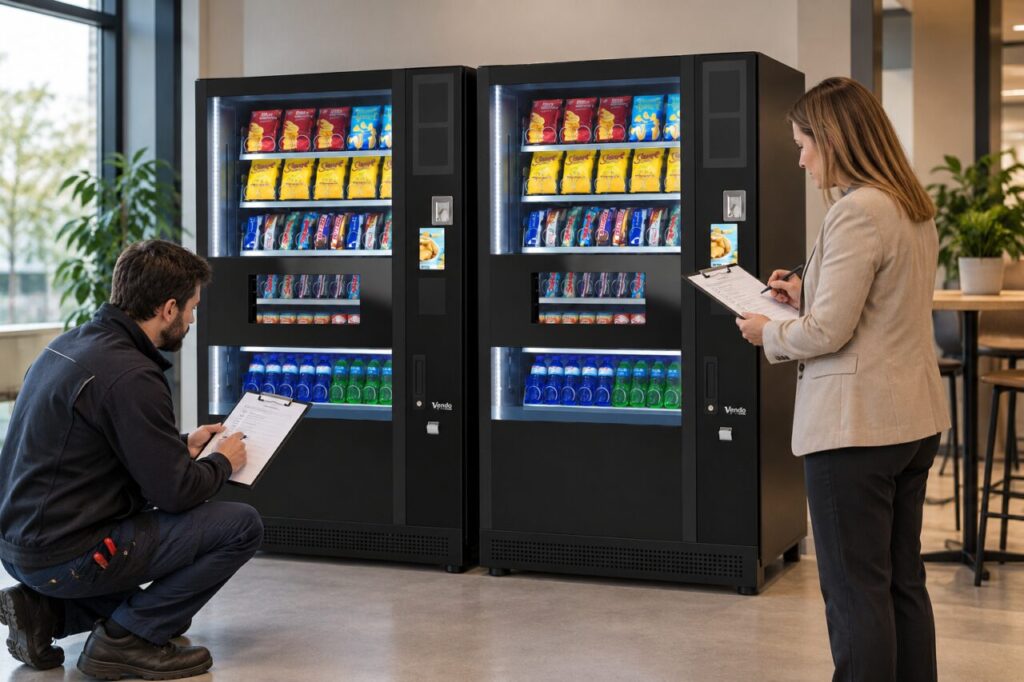
Define what should actually match
Create a simple comparison of the two intended sites. List the products, pack sizes, prices, opening arrangements and customer instructions you want each location to use. Mark deliberate differences clearly. If one site serves visitors and the other serves staff only, for example, the communication may need to differ even when the equipment is the same.
Agree the shared baseline before discussing a transfer. A convenient copying method is not a reason to reproduce a setting that does not suit the second site. Give the supplier one approved record for each machine so that the intended outcome remains clear. Use machine and site identifiers rather than informal descriptions such as the first one and the other one.
Ask what the equipment supports
Have the supplier explain the supported setup process for the exact proposed configuration. Ask whether settings can be copied, by whom and with what limitations. Some details may belong to connected services or separate accounts rather than the cabinet itself. Do not assume a demonstration of one function establishes how all related systems will behave.
Keep access responsibilities clear. The person authorised to configure equipment may not be the same person who approves prices or manages a payment agreement. Ask how those approvals will be coordinated without sharing passwords or using another person’s account. Record any setup work or separate service required in the proposal before comparing the total scope of the purchase.
Check each machine on its own merits
Even where a transfer is supported, agree how the result will be checked on both machines. Follow the relevant customer journey using the approved product and price information for that site. Confirm that selection descriptions and local help information refer to the correct equipment. A successful check at one location should not be treated as the completion record for the other.
Ask how exceptions will be documented. If one machine needs a different range or configuration, make that an intentional, approved variation. Avoid silently altering a shared master record to solve a local issue. Keep the baseline and the site-specific changes understandable so a future colleague can see why the machines behave differently.
Plan how later changes will be controlled
Decide whether future price or product changes will be approved centrally or separately by each site. Record the person responsible for updating the working information and confirming completion. This is useful even when no electronic copying feature is available: a clear change process matters more than making every update look identical.
When comparing vending machines for your sites, include configuration and handover in the discussion rather than treating them as invisible extras. Ask for an explanation of what is included, what the customer must supply and how outstanding settings will be resolved. You will then be buying a defined setup for each location instead of relying on the appearance of matching cabinets.
Send your two-site brief through our enquiry page.
Related guidance: Buying Multiple Vending Machines: Keep Site Differences in One Schedule.