
Two Vending Suppliers or One Combined Order: Compare Charges and Extra Stock
Buying all vending stock from one supplier may simplify receiving, but a combined order is not automatically cheaper than two smaller orders. Compare the products you actually need, each supplier’s delivery terms and any extra cases required to reach a threshold. The useful comparison is the complete purchasing decision, including cash and usable stock, rather than the number of invoices on your desk.
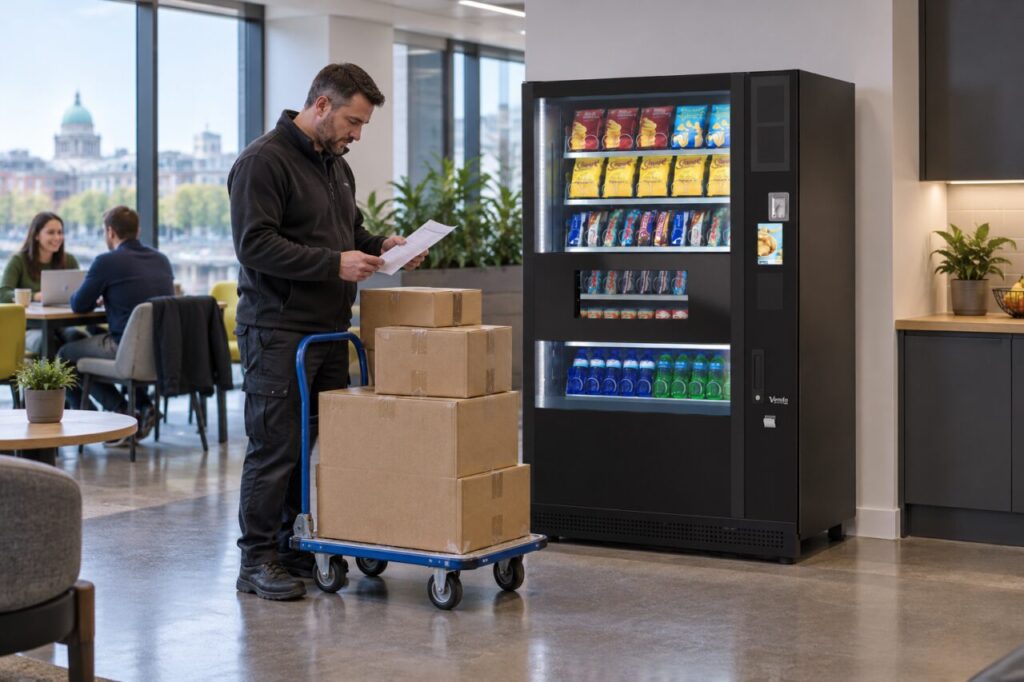
Build the same refill requirement for both options
Start with a product list and quantities based on the next planned refills. Check existing stock and reservations before requesting prices. Use exact pack sizes and variants so that a cheaper substitute does not silently change the comparison. Mark any product that one supplier cannot provide, rather than treating a different item as identical without review.
For the split option, allocate the required products between the suppliers and record their confirmed charges and delivery dates. For the combined option, price the same requirement through one supplier where possible. Include any minimum-order condition. Keep quoted figures dated because availability and terms can change between the comparison and the actual purchase.
Show the effect of extra cases separately
As a hypothetical example, two required orders might cost €120 and €80, with delivery charges of €8 each, for €216 in total. A single supplier might provide the required goods for €205 plus €10 delivery, totalling €215. That is only a €1 difference before considering other factors. These figures illustrate the method and are not real supplier offers.
If the combined supplier offers delivery without a charge above €250, reaching that threshold would require €45 of additional stock in this example. The cash payment becomes €250 rather than €215. You receive extra goods, but you have not saved €35 in cash. Identify those goods and their expected use before deciding whether the larger commitment is worthwhile.
Compare the operating consequences
Two deliveries require two receiving checks, but they may arrive at times that suit different routes. One combined delivery may be easier to handle yet arrive too late for an early refill. Record these practical differences rather than assigning an invented labour saving. If staff time is a material factor, use your own observed handling time and an explicit internal cost assumption.
Check storage, product dates and the risk of a missing line disrupting the order. Ask each supplier what happens when a requested product is unavailable. Do not assume that a consolidated order guarantees complete delivery or that splitting orders guarantees resilience. The actual service arrangements and available alternatives determine how the business would respond to a shortfall.
Choose and review the whole arrangement
The Local Enterprise Office financial projection guidance helps frame the cash timing of purchases. Keep the chosen comparison with the order records and identify assumptions that need checking after delivery. Include any additional stock as stock, not as an immediate profit improvement simply because a delivery charge disappeared.
Our vending business guide provides wider planning context. After the next cycle, compare what actually arrived, what it cost and how much extra stock remains. Revisit the decision if the range or route changes. The best arrangement is the one that reliably supplies the required products at a justified total cost, with a cash commitment the business can manage.
Related guidance: Vending Stock Case Discounts: Compare Savings with the Quantity You Can Use.
Planning or reviewing vending at your site? Contact the team with your location, equipment details and the question you would like to resolve.