
Buying a Used Vending Machine: Clarify Keys and Access Before Collection
When buying a used vending machine, the key handover deserves its own question. A cabinet may look complete while the seller has not explained which keys are included, who holds copies or how authorised service access will be managed. Clarify those points before arranging collection.
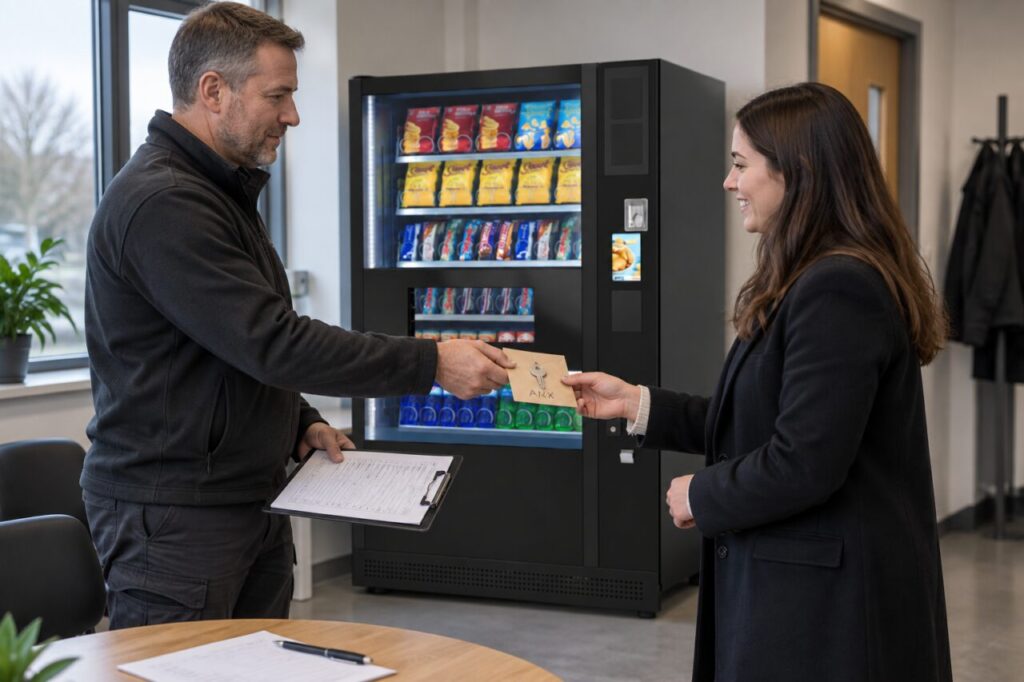
This article concerns ownership planning and documentation. It does not explain how to bypass locks or gain unauthorised access. If access is missing or uncertain, ask the legitimate seller and an appropriate supplier or technician to resolve it.
Ask what comes with the particular machine
Request an inventory of the keys and access items included with the exact unit being sold. Connect that inventory to the machine identification and sale documents. Do not assume that a photograph of a key or a general statement about the model confirms access to the offered cabinet.
Ask the seller to explain any missing item before the purchase is finalised. An unresolved access issue may affect inspection, collection or later service. Record it as an open question rather than treating a promise to sort it out later as a completed handover.
Verify through an authorised demonstration
Ask the seller or authorised technician to demonstrate the access relevant to the handover. Stay within the agreed inspection process and do not handle internal components without permission or competence. The purpose is to confirm the supplied items, not to experiment with the mechanism.
Record what was demonstrated and by whom. If part of the machine could not be inspected, note that limitation alongside other condition questions. Our used-machine service-history guide provides a separate framework for reviewing maintenance evidence.
Discuss copies and future responsibility
Ask who is known to hold copies and what the seller can confirm about the previous arrangement. Do not infer that receiving one key proves no other copies exist. If the new owner needs a different access arrangement, discuss the appropriate options with an authorised provider.
Keep responsibility clear after purchase. Identify the person who will hold the operational set, the authorised backup arrangement and the process for recording a transfer. Avoid storing key details or access information in a public-facing machine notice or an unrestricted shared document.
Connect access with collection and service
Confirm which party needs access during collection, positioning and commissioning. Ask the provider to identify any unresolved issue before the appointment rather than discovering it when a vehicle arrives. The equipment and its supporting items should follow an agreed handover process.
Do not assume that the person moving the cabinet is also responsible for changing access arrangements or preparing it for use. Those tasks may belong to different parties. A simple list of responsibilities helps prevent a gap between buying the machine and being ready to operate it.
Close the inventory at handover
Record the items actually received and any difference from the agreed list. Include the date and the names of the responsible parties through your normal business record process. Keep the inventory with the equipment documents so future staff can understand what was supplied.
If something is missing, seek clarification before describing the handover as complete. Ask an authorised supplier what information is needed to assess the issue. Avoid advice that treats missing keys as an invitation to force a cabinet or use an unverified workaround.
Compare the condition, documentation and access arrangements together when reviewing vending equipment. A practical purchase decision should account for the work needed to make the particular unit ready for its intended service.
Speak with our team about equipment requirements and the checks to include in a proposed handover.