
Inspecting a Used Vending Machine: Ask for Its Service History
A clean used vending machine can look ready for work while leaving important questions unanswered. Its service history helps you understand what has been maintained, repaired or changed and what still needs assessment. Treat that history as evidence to discuss with the seller, rather than a guarantee that the machine will never develop a fault.
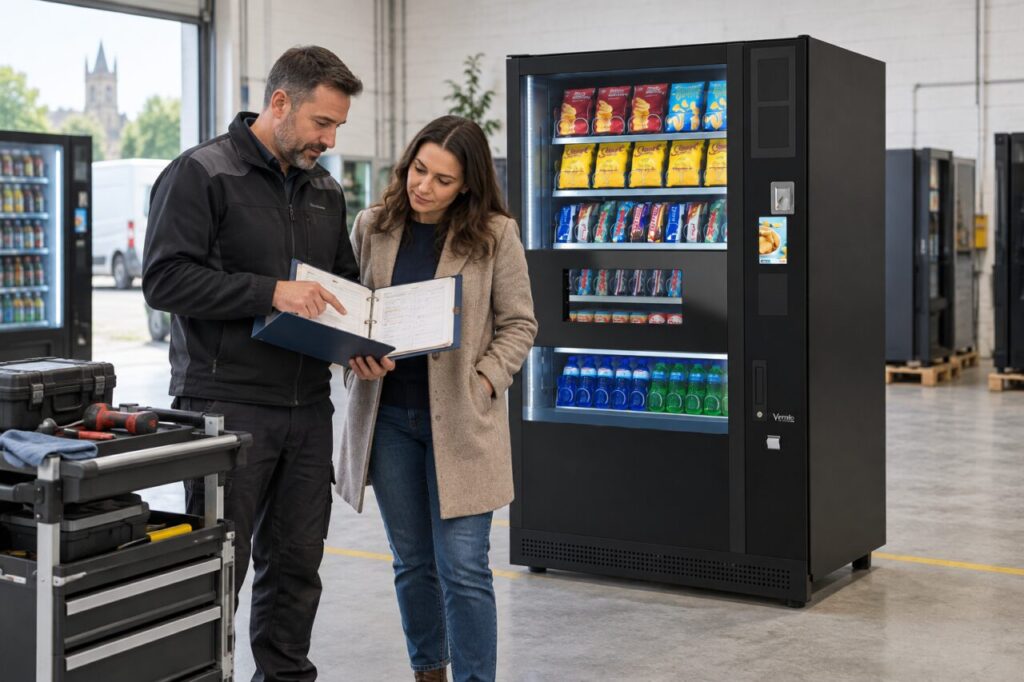
The useful question is not simply whether the machine has been serviced. Ask what was done to this particular unit, when it happened and how the work relates to your proposed use.
Connect records to the actual unit
Check that the model and identifying details on the records correspond to the machine being offered. A folder covering a fleet may contain relevant information, but you need to know which entries apply to the cabinet you are considering. Ask the seller to clarify uncertain references.
Keep the distinction between an inspection, a repair and a routine cleaning visit. Each tells you something different. A recent visit does not necessarily mean that every system was tested or that worn parts were replaced. Ask what the recorded activity included and what it did not cover.
Look for recurring issues
Read the sequence of entries rather than only the latest date. Repeated visits for the same symptom deserve an explanation of the eventual diagnosis and corrective work. A symptom can have several causes, so avoid making your own technical conclusion from a short note.
Ask whether the machine was tested after the work and whether the seller knows of unresolved issues. Where records are incomplete, write that down as uncertainty. Missing paperwork does not prove a defect, but it changes what you need to verify through a suitable inspection and demonstration.
Identify changes from the original setup
Find out whether payment equipment, controllers, shelves or other components have been replaced. Ask the supplier to confirm compatibility and support for the resulting configuration. An original catalogue describes the product family; it may not describe every component currently installed in a used unit.
Account ownership matters as well as hardware. Our used card-reader transfer guide covers questions to resolve when payment equipment moves between operators. Confirm the arrangements before relying on the machine to take customer payments at your site.
Arrange a relevant demonstration
Ask to see representative products selected and collected using the proposed configuration. Discuss any limits on what can be demonstrated and who will assess functions that require a qualified technician. A buyer should not open electrical areas or carry out repairs to compensate for missing evidence.
Consider whether the inspection conditions resemble the intended job. A short demonstration is not a prediction of long-term performance, but it can reveal questions about product fit, customer controls and the supplied setup. Keep observations separate from assumptions about future reliability or sales.
Record what the purchase includes
Ask the seller to state the condition offered, known limitations, agreed work before delivery and the scope of any warranty or support. Clarify parts, labour and travel arrangements through the written proposal. Avoid assuming that refurbished has one universal meaning across every supplier.
Prepare a short list of questions for the seller before the inspection. For each answer, note whether it came from a dated record, a demonstration or a verbal explanation. Those are different kinds of evidence. Keeping them separate makes it easier to decide what still needs independent assessment before you commit to the particular unit.
Keep the records and the agreed condition summary for your future operator or service provider. This gives them a better starting point if assistance is needed. Explore our vending equipment options and discuss your site before deciding whether a particular used or new configuration meets the job.