A Vending Button Feels Loose: Report the Control Without Trying to Repair It
A vending button that feels loose, sticks or moves differently from the others should be reported rather than repeatedly tested. Customers and ordinary site staff should not remove the control, insert tools around it or try to secure it with adhesive. The responsible operator can decide whether the machine needs attention and how it should be left meanwhile.
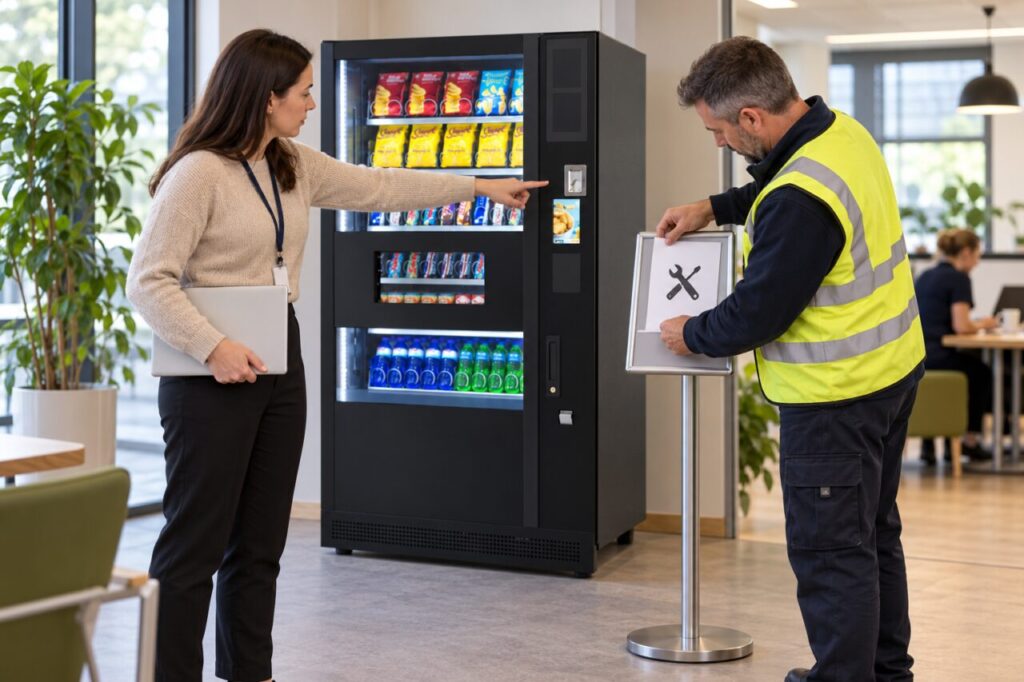
Describe the observation precisely. A control failing to register and a control physically moving are different reports, even if both interrupt a purchase. Do not label the issue as an electrical fault or a broken internal component without a qualified assessment. A clear external description helps support decide the appropriate next step without encouraging improvised repair.
Stop the unsuccessful sequence
If the control behaves unexpectedly, pause the purchase. Note whether a selection or payment had already been accepted and whether a product was delivered. Do not keep pressing harder to discover whether the button will work. If payment status is unclear, retain the relevant details and follow the operator’s support process before starting another paid attempt.
Keep fingers and objects away from any gap or damaged area. Do not remove a loose piece to show someone what is wrong. Where something appears unsafe or the equipment is visibly damaged, alert site staff and use the site’s procedure for keeping customers away. Any isolation or technical action should be performed only by the appropriate authorised person.
Identify the control from outside
Record the machine location and the position or label of the affected control. Explain what happened during normal use: for example, it remained depressed or shifted when touched. Avoid performing a second test just to obtain more detail. A photograph taken from outside can show context without requiring anyone to open the cabinet or expose payment information.
State whether the observation is new and whether any customer transaction needs follow-up. Keep the service issue and the payment query linked where they concern the same incident, but do not assume fixing the control automatically resolves a refund request. The responsible organisations may need different details to investigate the physical fault and the transaction.
Leave the interim arrangement clear
Ask the operator what customers should do while the report is open. Do not assume other selections are safe or available simply because they look unaffected. If the agreed response is to suspend use, make the temporary notice clear and place it without covering ventilation, controls or safety information. Follow the site’s approved procedure for the surrounding area.
Record who reported the issue, the case reference and when an update is expected. Staff changing shifts should know whether the machine is awaiting assessment or has been cleared for use. An informal statement that someone has been called is insufficient if the next colleague cannot identify the report or the instructions already given.
Confirm the outcome after authorised attention
When the operator or engineer attends, ask for the customer-facing outcome and any follow-up instructions. Site staff do not need a detailed repair tutorial. They need to know whether service has resumed, whether a restriction remains and who will complete outstanding work. Keep the result with the original report so the next recurrence can be described accurately.
When choosing vending equipment and support, clarify the ordinary fault-reporting route and the roles expected of site staff. Good preparation does not mean turning reception into a repair team. It means customers have a safe next step, the operator receives useful evidence and the machine’s status is clear until the issue is resolved.
For a proposal suited to your site, contact our team with the location, expected users and your main requirements.
Related guidance: A Vending Service Report Says Monitor: Agree What Observation Would Trigger a New Call.