A Vending Service Report Says Monitor: Agree What Observation Would Trigger a New Call
A vending service report that says monitor needs a practical explanation. Site staff should know what they are being asked to observe, for how long and what would justify contacting support again. Without that detail, one shift may call about every small change while another assumes that no further report is needed.
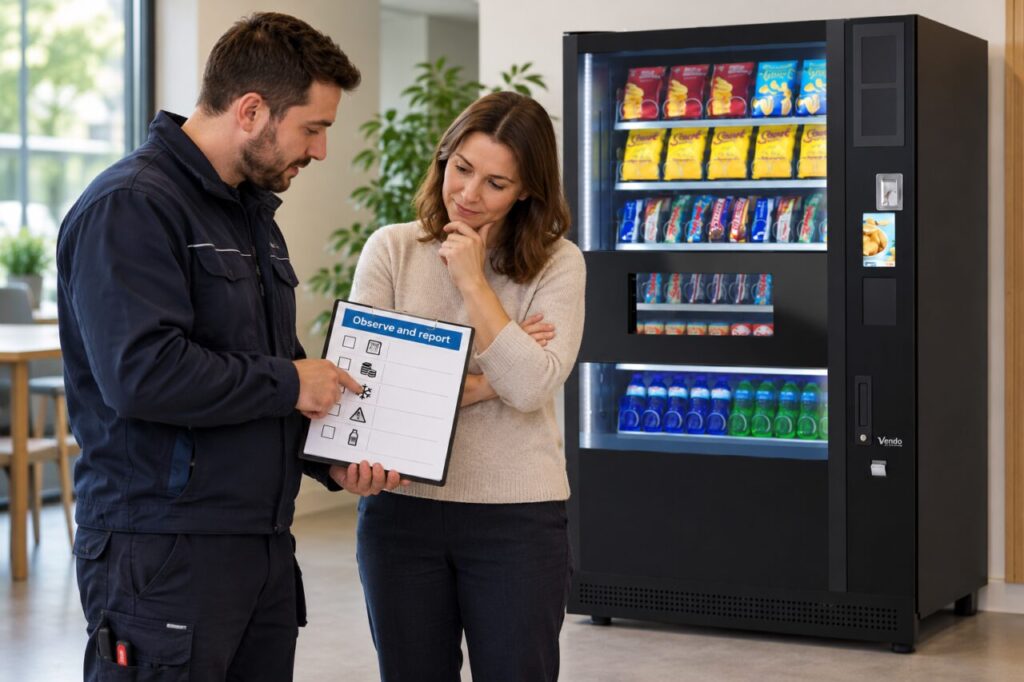
Ask for clarification before treating the instruction as a completed handover. Monitoring should mean an agreed observation within the site’s role, not an invitation to test internal components or continue using equipment that has not been confirmed safe. The responsible provider should explain the machine’s current status separately from any request to collect further information.
Clarify the status of the equipment
Ask whether the machine or affected selection is available for normal use and whether any restrictions apply. Record the answer with the service reference. A request to monitor is not itself a statement that every function is working, nor does it tell staff what to do if the original symptom returns immediately after the technician leaves.
If the wording is unclear, ask the provider to restate it in ordinary language. Confirm which observation the instruction refers to, especially if several issues were discussed during the visit. A general note about monitoring should not conceal an unresolved question about a different payment, product or service function mentioned in the same report.
Define what staff should observe
Agree the details that would be useful if the symptom appears again: the time, selection, visible message and what the customer was doing. Staff should record what they see rather than assign a technical cause. A report that a specific selection did not complete at a particular time is more useful than an unsupported diagnosis.
Clarify whether observations should come from normal use only. Do not create repeated test purchases, open the cabinet or change settings unless the responsible provider has given an appropriate authorised procedure to a suitably trained person. If no new event occurs, record that accurately rather than inventing a successful test that nobody actually performed.
Agree a trigger and a review point
Ask what should prompt another call and which contact route to use. The provider may want a recurrence reported immediately or may specify another review arrangement. Do not assume a universal threshold. Keep the instruction attached to the existing service case so a later report can be understood in the context of the visit.
Also ask when monitoring ends or will be reviewed. An open-ended instruction can remain in a shift book long after staff understand its purpose. A named review date or confirmed event gives the site a point at which to ask whether the issue can be closed, needs further work or requires a revised observation plan.
Make the shift handover usable
Leave the next shift a short note containing the machine reference, current status, observation requested and support contact. Identify who will maintain the record so separate teams do not create conflicting logs. Keep customer information limited to what is necessary for the approved support process, and avoid copying sensitive payment details into general site notes.
When arranging vending support for your premises, ask how post-visit monitoring is explained and reviewed. A useful handover turns an ambiguous word into a manageable task with boundaries. It helps staff provide relevant evidence while keeping technical diagnosis, equipment safety and decisions about further work with the responsible provider.
For a proposal suited to your site, contact our team with the location, expected users and your main requirements.
Related guidance: A Vending Service Report Uses Unfamiliar Abbreviations: Ask for a Clear Handover; Vending Service Notes Say No Fault Found: Add the Conditions That Trigger the Problem.