
Vending Change Looks Wrong: Check the Amount Before Reporting the Purchase
When the change from a vending purchase seems wrong, pause before making another purchase. Check the price you selected, the money you inserted and the coins you actually received. Then report the difference through the machine’s customer-support route. A simple record of the amounts is more useful than guessing why the machine returned a particular combination of coins.
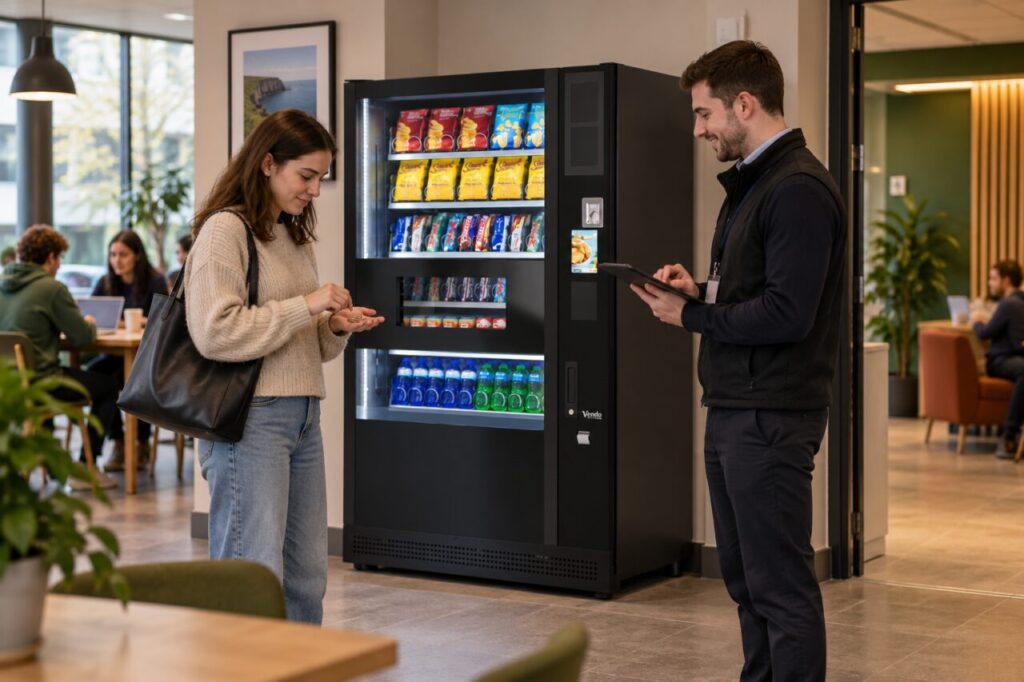
Reconstruct this purchase only
Write down the displayed price and the amount inserted as accurately as you can. Count the returned coins in a safe place without blocking other customers. Keep any money returned by a cancelled attempt separate from the change for a completed purchase. If you cannot remember one part of the sequence, say so; uncertainty should not be filled in with an invented figure.
For example, if the selected item displayed a price of two euro and you inserted three euro, the expected difference is one euro. That arithmetic does not prove what the machine accepted or returned. The useful report includes the displayed price, your recollection of the accepted amount and the actual coins received. Treat this as an illustration, not a statement of vending prices.
Record the sequence without retesting
Note whether the product was delivered and whether any coin appeared to be rejected before the purchase. Include the approximate time and the selection number if available. If the machine displayed a message about change or payment, record the wording. Do not insert more money just to reproduce the problem or ask another customer to test it for you.
Different coin combinations can add up to the same amount. Count the value rather than expecting a specific denomination. At the same time, do not assume a shortfall is correct merely because the machine completed a vend. The operator needs the details to investigate the particular event, including whether the customer’s expected amount and the recorded transaction agree.
Use the right reporting route
Find the operator’s contact information on the machine or ask the venue host. Provide the location, time, selection and amounts, together with a contact route for the reply. The host may be able to help identify the machine, but they may not control its cash system or customer reimbursements. Avoid expecting reception to replace money immediately without checking who handles the enquiry.
Do not force a return control, open the cabinet or attempt to clear a coin mechanism. Those actions are not part of a customer purchase check. If the operator gives a reference, keep it with your notes. Where several people experienced a problem, each should provide their own details rather than combining uncertain totals into a single claim.
Help prevent repeated confusion
The site contact can ask the operator whether customer instructions or a temporary status notice are needed while the report is reviewed. Any notice should reflect confirmed information. It should not claim that exact change is required or that a payment option works unless the operator has established that for the machine. Clear guidance reduces avoidable repeat attempts.
When planning vending equipment, discuss coin support, customer information and the enquiry process before launch. Suitable equipment and payment arrangements are confirmed for the installation; the managed service also explains the agreed payment setup. For today’s purchase, the immediate priority remains a factual amount-by-amount report and a named route for the response, without further unapproved testing.
Related guidance: Planning Coin Payments for Vending: Ask How Change Will Be Managed.
Planning or reviewing vending at your site? Contact the team with your location, equipment details and the question you would like to resolve.