
Vending Customer Notices: Replace Old Instructions When the Process Changes
A new vending process can be correctly agreed between the host and provider while customers still follow an old notice. Conflicting instructions are especially unhelpful when someone is trying to report a purchase problem. When the process changes, review every customer-facing message that describes it and make the current route clear before the old information causes another avoidable query.
Confirm the process before editing the message
Ask the responsible provider or site contact to confirm what has changed and when it takes effect. Separate a proposed improvement from a process that is ready to use. Do not publish a new contact method, payment instruction or response promise based on an informal suggestion. The notice should describe the supported arrangement that customers can actually follow.
Identify who owns the message and who can approve future changes. For the wider vending service arrangement, that responsibility should be clear between the host and operator. A colleague should not need to guess whether an instruction came from the supplier, a previous site manager or an unrelated notice copied from another machine.
Find the old versions
Check the immediate vending area, nearby noticeboards and the internal channels where the instructions were shared. Include any printed guide used by reception or staff who answer customer questions. Keep this review focused on the relevant process rather than collecting unnecessary information about customers. The aim is to identify conflicting messages, not build a new database of enquiries.
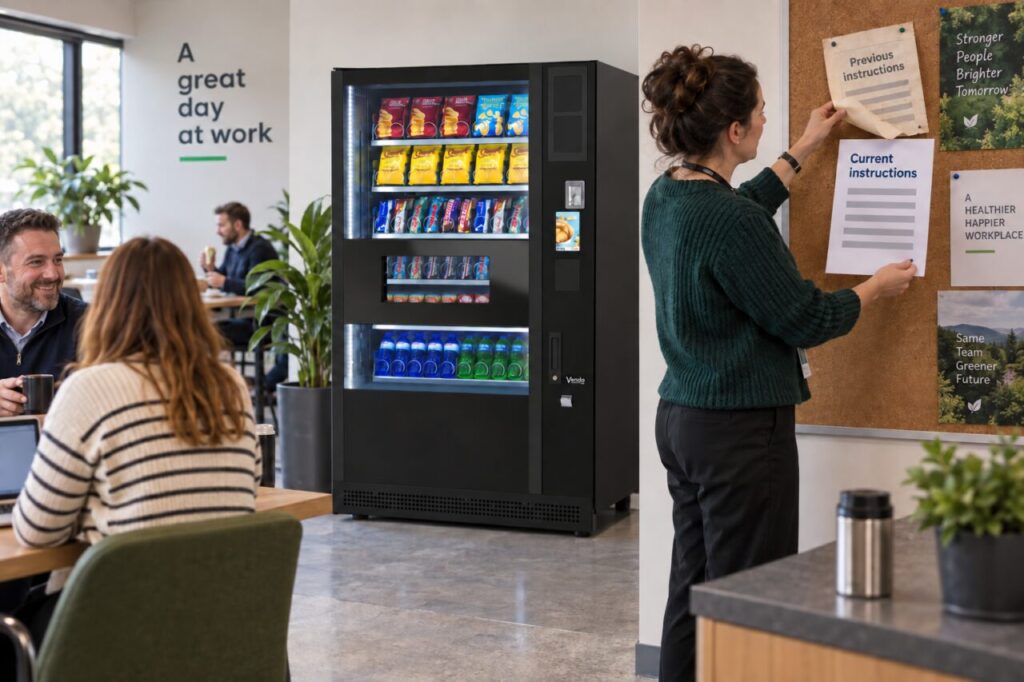
Mark which versions need replacement and who will handle each location. Do not simply add a new sheet beside an old one and expect customers to know which takes precedence. Follow the site’s normal arrangements for signage and preserve historical documents in the appropriate internal record where needed. Customer-facing space should present the current action clearly.
Write for the person using the service
Explain the action in plain language and include only the information the customer needs at that point. For a purchase query, that may mean identifying the machine and using the confirmed support route. Avoid placing account credentials, private staff details or internal escalation notes on a public notice. Keep the operational detail in the authorised site record.
Make the notice specific enough to distinguish the relevant equipment where several machines share an area. Check that a customer can connect the message with the machine they used. The guide to clear location reporting provides a useful approach to identification without requiring the customer to understand the site’s internal asset-management system.
Test any customer-facing link or contact route through the normal approved method. Check that the destination matches the intended process and that the printed wording is legible in its actual position. A correct digital file does not prove a small, poorly placed printout is usable. Ask someone unfamiliar with the change to explain what they would do next.
Check the change has taken effect
Record the replacement date and the version approved. Tell the people who handle questions what changed so they do not continue giving the old instructions verbally. If the process has a transition period, agree how enquiries arriving through the previous route will be handled. Do not promise automatic forwarding or continuity unless the responsible team has confirmed it.
Review early questions for evidence that the message remains confusing. Customers may reasonably follow an old screenshot or a notice that was missed during replacement. Identify the source and correct it. Avoid treating every repeated question as a failure by the customer when the site may still be presenting two different explanations of the same process.
Clear notices support a service customers can understand when something changes. The practical test is whether a person at the machine can find the current instruction, follow it and reach the right destination. Keeping the message owned, dated and checked makes future updates easier and reduces dependence on informal explanations that vary from one shift to another.
Discuss clear customer instructions for your vending service.