
Vending Customers Ask for a Larger Range: Test Whether More Lines Improve Availability
Requests for more vending products do not always mean that adding more lines is the best next step. Customers may want a missing category, a particular flavour or simply more reliable availability of items they already buy. Ask what problem the request is trying to solve. A controlled range trial can show whether extra lines improve useful choice without making familiar products harder to keep available.
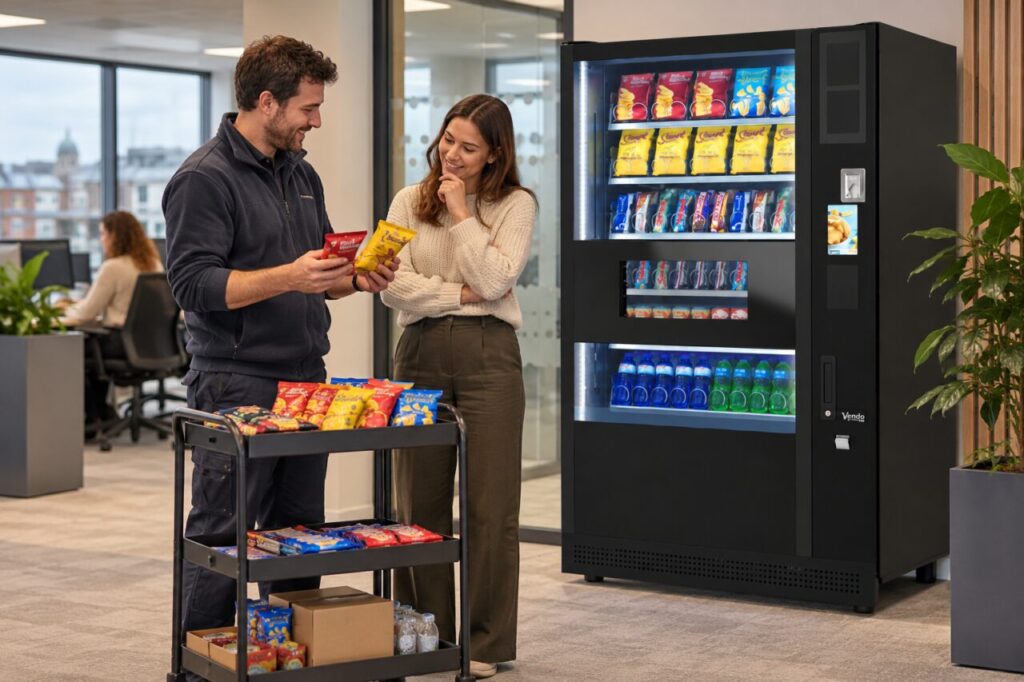
Translate requests into needs
Group the feedback by the occasion or preference behind it. Someone asking for another savoury option has a different need from someone who cannot find their usual drink after lunch. Keep specific product requests, but do not treat every brand name as a separate commitment. Ask the operator which suitable products could address the underlying need.
Record who uses the machine in broad terms and when the request arises. Avoid inferring demand from one enthusiastic suggestion alone. Equally, do not dismiss a small group’s practical requirement simply because its total purchases are lower. The range discussion should balance relevant choice, product suitability and the realities of the equipment and supply arrangement.
Check what additional lines displace
Ask the operator how the current configuration uses its available selections and stock capacity. An extra line may require reducing space for another product, changing the arrangement or using a different machine configuration. Do not assume that every new item can be added without consequences. Product dimensions and dispensing suitability must be checked for the actual equipment.
The vending equipment overview can support that discussion. The fully managed service information also describes reviewing products with the account manager. Keep the decision tied to your site’s agreed range and available options rather than interpreting a general range description as a promise that every requested pack can be supplied.
Define a small trial
Choose a limited number of suitable additions and state the question being tested. For example, does another savoury choice serve a gap that existing lines do not meet? Agree the trial period, review information and what happens to remaining stock. Avoid changing prices, refill timing and several unrelated products at the same time if that would make the result difficult to interpret.
Track availability as well as sales. A new line cannot be judged fairly if it was absent for much of the trial. Likewise, a familiar line selling less may have had less capacity after the change. Record those conditions before concluding that customers switched preferences. Use the operator’s available information and acknowledge any gaps in the evidence.
Review the whole range outcome
Ask whether the trial improved the customer experience and whether it created new stock problems. Did the new line attract useful purchases, or did it mostly divide the same demand across more products? Did reduced space for a popular item lead to more empty selections? These questions help distinguish a broader-looking display from a genuinely more useful offer.
Keep a successful addition, modify the trial or revert through the agreed operating process. Explain the decision to the site contact using observations rather than promises about universal popularity. A larger range can be worthwhile, but its value depends on relevance and availability together. The strongest outcome is a selection customers can understand and reliably use, not the largest possible number of product names.
Related guidance: A Vending Favourite Sells Out: Check Whether Customers Buy Another Selection.
Planning vending at your site? Contact the team with your location, equipment details and requirements.