
Vending Stock Written Off: Keep Damaged Goods Separate from Sales
When damaged vending stock leaves the saleable inventory, it has not become a sale. Keeping that distinction clear helps an operator understand both stock availability and the real cost of waste. Use the business’s approved stock adjustment process, with an identifiable reason and supporting record, rather than forcing the quantity through a sales entry to make the numbers match.
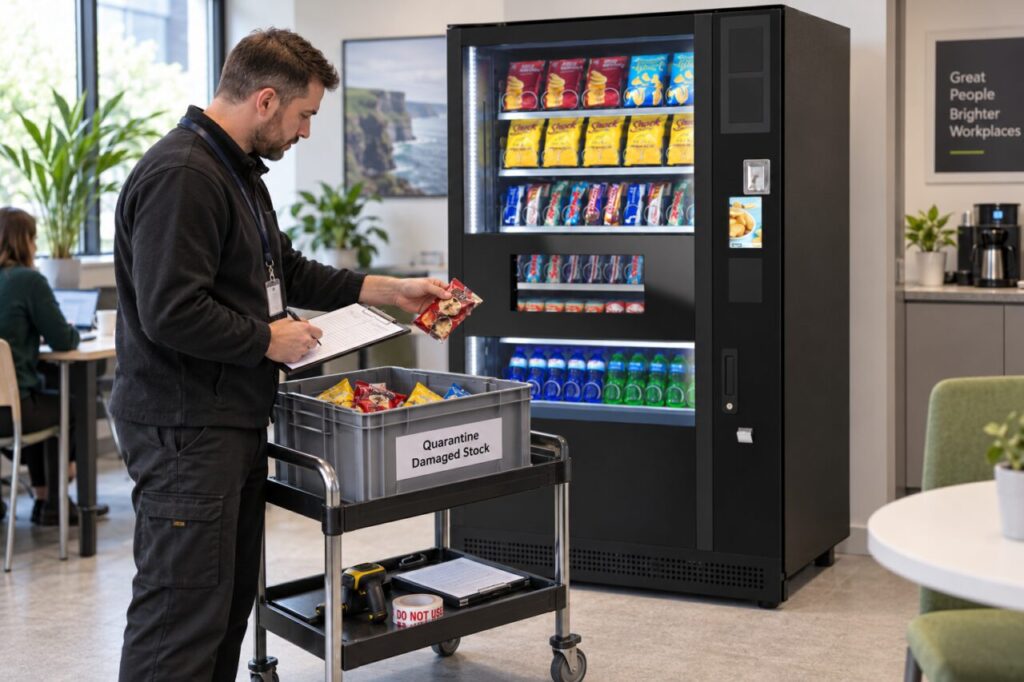
Separate the goods before changing the record
Identify the affected product, quantity and relevant stock location. Keep the goods apart from saleable stock under the business’s established procedure so they are not accidentally picked for a refill. Record the observed problem without making a technical or food-safety judgement beyond your role. Where the condition needs assessment, refer it to the responsible person.
Count actual units rather than assuming that every case contains its original quantity. Note the pack size and product variant, especially where similar wrappers share a storage area. If the stock came from a particular delivery or transfer, preserve that reference. The purpose is to make the movement explainable later, not to collect a large set of photographs or documents that cannot be connected to the affected units.
Use the correct type of adjustment
Follow the system and approval process the business uses for damaged or unsaleable goods. Record the reason, date and person responsible for the adjustment. If you do not have the necessary permission, request the authorised change rather than entering a fictitious sale or altering a purchase quantity. Those workarounds can make the inventory appear balanced while distorting other reports.
Keep the physical and administrative stages distinct. Goods awaiting a decision may need a different status from goods approved for disposal, depending on the business’s process. Make that status visible to colleagues. Do not assume that an inventory adjustment itself authorises disposal or determines the accounting treatment. The responsible operations and finance staff should apply the appropriate procedures to the documented event.
Track claims and credits separately
If the damage may relate to a supplier delivery, record any claim with the original order and delivery details. A stock write-off and a supplier credit are different events. The goods may already be unavailable for sale while the supplier is still reviewing the request. Do not count an expected credit as received simply because somebody has agreed to investigate it.
Keep updates connected to the same case: quantity reported, supplier response, collection if arranged and credit confirmation if issued. This helps avoid duplicate claims or a credit being missed during reconciliation. Where the supplier asks for further evidence, provide it through the agreed route and keep the request proportionate. The goal is a traceable resolution, not a parallel set of conflicting stock spreadsheets.
Use the record to improve operations
Review recurring losses by their recorded reason, product and stage in the process. Damage found on delivery raises a different question from damage discovered after repeated handling. Avoid assigning a cause from one incident alone. Look for a consistent pattern and agree a practical change that can be checked, such as a revised receiving check or a clearer storage arrangement.
For anyone developing a vending machine business, accurate stock records support more useful decisions than a sales total alone. Keep revenue, saleable stock and stock losses distinct when reviewing performance. A machine can appear busy while avoidable product losses weaken the result. Clear adjustment records help the operator see that difference and give finance the evidence needed for its own review without inventing customer purchases that never happened.
Discuss equipment and operating support for your vending business.
Related guidance: Damaged Vending Stock Deliveries: Track the Supplier Credit Separately.