
Vending Delivery Across a Pedestrian Courtyard: Agree the Route Before Arrival
A pedestrian courtyard can make a vending delivery look simple because there are no parked cars in the way. It may still contain steps, changes in surface, narrow gates, drainage channels and busy walking routes. Before a delivery date is confirmed, ask the delivery team to assess the whole approach from the vehicle position to the final machine location. A photograph of the entrance alone rarely describes the complete route.
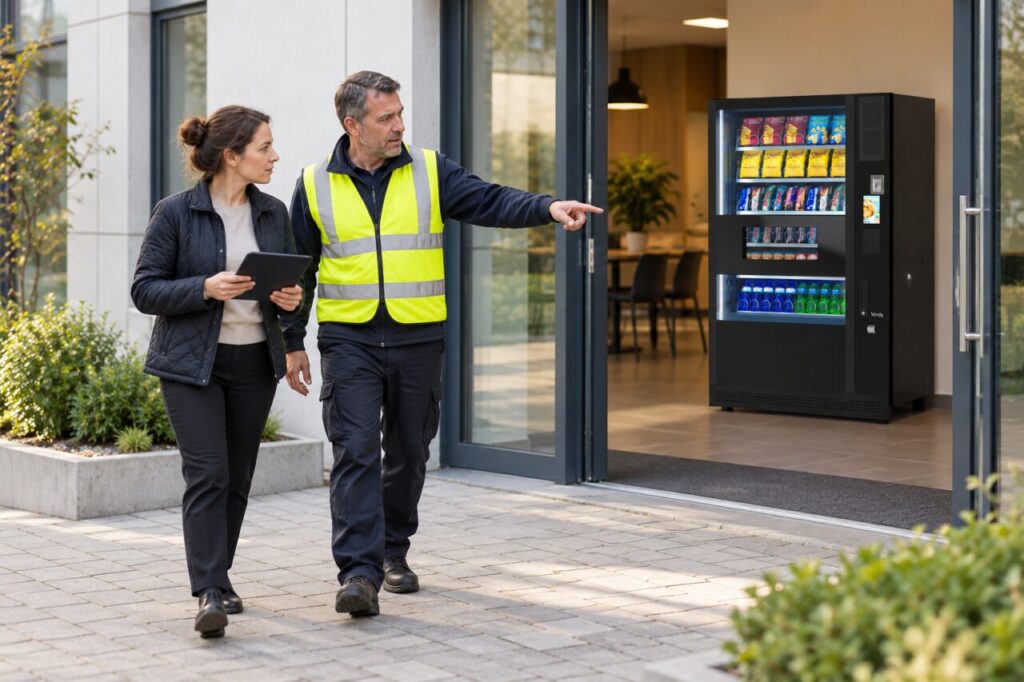
Describe the route continuously
Walk the proposed route with the person responsible for the building. Note where a vehicle can stop, where unloading would occur and how the equipment would reach the entrance. Include gates, thresholds, slopes and turns. Supply measurements requested by the delivery team rather than assuming that a wide courtyard means there is sufficient working space at every point.
Take a sequence of photographs that makes the route understandable. Label their order and explain any part that is outside the site owner’s control. A shared courtyard may have its own booking requirements or restrictions. Pass these to the delivery coordinator early so that the plan does not depend on an informal promise from someone who cannot authorise access.
Keep public access in the plan
Describe when staff, visitors or residents normally cross the courtyard. Ask the site team and delivery provider how pedestrian access will be managed during the work. Do not improvise a route through occupied space when the vehicle arrives. The people carrying out the delivery should determine the appropriate handling method and any necessary arrangements for the equipment and surface.
Keep emergency routes and building access requirements within the site’s normal management process. If an alternative entrance will be used temporarily, confirm who communicates that change. A delivery notice should give useful timing and contact information without promising a precise completion time that the delivery team has not agreed.
Check the handover at the doorway
An outdoor route assessment should connect with the indoor assessment. Confirm the usable door opening, threshold and turning space beyond it. Account for doors that cannot be held open in the way a photograph suggests. Identify who can provide authorised access on the day and what happens if the nominated contact is delayed.
When discussing vending equipment for an Irish site, provide the access information alongside the intended machine location. Equipment selection and delivery planning need to fit together. Do not assume that a smaller-looking cabinet can be moved by site staff or that delivery includes every access arrangement; obtain the actual scope from the supplier.
Reconfirm conditions before arrival
Check whether landscaping, scaffolding, events or weather-related restrictions have changed the planned route. Tell the coordinator about changes promptly, with updated photographs where useful. Avoid assuring the driver that a new obstruction can be removed unless the responsible person has confirmed it. The plan should describe what will actually be available when the vehicle reaches the site.
On the day, have the agreed contact meet the team and identify the route. If conditions differ materially, let the delivery professionals reassess before unloading proceeds. Record any revised arrangement and communicate a new expected handover time to the building team. Careful preparation is most useful when it supports a clear decision at arrival, rather than pressuring everyone to continue with an unsuitable route.
Related guidance: Vending Delivery Routes: Agree Protection for Finished Floors.
Planning vending at your site? Contact the team with your location, equipment details and requirements.