
Vending Delivery by Goods Lift: Confirm the Booking and Handling Plan
An upstairs vending position may look straightforward on a floor plan, while the delivery depends on a shared goods lift. Treat that lift as a separate part of the delivery plan. The building contact and delivery team need to agree that the route and equipment are suitable before setting the installation date.
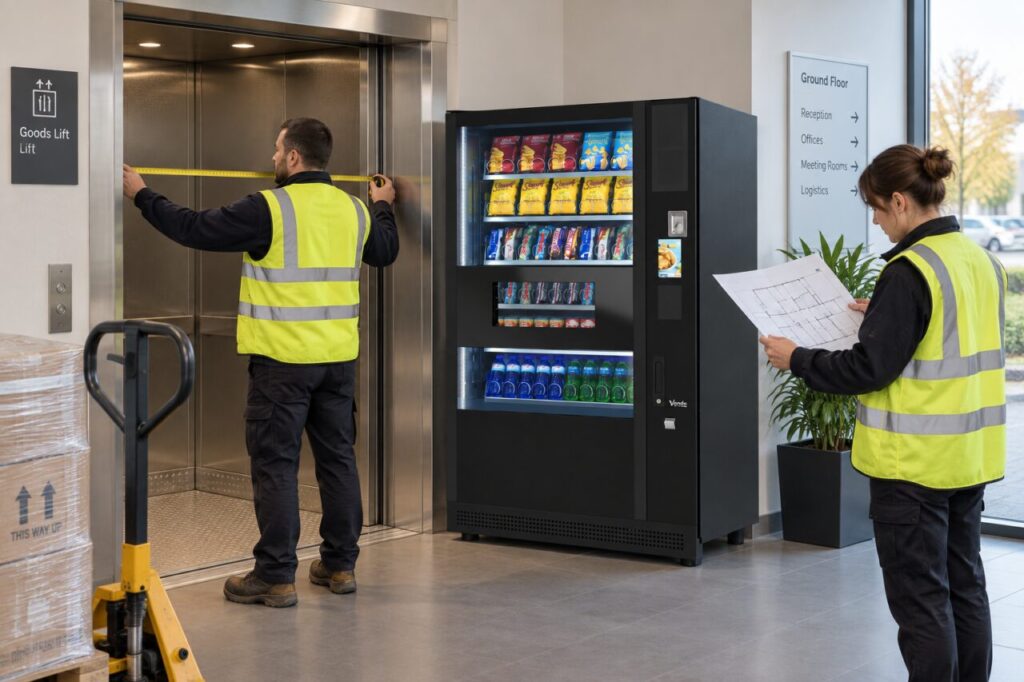
This article is a planning checklist, not a method for moving heavy machinery. The handling team must assess the actual load, route and equipment. Site staff should provide accurate information and access rather than improvise a move when the delivery arrives.
Identify the exact lift and route
Confirm which lift the building permits for the delivery and how the machine reaches it from the unloading point. Include the route from the lift on the destination floor to the final position. A suitable lift does not resolve an unsuitable doorway, turn or threshold elsewhere in the journey.
Provide current drawings or photographs requested by the delivery team. Our guide to checking the delivery route can support the wider discussion. Flag any temporary works or restrictions that are not obvious from a standard building plan.
Obtain the building's information
Ask the building representative for the relevant documented lift limits and access requirements. Pass that information to the delivery team together with the proposed equipment details. Do not estimate capacity from the lift’s appearance or assume that passenger access means machinery delivery is permitted.
The assessment needs to account for the actual delivery arrangement, including handling equipment where relevant. Leave the interpretation and suitability decision to the responsible professionals. If information is missing or inconsistent, resolve it before confirming a move rather than treating uncertainty as approval.
Book enough time for the agreed work
Clarify the permitted delivery window and whether the lift must be reserved. A shared building may have other deliveries or operational restrictions. Ask how access is controlled and who will be available to provide any required key, escort or authorised assistance.
Include time for the agreed unloading and route preparation without inventing a universal duration. The delivery team should advise what they need for this site. Tell other affected building contacts about the booking through the normal coordination process so the lift is available when the team arrives.
Agree what happens if access changes
Record whom the delivery team should contact if the lift is unavailable or the route differs from the agreed plan. Do not make stairs or another lift the automatic fallback. Any alternative needs a fresh suitability assessment and agreement from the responsible parties.
If a disruption is known before dispatch, communicate it promptly. A revised appointment may be more practical than an arrival that cannot proceed. Keep the supplier, receiving contact and installer aligned, especially where different organisations are responsible for delivery and commissioning.
Reconfirm before the delivery day
Shortly before the appointment, confirm that the booked lift, route and access contact remain available. Check for new furniture, storage or building works along the route. This is a confirmation of the agreed conditions, not an invitation for untrained staff to begin moving obstacles or equipment unsafely.
Include the lift plan when enquiring about vending equipment in Ireland. At handover, retain the final access information for future authorised servicing or eventual collection, while recognising that a later move will still need its own assessment of current conditions.
To plan a delivery proposal, contact the team with the intended floor and the building access information available.