
Goods Lift Unavailable on Vending Delivery Day: Agree the Next Step
A delivery plan can be correct when booked and unusable when the vehicle arrives. If the goods lift is unavailable, tell the delivery team before unloading begins. The missing lift may affect the approved route, handling arrangements and installation timetable. Treat this as a change requiring a decision by the responsible people, rather than a minor inconvenience that site staff should solve by finding another way upstairs.
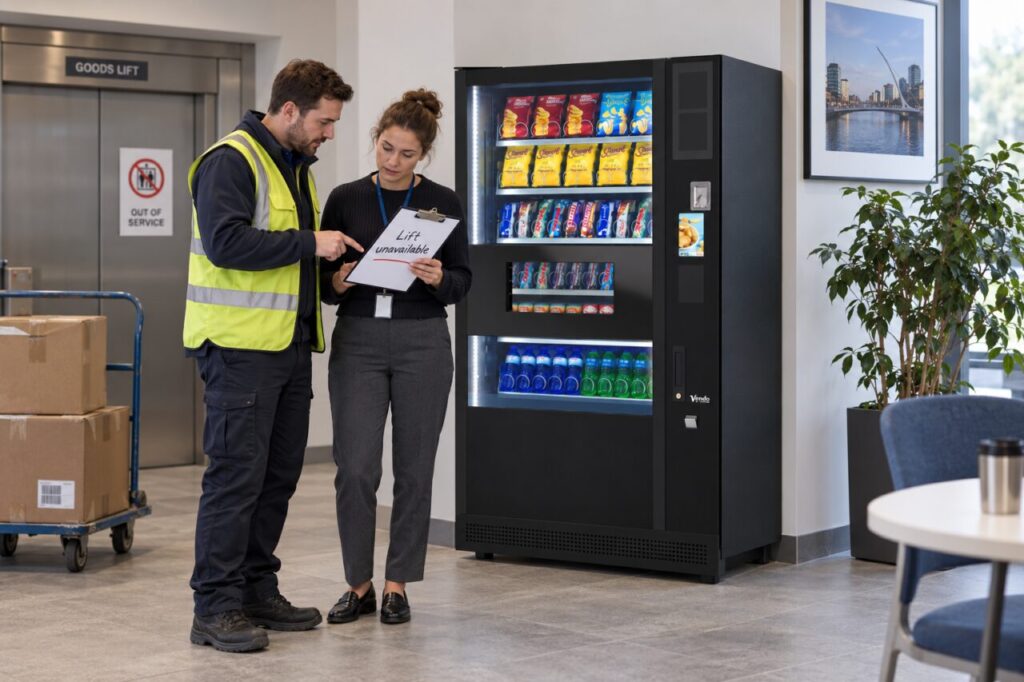
Establish what has changed
Ask the building contact whether the lift is temporarily occupied, out of service or unavailable for the whole agreed window. Record the information you actually have, including who provided it. Avoid giving the driver an estimated reopening time based on a rumour. An uncertain delay and a confirmed cancellation lead to different planning decisions, so make the distinction clear from the first call.
Check whether the original booking can still be honoured later that day. The building team needs to confirm access, while the delivery provider needs to confirm its availability. Neither party can make that commitment for the other. Explain any related restrictions, such as reception closing or an escort leaving, because a later lift slot alone may not make the complete delivery route workable.
Do not improvise an alternative move
Refer any proposed alternative route to the delivery provider and the person responsible for the premises. Another lift, a staircase or a different entrance may have requirements that were not assessed for this equipment. Site staff should not decide that a route is acceptable simply because its doorway looks wide enough. The provider should determine what information and assessment are needed before a revised move is authorised.
Keep the equipment in the position agreed with the delivery team while that decision is made. Do not offer to push, tilt or dismantle the machine to save time. If unloading has not started, ask the provider whether it should remain on the vehicle. Where temporary holding is considered, establish who approves the location and how the equipment will be protected and accounted for.
Agree the practical consequences
Ask which options are available: a confirmed later appointment, a different assessed route or a rescheduled delivery. Compare the complete requirements for each option, including the necessary staff and access. Keep any discussion of additional charges separate from assumptions. Request confirmation of the applicable arrangement and the person authorised to approve it before anyone commits the site to a revised service.
Update other people whose work depends on the delivery. An installer, IT contact or workplace host may otherwise wait for equipment that cannot reach its destination. Explain the confirmed change and the next decision point. Avoid announcing a new launch time while the route remains unresolved; doing so can create pressure to bypass the very checks that made the original installation plan workable.
Close the revised booking clearly
Record the agreed date, access window, responsible contacts and any changed instructions in one updated booking. Mark earlier information as superseded so the next delivery does not repeat the same misunderstanding. Ask both the building and delivery contacts to confirm their parts of the plan. Keep the reason for the change factual, especially where more than one contractor or building team is involved.
After delivery, retain the revised record with the installation paperwork. If lift availability is a recurring restriction, raise it when planning future service or collection visits. When discussing vending equipment for your premises, include the actual internal delivery route from the outset. A clear response to a changed lift arrangement protects the agreed process and gives everyone a realistic next step.
Contact our team to discuss your installation requirements.
Related guidance: Vending Delivery by Goods Lift: Confirm the Booking and Handling Plan.