
Vending Delivery Dimensions: Ask About the Packed Machine as Well as the Cabinet
The cabinet dimensions in a vending quotation help you plan its final position. They may not describe the shape that arrives at your loading entrance. Packaging, a pallet and the handling equipment can all change the space needed during delivery. Before approving an order for a tight route, ask the supplier to distinguish the operating machine from the complete delivery unit. That distinction can prevent an otherwise careful measurement exercise from answering the wrong question.
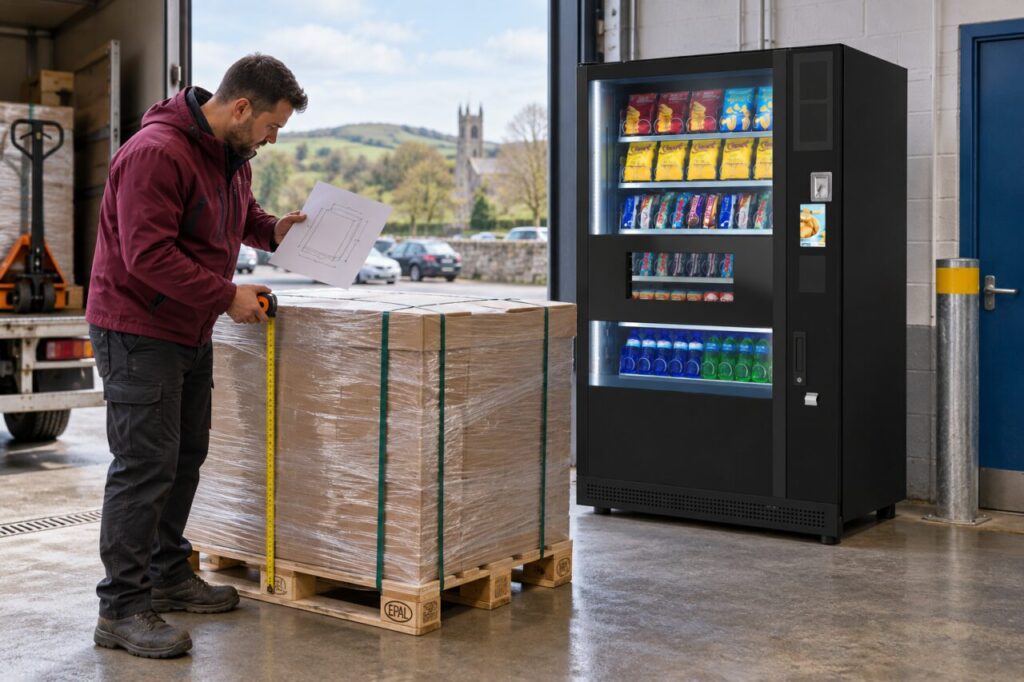
Request two sets of dimensions
Ask for the dimensions of the quoted cabinet and the packed delivery unit, clearly labelled. Confirm which figures include protruding parts and which relate only to the main enclosure. If the supplier has not yet confirmed the transport packaging, record that as an outstanding delivery detail. Do not fill the gap with dimensions from a different model or assume every machine travels on the same pallet.
Use the packed measurements when discussing the receiving area. Use the installed measurements, together with the supplier’s required working space, when planning the final position. These are related but different checks. A delivery can enter a building successfully yet still lack a suitable place to remove its packaging, turn the load or prepare the next stage of movement.
Identify where unpacking is intended
Agree whether the equipment will remain packed through the route or be unpacked at a designated point. That decision belongs with the supplier and handling team, based on their method. Do not assume removing packaging at the first narrow door solves an access problem. It may expose the cabinet before the team has reached an area where it can be handled appropriately.
Describe the proposed unpacking space with practical detail: indoor or outdoor, level or sloping, shared with other deliveries, and available for how long. Note any restriction on leaving packaging there. Ask who provides the labour and equipment for unpacking, and who takes responsibility for the packaging afterwards. Put those answers into the delivery plan rather than leaving them to a receptionist on the day.
Review turns and handling equipment
Send the route measurements to the delivery team with photographs of corners and door approaches. A straight opening width does not describe a tight turn immediately beyond it. Nor does a cabinet measurement describe the working space needed by a pallet truck or other handling equipment. Ask the team to assess the whole route using their proposed method, including any lift journey.
If an alternative route is suggested, check it with the building contact before accepting it. A service corridor may have different opening hours or an access booking requirement. Keep the agreed route in the same document as the packed dimensions. This makes it less likely that someone will combine one route’s measurements with another route’s assumptions when the final booking is made.
Close the delivery question before launch
Make route approval a visible item in the order checklist. Record who confirmed it, what equipment and packaging were assessed, and whether any site work remains. If the machine specification changes, ask whether the packed dimensions or handling plan change too. A smaller-looking cabinet is not enough evidence to carry forward a previous delivery approval without checking the relevant details.
Bring this information to a vending machine buying discussion along with the final location and intended product range. Keep staff launch notices provisional until access arrangements are confirmed. The benefit is not a larger stack of paperwork: it is a delivery plan that describes the load actually arriving and the sequence needed to get it into service.
Ask us to review your delivery requirements.
Related guidance: Vending Delivery Routes: Agree Protection for Finished Floors.