Vending Delivery Arrives in Two Parts: Reconcile the Equipment Before Signing Off
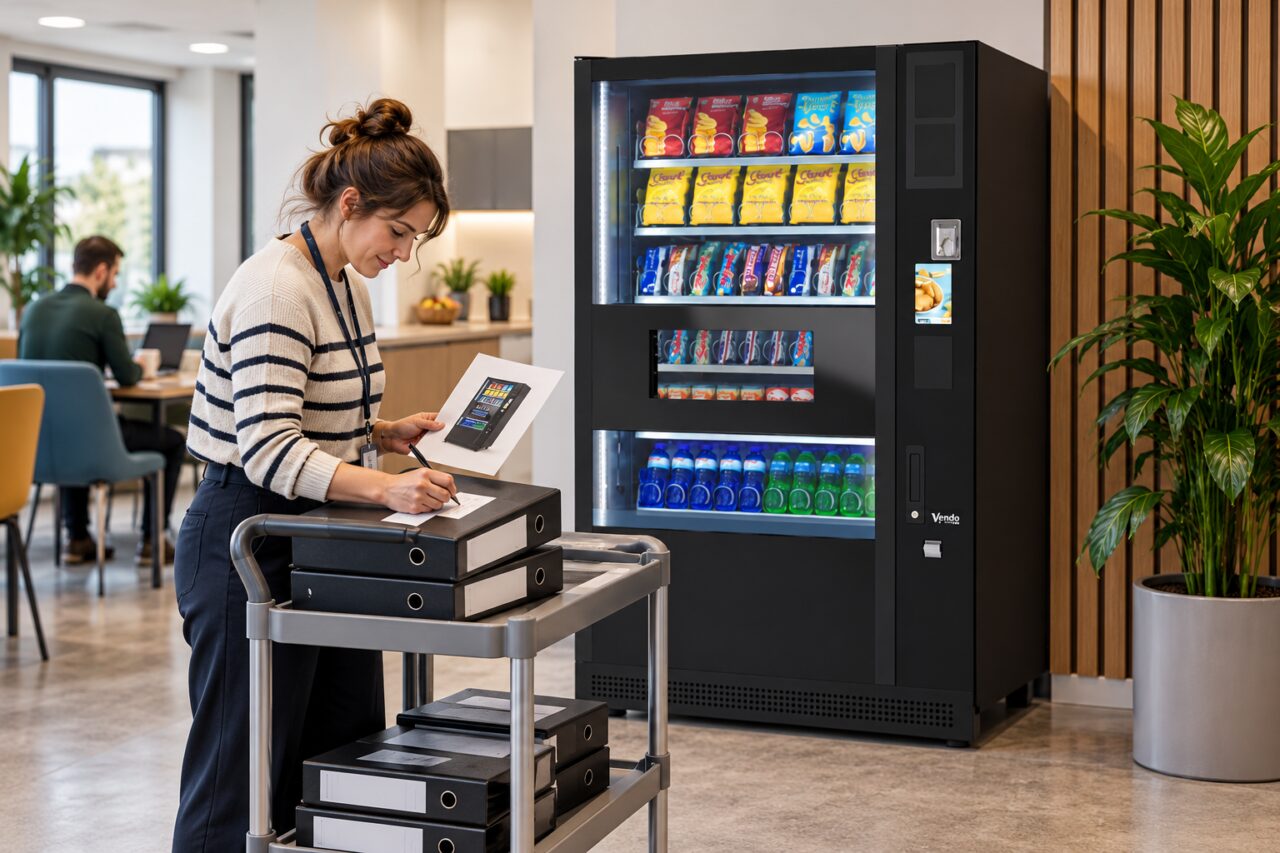
A vending delivery can arrive as a machine followed by an accessory, payment component or separate package. Receiving the cabinet does not necessarily mean the entire order is complete. Before agreeing that delivery and installation are finished, reconcile what arrived against the accepted quotation and the supplier’s delivery schedule.

This is a practical receiving check, not a reason to refuse every split delivery. Separate shipments can be planned. The important point is that the site, supplier and installer share the same understanding of what has arrived, what remains outstanding and whether the equipment can safely enter service without the remaining item.
Prepare one complete order list
Ask the supplier to identify the items expected in each delivery. Use the order reference, description, quantity and expected date. If the wording on the delivery note differs from the quotation, ask for the relationship to be explained. An unfamiliar abbreviation should not be treated as proof that an accessory is missing or included.
Name the person who will receive each shipment and where separate packages should be held. A parcel delivered to reception can otherwise become detached from equipment installed elsewhere. Keep the supplier’s instructions with the package. Do not open, fit or connect unfamiliar components merely to establish what they do or whether they appear compatible.
Record receipt separately from acceptance
Distinguish physical receipt, condition inspection, installation and operational acceptance in your notes. These are different events even when they happen on the same day. If a document combines them, read its wording and ask the supplier how an outstanding item should be recorded before signing. Do not add assurances you have not actually checked.
Record visible damage, unexpected quantities or missing packages promptly through the agreed process. Photographs can help identify packaging and labels, but avoid unnecessary personal information. Retain the relevant notes and packaging as instructed. Your records should show what was observed at receipt rather than a guess about when or how a problem occurred.
Ask what the missing item prevents
Some outstanding items may affect a convenience feature; others may prevent installation or the intended payment arrangement. Ask the responsible supplier or installer to explain the consequence for this exact configuration. Do not assume that a cabinet which powers on is ready for customer use, or that a temporary workaround is authorised.
For example, a separate component might require fitting, configuration and a later test. Agree who will perform those tasks and whether another visit is needed. A vending equipment enquiry should describe any deadline for opening the service so the proposal can address the complete handover rather than cabinet delivery alone.
Close the outstanding list deliberately
Give every outstanding item an owner and a next update date. Keep the original order reference in follow-up messages, and ask whether the expected date is confirmed or provisional. If the delivery plan changes, update the shared list rather than relying on separate conversations between reception, facilities and the supplier.
When the final package arrives, match it to the outstanding line and confirm any installation or testing still required. Keep the completion evidence with the order documents. The useful endpoint is a clear record that the agreed equipment and tasks are complete, with unresolved points still visible rather than hidden by a signed delivery docket.
For a proposal suited to your site, contact our team with the location, expected users and your main requirements.
Related guidance: Vending Delivery Across a Pedestrian Courtyard: Agree the Route Before Arrival; Vending Delivery Delayed? Reset the Launch Plan Before Announcing a New Date.