
Vending Delivery Vehicles Face a Height Restriction: Confirm the Arrival Route
A vending delivery can reach the correct address and still be unable to enter the agreed unloading area. Height barriers, covered entrances and low structures need to be considered before the vehicle arrives. Give the delivery team accurate route information and ask them to confirm the vehicle and unloading arrangement they intend to use.
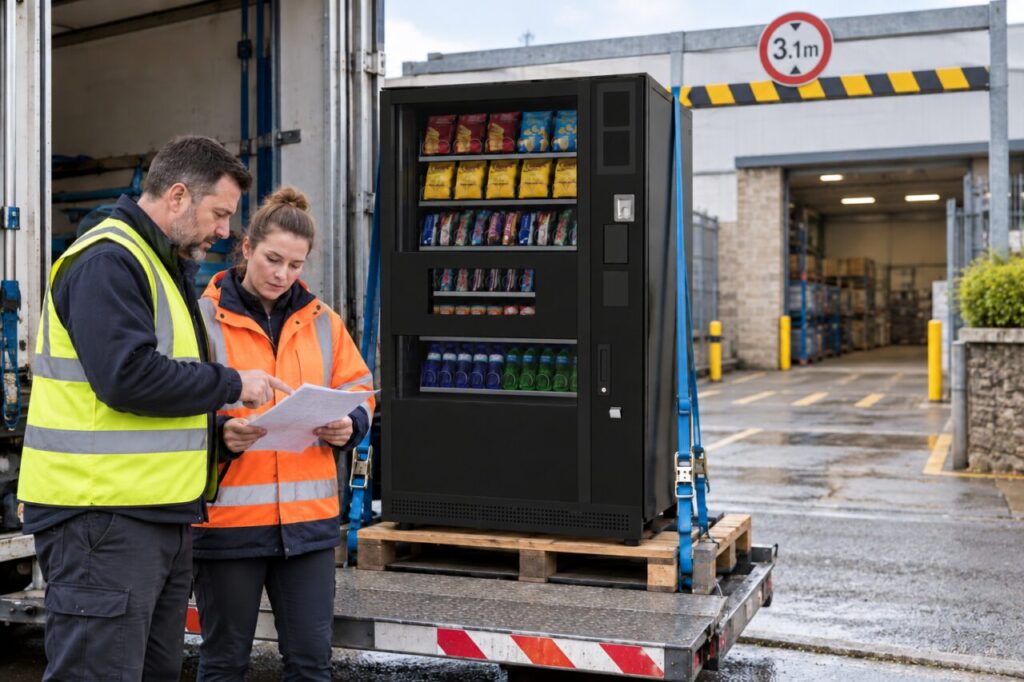
The machine’s height alone does not answer this question. The vehicle, any load or equipment above it, the route and the unloading method all matter. Treat the route review as a discussion with the professional delivery team, rather than a calculation that reception staff are expected to approve on the day.
Describe the complete arrival route
Identify the entrance the driver should use, including any barrier, canopy or internal access road before the unloading point. An address pin can lead to a visitor car park that is unsuitable for a delivery vehicle. Send a clear location description and photographs of relevant signs through the team’s agreed communication method.
Ask the venue’s responsible facilities contact to confirm the available route information. Do not guess a clearance from a photograph or assume an old note still applies after building work. If a measurement or site assessment is needed, arrange it through appropriately competent people before booking a vehicle whose access depends on that information.
Let the carrier confirm suitability
Provide the restriction details to the carrier and ask for confirmation against the actual proposed vehicle. A previous delivery by a smaller van is not evidence that the next vehicle can follow the same route. Record who checked the information and whether the carrier requires any further survey or access arrangement.
Keep vehicle access separate from the machine’s journey inside the premises. A vehicle may fit under the entrance while the unloading position is unsuitable for the equipment or handling method. The delivery team should consider both stages, including the transition between unloading and the building entrance, as part of its own safe working plan.
Agree an alternative before arrival
Where the normal entrance is unsuitable, discuss another approved unloading location with facilities and the carrier. Check who controls that space, when it is available and how the delivery team will complete the remaining journey. Moving the unloading point is a change to the plan, not merely a different instruction for the satnav.
Do not improvise by removing barriers, driving across restricted areas or asking staff to help move a heavy cabinet manually. Any alternative needs the relevant venue permissions and a suitable professional handling arrangement. If those conditions cannot be confirmed, agree a revised delivery plan rather than pressuring the driver to make an uncertain route work.
Brief the people receiving the delivery
Give reception or security the agreed entrance, contact name and arrival window. Explain which person can resolve an access question and which changes require the carrier’s agreement. Keep the instructions concise enough to use when the driver calls, while retaining the detailed route assessment with the delivery booking.
On arrival, stop and check if conditions differ from the agreed plan. Temporary scaffolding, parked vehicles or a changed barrier can invalidate an earlier arrangement. Record the issue and contact the responsible team. A successful delivery depends on a usable route on that day, not simply on having obtained a confirmation several weeks earlier.
For help matching the service to your site, explore Vending-Machines.ie or send an enquiry describing your requirements.
Related guidance: Vending Delivery Photos Show a Different Cabinet Condition: Preserve the Before-and-After Record.