
Vending Delivery in Wet Weather: Plan a Protected Receiving Area
A wet delivery day creates questions that should be settled before the vehicle arrives. Where can the equipment be received under cover, who controls the entrance and what happens if the approved route is unsuitable? Discuss those details with the supplier and the building contact. A machine intended for an indoor workplace should not be treated as suitable for outdoor exposure simply because it is still in delivery packaging.
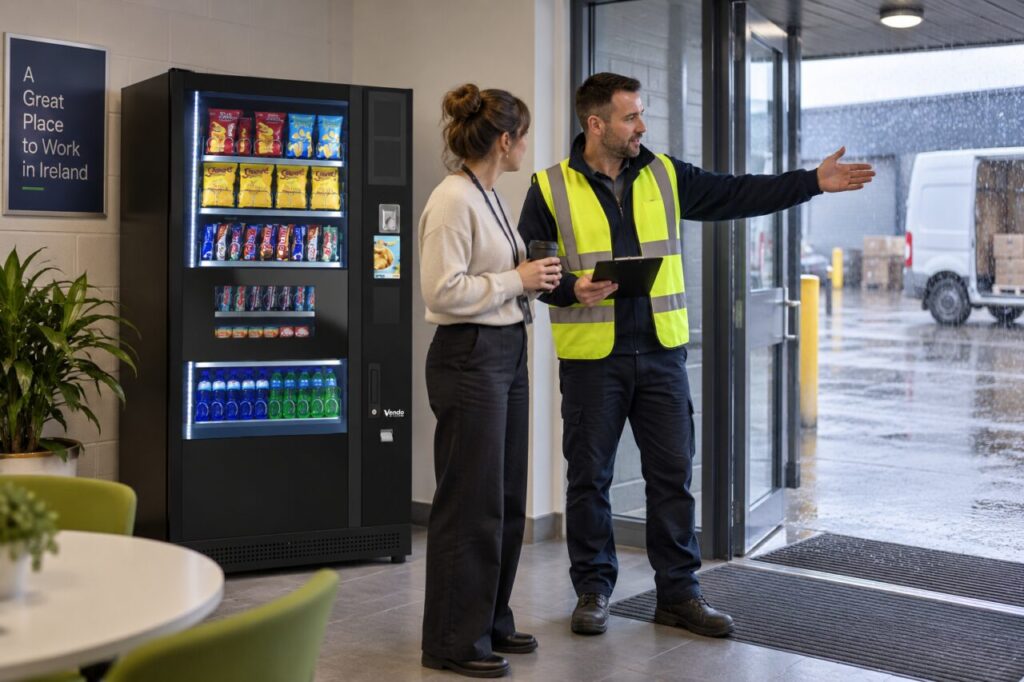
Describe the receiving route accurately
Tell the delivery team where the covered receiving point is and whether the route includes an uncovered section. Provide current photographs or a site plan through the agreed channel. Distinguish the vehicle stopping point from the place where equipment can safely wait. The driver should not have to discover that the only dry space is behind a locked door after unloading arrangements have begun.
Ask the supplier to confirm the handling and protection arrangements appropriate to the actual machine and packaging. Do not improvise lifting, covering or electrical procedures from general online advice. The competent delivery team should assess the task using the manufacturer’s requirements and the site conditions. Record any assumptions about access, assistance or covered space in the delivery booking so everyone is planning the same visit.
Prepare the building contact
Nominate a contact who can meet the team and obtain access to the agreed receiving area. Give that person the booking reference and the correct supplier contact. If reception changes shifts around arrival time, hand over those details. A dry lobby is not a workable receiving plan if nobody present has authority to open it or keep the agreed space available.
Keep normal customer routes and the receiving operation coordinated through the site’s established arrangements. Tell the delivery team about relevant restrictions and changes before arrival. Do not leave equipment or packaging in a circulation route just to get it out of the rain. If the planned space becomes unavailable, ask the responsible people to reassess the arrangement rather than selecting a new position casually.
Agree when the visit should be paused
Ask who can decide that conditions prevent the planned delivery from proceeding. Confirm the contact route for that decision and how the site will be told. Avoid promising that a delivery will go ahead in every condition. A clear escalation route allows the supplier and building team to assess a problem without staff feeling pressured to invent a handling solution to preserve the original timetable.
Discuss how a postponement would affect installation and customer launch plans. Transport arrival and readiness for use are separate milestones. If equipment is received but commissioning cannot proceed, follow the supplier’s holding instructions and identify the person responsible for the next appointment. Do not switch on equipment simply because it has reached the intended room or because customers have already been told it is arriving.
Record the condition at handover
Use the agreed receiving checks to note visible packaging or equipment concerns, including when and where they were noticed. Photographs can support a factual record where appropriate. Describe observations without making an unsupported diagnosis about internal damage. Ask the supplier how to proceed if a concern remains, and keep the report connected to the delivery reference rather than starting several unrelated messages.
When planning vending installation in Ireland, include wet-weather receiving in the access discussion. The useful outcome is a protected agreed route, an available contact and a known decision process if conditions change. It is a small part of the delivery brief, but it prevents the day’s weather from becoming an unplanned test of equipment handling or building access arrangements.
Discuss the delivery route before confirming the visit.
Related guidance: Vending Delivery Routes: Agree Protection for Finished Floors.