
Vending Demonstrations: Test the Least Convenient Pack, Not Just the Easiest
A vending demonstration is most useful when it represents the range you intend to offer. If every sample is the easiest shape in the cupboard, the session may leave your important product questions unanswered. Choose a small set of representative packs, including the one whose size or packaging gives you most reason to ask about suitability. The supplier should decide how those products can be assessed safely in the proposed configuration.
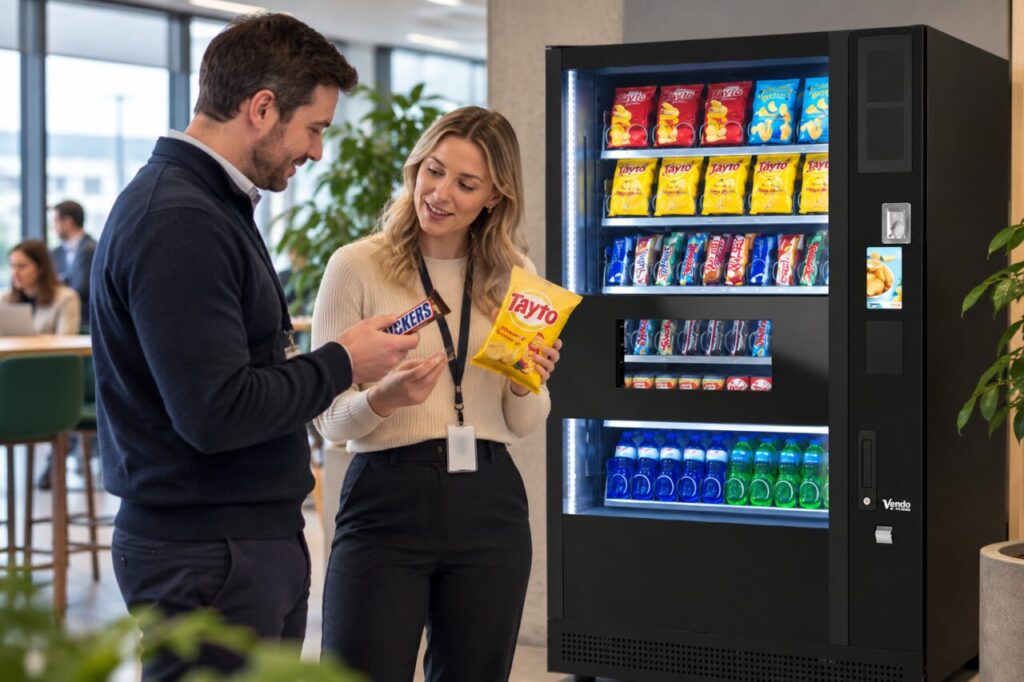
Explain why each sample matters
Start with the customer need behind the product. Perhaps staff want a particular bar format, or the proposed range includes a packet that differs noticeably from the others. Describe that need before discussing a cabinet. It gives the supplier room to explain suitable options without assuming that the first product or machine combination must work.
Bring the actual saleable pack wherever practical, rather than a photograph or an outer carton. Record its name, size and packaging version. Two items with similar branding can be physically different, and an illustration may not communicate a flexible wrapper accurately. Agree the sample list in advance so the demonstration does not become an improvised experiment with equipment that was prepared for another range.
Agree the test with the supplier
Ask what configuration is being demonstrated and whether it matches the proposed order. The supplier should explain any preparation or limitations relevant to the chosen products. Do not ask to force unsuitable items into a selection, bypass a mechanism or improvise adjustments. A clear explanation that a particular pack is unsuitable is useful information for the buying decision.
Define what you want to observe: the customer identifies the product, selects it through the supported process and receives it at the collection point. Include the condition of the pack after collection. Keep those observations separate from claims about every future vend. A short demonstration can answer a specific question without proving unlimited reliability under every possible operating condition.
Observe the awkward sample without changing the question
Follow the selected pack through the agreed demonstration and record the result. If the supplier changes the setup, note that change rather than combining the outcomes as though nothing differed. If an alternative product is suggested, identify it clearly and explain whether it meets the original customer need. An easier substitute is only useful if you are willing to stock it.
Keep the discussion practical. Ask whether the demonstrated arrangement affects the rest of your intended range, the number of positions available or the way staff replenish the machine. Do not infer that a feature shown on one cabinet is included in another. Review the written proposal alongside the vending options under consideration before final approval.
Leave with a usable decision record
Write down the samples, equipment identity, demonstrated configuration and observed outcomes. List any products still awaiting confirmation. A photograph can support this record, but it should not replace a written explanation of what was tested. Ask the supplier to correct misunderstandings while everyone can still refer to the same demonstration.
Use the record to decide whether to keep the product, choose an agreed alternative or revise the machine proposal. If the pack changes before launch, raise that change rather than assuming the earlier result still answers the question. This approach makes a demonstration a focused purchasing tool and leaves fewer product-fit assumptions to be discovered after installation.
Use our contact page to discuss your intended range.
Related guidance: Buying a Vending Machine: Check What the Demonstration Actually Proves.