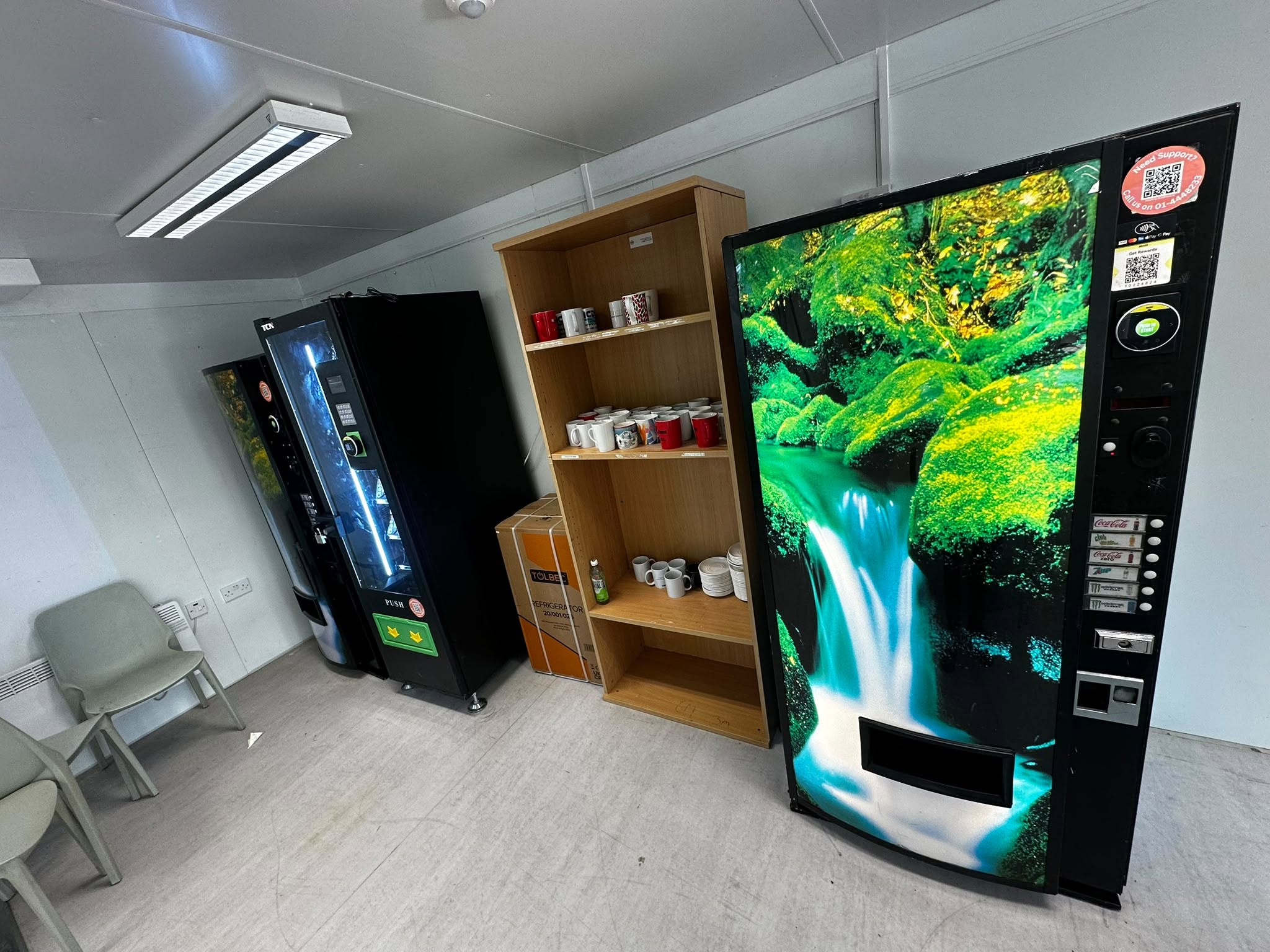
A Vending Demonstration Is Too Quiet to Judge Noise: Ask for a Realistic Listening Check
A vending demonstration in an empty showroom may tell you little about how the equipment will sound beside desks, a meeting room or a quiet reception. The useful question is whether normal operating sounds suit the intended location. Ask for a realistic listening check before treating a brief demonstration as evidence of acoustic suitability.

Explain where people will sit or work relative to the proposed machine. Mention whether conversations, phone calls or quiet concentration are important nearby. A supplier cannot assess that context from the machine model alone. A simple room sketch and a description of normal activity can make the discussion more concrete without claiming a measured noise level.
Identify the operating conditions
Ask which sounds can occur during ordinary use and which conditions the demonstration represents. A machine standing idle is not demonstrating the sound of a product being delivered. Likewise, a short purchase may not reveal every periodic operating sound. Ask the demonstrator to explain what has and has not been heard during the appointment.
Keep the comparison consistent. If you listen to two options, note whether both are stocked, powered and operating under comparable conditions. Do not interpret a switched-off display unit as the quieter choice. Record the particular configuration being demonstrated, because a general model name may not describe everything included in the proposed equipment.
Listen from the user's position
With the host’s permission, stand or sit where a nearby employee would normally work. Listen while another person follows the ordinary customer purchase sequence. Consider the character of the sound as well as its apparent volume: a brief product landing and a continuing background sound may affect a quiet room differently.
Do not rely on a phone recording as a calibrated measurement. Microphone processing, playback volume and the room itself can alter the impression. A recording can help explain which sound you mean, provided recording is permitted, but it should not be used to invent a decibel figure or prove compliance with a specification.
Discuss the actual room
Ask how the proposed position differs from the demonstration space. Nearby hard surfaces, partitions and the distance to occupied desks may change what users notice. Avoid improvising an enclosure or moving equipment tightly against furniture to reduce sound; the installation still needs to meet the supplier’s requirements for access and operating clearances.
When considering vending equipment for an Irish workplace, explain any acoustic concern during the site assessment. Ask whether a different approved location would address it. If a measured acoustic requirement applies to your project, obtain suitable professional advice and manufacturer information rather than substituting a subjective showroom impression for that requirement.
Record what remains uncertain
Your demonstration notes should identify the equipment, the activities observed, the listening position and the relevant room conditions. State any limitations plainly. For example, “purchase cycle heard from an adjacent chair; other operating cycles not observed” is more useful than a broad statement that the machine is silent or noisy in all circumstances.
Before ordering, agree how any unresolved concern will be assessed and who will confirm the proposed location. Do not assume an informal listening check creates a return right or a performance guarantee. The aim is to raise the issue early, ask precise questions and avoid discovering after installation that a quiet workspace has different needs from the showroom.
Related guidance: A Vending Machine Sounds Different: What Site Staff Should Record.
For help assessing your site, contact Vending-Machines.ie.