
Snack Vending Ranges: Avoid Mistaking One Popular Flavour for a Whole Category
One popular snack flavour can make a category look stronger than it really is. If most purchases come from a single item, adding several similar flavours may not produce the same result. Review the exact products and their availability before expanding the range, and treat a category-level conclusion as something to test rather than an automatic answer.
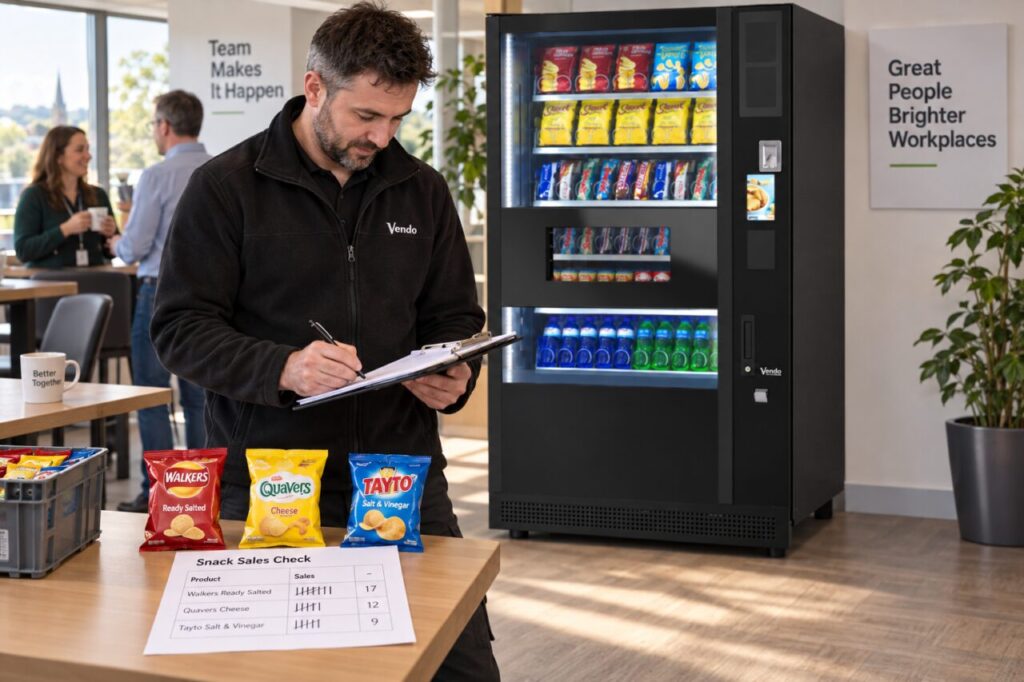
Start with individual products
Use the most reliable item-level information available to the operator. Keep flavour and pack size distinct where they identify different products. A broad entry such as crisps can hide a strong seller and several weaker alternatives. If the records cannot separate them, state that limitation rather than presenting the category total as evidence for every pack in it.
Compare the information with the actual vending range. Check whether the products were offered for comparable periods and whether one was repeatedly unavailable. A lower purchase count for an item that was seldom stocked does not establish weaker customer preference. Availability, range duration and customer exposure all affect what the observed numbers can reasonably tell you.
Look for a clear decision question
Decide whether the purpose is to protect availability of a popular item, introduce variety or replace an underperforming selection. These are different decisions. A request for more choice does not necessarily require reducing the space given to the established seller. Discuss the practical options with the operator, including equipment suitability and the site’s intended balance of products.
Ask for specific feedback when people mention the category. Which flavour or pack do they want, and what do they currently choose instead? A small number of comments is useful qualitative evidence, not a measured forecast for the whole site. Keep requests separate from actual purchases and avoid treating the most vocal preference as representative of every customer.
Test one change you can interpret
Agree a limited trial with a clear purpose and review point. Record the new item, the selection it replaces or the additional space it uses, and any other meaningful range change at the same time. If several variables change together, the result becomes harder to interpret. Keep the trial simple enough to explain to the site contact afterwards.
Confirm the exact pack is suitable through the operator’s normal process. Flavours within one brand can still arrive in different packaging or sizes. Do not assume the existing machine arrangement is appropriate without checking. Keep the customer-facing product information aligned with the trial item so any purchase data relates to a clearly identified choice rather than a confusing substitution.
The guide to recording why a trial product was removed helps preserve the result. A product may leave because of supply or packaging difficulties rather than low demand. Record those reasons separately, so a later range review does not incorrectly conclude that the category or flavour was rejected by customers.
Review the mix, not just the winner
Look at the trial item alongside the established seller and the wider range. If the new flavour gains purchases while another loses them, the change may represent switching rather than additional demand. Without suitable data, describe that as a possibility. Do not claim increased revenue or customer satisfaction simply because the new pack sold at least once.
Consider the operational cost of variety as well as the appeal of choice. More distinct products can create additional ordering and stock-management work. Ask the operator what arrangement is practical for the site rather than assigning an invented financial value to that complexity. A smaller range with reliable availability may meet the need better than a broad but inconsistent offer.
Keep the final decision specific: retain the successful flavour, continue a trial, replace an item or gather better evidence. Avoid turning a local observation into a universal statement about what all vending customers prefer. The useful result is a range decision grounded in the site’s actual products, availability and feedback, with the uncertainty honestly recorded.