
Vending Glass Has a New Scratch: Report the Mark Without Testing It
A new line on vending glass may be a surface mark, a scratch or damage that needs a closer assessment. Site staff should not test it by pressing, scraping or tapping the glass. The useful first step is to record what can be seen and ask the operator how the equipment should be managed.
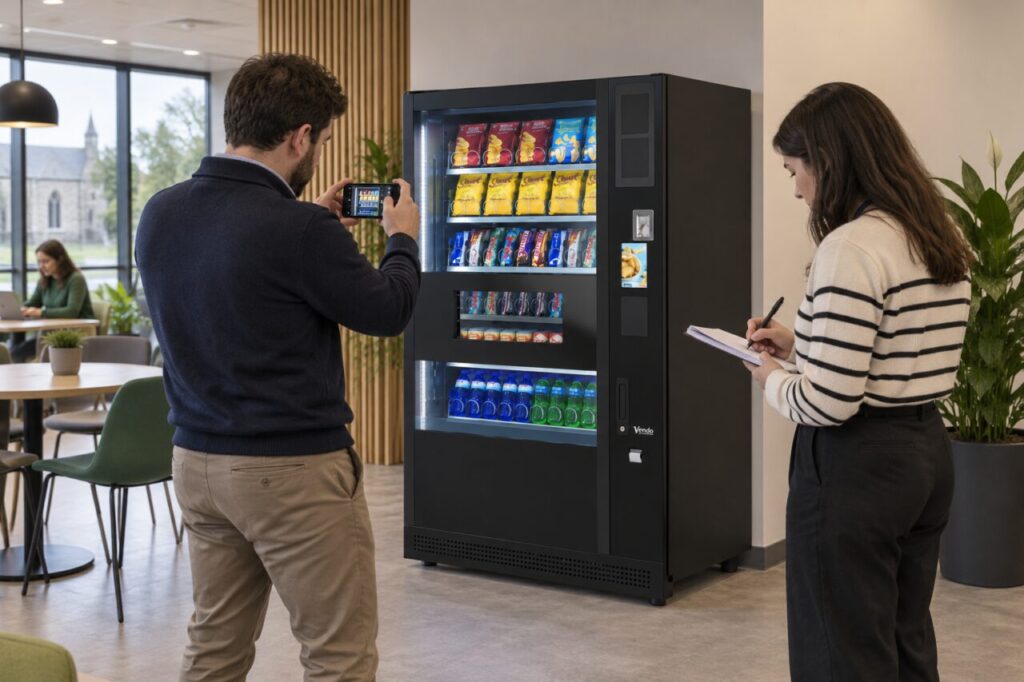
A clear report helps distinguish a newly noticed mark from damage already recorded at installation. It also avoids an informal cleaning attempt making the original condition more difficult to assess.
Observe without investigating physically
Note which panel is affected and where the mark appears in relation to an obvious feature such as the product window. Look from a normal customer position. Do not lean on the panel, remove trim or try to establish the depth of the mark with a fingernail or tool.
If there is loose glass, a visible crack or another immediate concern, follow the site’s safety procedure and keep people away while obtaining help. Do not assume that a small-looking mark is harmless. The equipment operator or appropriate technician should decide whether the machine can remain available during assessment.
Take useful photographs
Where it is safe to do so, take one photograph showing the whole machine and another showing the mark. An angled view can help show a line that disappears in reflections. Keep the original files and note when they were taken. Avoid filters or edits that change how the mark looks.
Include the machine identifier and location in the report, rather than relying on the photograph alone. At a site with several similar cabinets, the service team needs to know which unit to assess. Check the background for people, screens or private information before sharing the images through the agreed support route.
Separate observations from assumptions
Say when the mark was first noticed and whether anyone saw an incident. If a trolley was nearby, that is not proof that it caused the damage. Avoid attributing responsibility without evidence. A factual account is more useful for technical assessment and any later discussion about the circumstances.
Check the existing condition record if one is available. A delivery photograph may show whether the line was present earlier, but differences in lighting can make comparison difficult. Share both images and explain the uncertainty rather than declaring that the damage definitely appeared overnight. Keep the original condition record unchanged.
If cleaners first noticed the mark, ask them to record when and during which routine task it became visible. Preserve that account in their own words. It may help establish the timeline without assigning blame or suggesting a cause.
Agree the next action and follow-up
Ask whether cleaning should stop around the affected panel and who will assess it. Do not apply polish, adhesive film or a repair product without approval for that equipment. Such attempts may obscure the condition or introduce another problem. Record the advice received and pass it to the people responsible for the area.
The fully managed service provides a route for reporting equipment issues under the agreed service arrangement. For customer-owned vending machines, use the relevant support agreement. Keep the case open until the assessment and any required action are confirmed. If the mark affects product visibility or customers express concern, include that information in the follow-up; it describes the practical impact without attempting a technical diagnosis.
Related guidance: Vending Support Photos: Show the Problem Without Exposing Personal Details.
Planning or reviewing vending at your site? Contact the team with your location, equipment details and the question you would like to resolve.