
Vending Installation in Two Visits: Define What Each Visit Completes
Some vending projects involve more than one planned attendance. Equipment may arrive before another agreed task can be completed, or different authorised people may need to attend at separate times. If that is the proposed arrangement, ask for a clear description of each visit. Everyone should understand what the first attendance achieves, what remains outstanding and when the machine is expected to be ready for normal use.
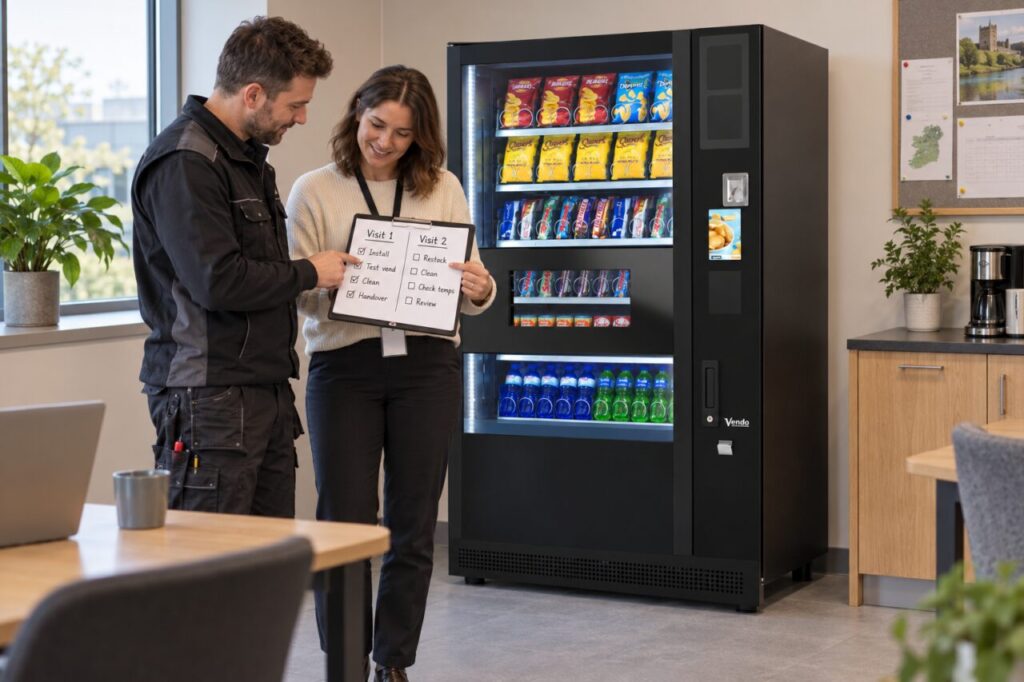
Define the outcome of each visit
Ask the provider to describe the actual work scheduled for each attendance, using the agreed equipment and service scope. Avoid relying on vague labels such as delivery visit and final visit. State whether the first attendance includes positioning, an inspection or other specifically agreed work. The second visit should have an equally clear purpose so the site can prepare the right people and information.
Record the completion evidence expected for each stage. A delivery receipt may confirm equipment received without confirming every operating requirement. Ask which checks, instructions and handover documents belong to the later attendance. Do not tell staff that the machine is ready simply because it is standing in its final position or its display is illuminated after the first visit.
Make dependencies visible
Identify what must be ready before the second attendance can succeed. The provider should explain the requirements relevant to the purchased configuration, and the site should assign each local task to an authorised person. Keep unresolved matters visible in the booking record. A connection or access arrangement described as planned should not be marked complete without confirmation from the person responsible for it.
Agree how readiness will be checked before the return visit is dispatched. This can prevent a second attendance being booked while a known prerequisite remains unresolved. Do not improvise technical work to meet the date. Where the site cannot complete its part on time, tell the provider early and ask how the schedule and any applicable arrangements should be revised.
Control the period between visits
Ask the provider how the equipment should be left between attendances and who is responsible for its condition and access. Follow the instructions supplied for that specific situation. If the machine is not available to users, agree a clear customer-facing notice and the person who will keep it current. Avoid messages that imply a definite opening time when outstanding work has not been scheduled conclusively.
Keep the site contact informed of any change around the equipment. Building work, moved furniture or a new access restriction may affect the return visit even if the machine itself has not changed. Record the observation and ask the provider whether it alters the plan. Do not allow a temporary holding arrangement to become an unreviewed permanent installation by default.
Complete one joined-up handover
At the second attendance, make the first visit’s record available so the provider can see what was completed and what was left open. Confirm the remaining agreed checks and training before normal launch. If another issue prevents completion, record it explicitly with an owner and next step. Signing a general attendance sheet should not obscure an unresolved item that the site still needs answered.
Keep the final handover with both visit records and the accepted proposal. Explain the confirmed operating status to the people who will use or manage the machine. When planning vending equipment for your site, discuss split attendance early enough to organise the dependencies. Two clearly defined visits can be managed effectively when each has a purpose and the gap between them is controlled.
Speak with our team about your installation timetable.
Related guidance: Ordering Vending Machines in Stages: Agree What Is Fixed at Each Release.