
Planning Vending Costs for a Longer Opening Day: Separate Fixed and Variable Costs
Extending a venue’s opening day can change vending demand without changing every cost in the same proportion. Before multiplying the entire monthly budget by the extra hours, separate costs that remain unchanged under the current agreement from those that may vary with sales, visits or operating conditions. Then build a scenario using explicit assumptions and review it against actual results after the change.
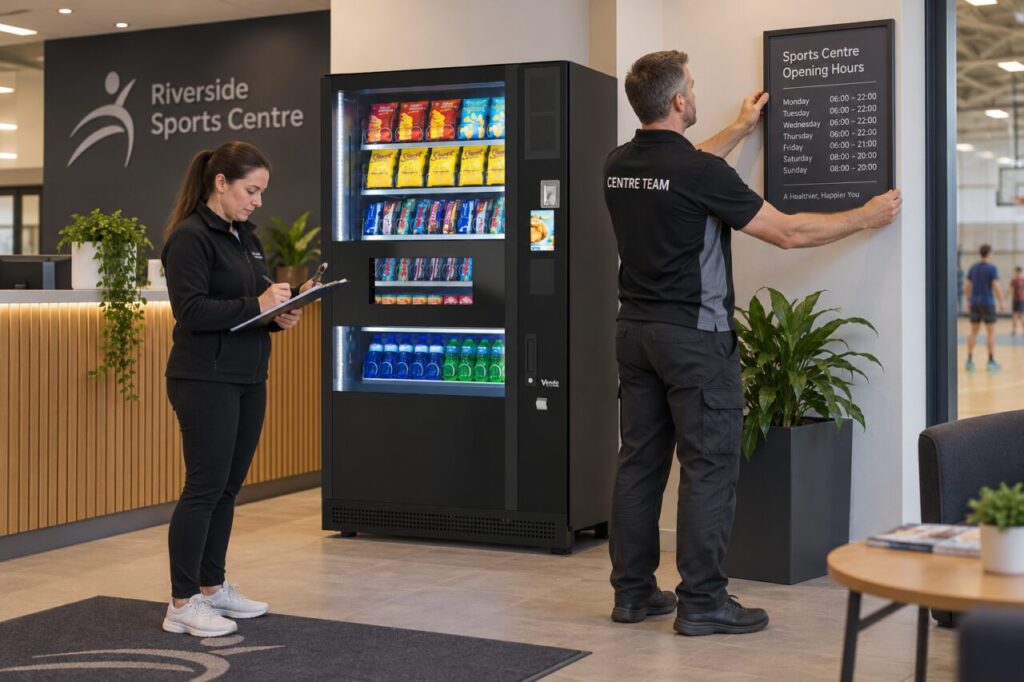
Define the change in use
Record the new opening hours and who will be present during the additional period. Extra hours do not necessarily mean the same number of customers per hour as the existing day. Ask whether the change brings another shift, a small cleaning team or a new public session. Describe the expected use without presenting an attendance estimate as guaranteed vending demand or assuming every person will make a purchase.
Check whether the machine will be accessible throughout the longer day. A locked internal door or restricted staff area can limit actual availability even while the building remains open. The vending cost guide provides wider context for equipment budgeting, while the extension needs its own site-specific assumptions about access, customers and the service arrangement already in place.
Separate costs by what drives them
List each cost and the reason it might change. An agreed equipment payment may stay the same during the period, while product purchases depend on the quantities needed. Replenishment work may increase only when demand exceeds what the current schedule can support. Check the actual terms rather than assigning every expense to a fixed or variable category based on its name alone.
Treat electricity carefully. Longer public opening does not automatically mean the machine was previously switched off outside those hours, and an energy estimate is not simply the venue’s opening time multiplied by a guessed power figure. Use relevant equipment information and measured data where available, and ask the supplier about the intended operating arrangement. Avoid promising energy savings from shutting down equipment without considering the machine and products involved.
Build a transparent scenario
For a hypothetical planning exercise, assume the extra period produces 100 additional sales in a month and each requires €1 of stock cost on a consistent reporting basis. That adds €100 of product cost before other changes. If an additional agreed visit costs €40 in this invented example, include it separately. These are illustrative inputs, not actual service prices or a prediction of what an Irish venue will achieve.
Now test a lower-demand case rather than relying only on the optimistic one. If sales are half the assumption, which costs fall and which remain? A visit may still be needed for practical reasons even when sales disappoint. Keep the scenario readable enough that another colleague can replace the invented inputs with confirmed prices and actual volumes. Do not hide uncertain assumptions inside a single precise-looking monthly total.
Review service needs after launch
Tell the operator about the new hours before they begin. Confirm access for replenishment, the site contact and how users report problems during the added period. Do not assume a longer opening day changes technical attendance commitments or the service schedule automatically. Ask what needs to be agreed, and keep any revised responsibilities with the existing site record so colleagues work from the same arrangement.
After a representative period, compare actual use and costs with the scenario. Note stock gaps, unusual events and any extra work that was not anticipated. Update the plan using the evidence rather than preserving the original estimate because it was approved earlier. This approach makes the budget useful as the venue changes, while avoiding the misleading idea that every vending cost rises in direct proportion to the number of hours the doors are open.
Discuss vending needs for your extended opening hours.
Related guidance: Your Second Year of Vending Ownership: Rebuild the Budget from Actual Records.