
Your Second Year of Vending Ownership: Rebuild the Budget from Actual Records
The first year of owning a vending machine often includes setup work that will not repeat in the same way. At the same time, some ongoing costs may only become clear after several months of operation. For the second year, rebuild the budget from actual records instead of copying the original launch estimate.
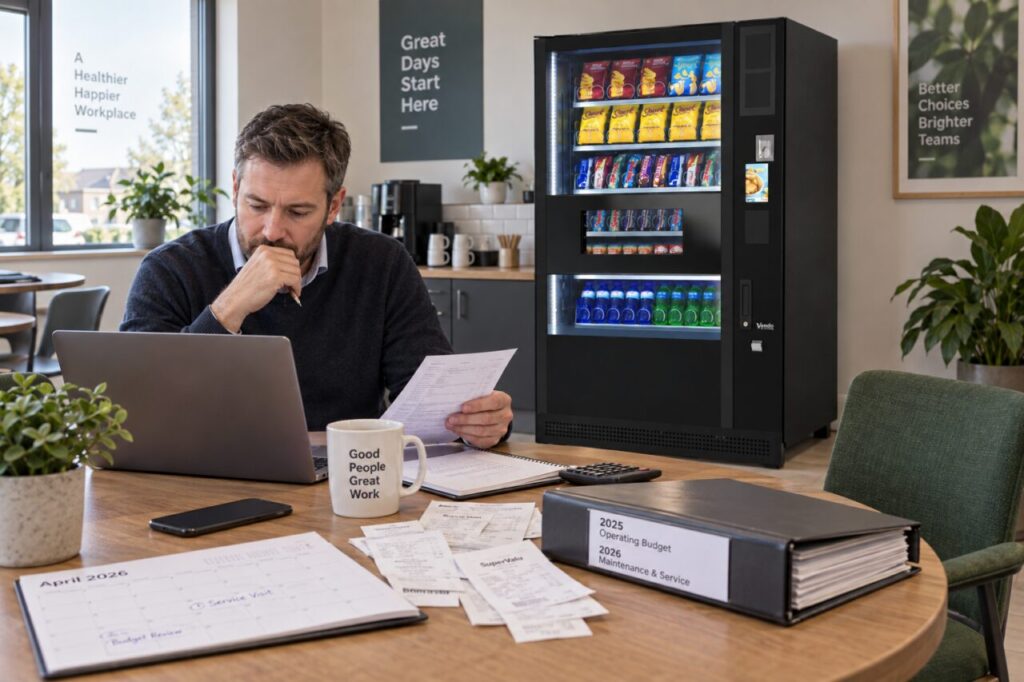
This is an operational planning exercise, not a forecast of guaranteed profit. Use your own costs and agreed terms, ask the relevant adviser about accounting treatment, and keep uncertain items visible rather than converting them into precise-looking assumptions.
Separate setup from continuing activity
Review the first year’s records and identify expenses connected specifically with launching the site. Keep them separate from regular stock purchases, agreed service charges and other continuing activity. A delivery or initial setup line should not automatically be repeated just because it appeared in the first-year total.
However, do not assume that the absence of launch work means no equipment-related expenditure. Ask the service provider about the current arrangement and any known planned work. Record confirmed commitments separately from possible costs that still need a quotation or a decision.
Use comparable operating periods
Check when the machine actually began normal service and whether there were closures or unusual events. A partial operating year is not directly comparable with a complete one. Describe those differences before using the records to plan the next period.
Likewise, distinguish stock bought from stock used. Purchases near the end of a period may leave stock available for the next one. Keep inventory records alongside the budget and ask your accountant how the figures should be treated for formal reporting. Do not label a simple cash movement total as net profit.
Review recurring agreements
List the ongoing services used by the machine and their current agreed charges and billing periods. Check for known renewal dates or changes already communicated by the provider. Do not assume a charge is unchanged merely because the original quotation is still in your files.
Where a service is optional, assess what it contributes before deciding whether to retain it. The software and recurring service checklist can help identify what is included and who uses it. Follow the actual agreement when considering a change.
Make uncertainty explicit
Prepare a base case from known information, then identify the conditions that could alter it. These might include a change in site use, a different product range or an agreed service revision. Use clearly labelled scenarios rather than claiming that one figure captures every possible outcome.
If you include a contingency amount, state that it is your planning choice and explain what it is intended to cover. Do not present it as an industry rule or a substitute for obtaining quotations. A visible assumption can be reviewed; an unexplained allowance is harder to manage.
Connect the budget to operating decisions
Use the revised budget to identify questions for the operator, supplier or adviser. A cost increase may be connected with more activity, a changed service or a one-off event. Investigate the reason before cutting a useful part of the operation simply because its total rose.
For the wider business context, review the guide to setting up a vending business. Keep the second-year plan grounded in your actual site and records, with an agreed date to compare the assumptions against what happens during the year.
To discuss equipment or service requirements that affect the plan, contact the team with the specific changes you are considering.