
Buying a Vending Machine: Ask for Empty and Fully Stocked Weight
A machine can fit neatly into a floor plan while leaving an important installation question unanswered: what weight does the quoted figure describe? Before buying vending equipment, ask whether the specification refers to an empty cabinet, a configured machine or a packaged delivery. Stock and accessories introduce further questions. A clear written answer helps the people assessing the building and planning the delivery work from the same information.
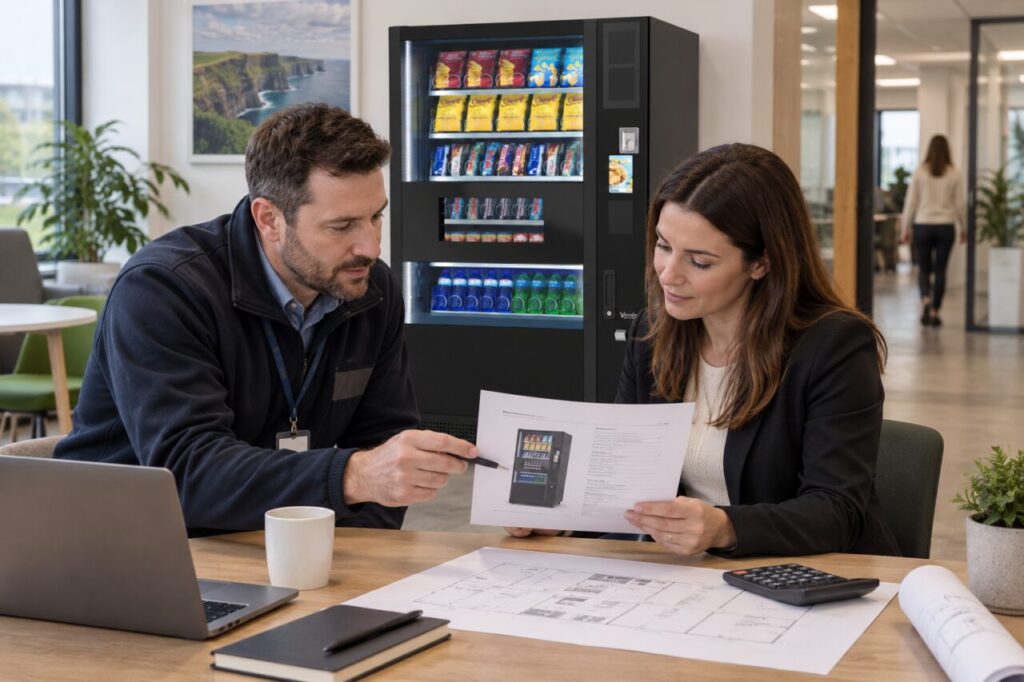
Ask what is included in the figure
Send the supplier the precise model and proposed configuration. Ask for the relevant manufacturer document and its definition of weight. A number copied from another model, an old quotation or a transport booking may describe something different. Record the document date and model identifier alongside the figure, rather than putting an unexplained number on the site plan.
Then ask which supplied components are included. Payment equipment, a base or other agreed accessories should be accounted for in the information provided to your assessor. You do not need to estimate unfamiliar components yourself. The useful question is whether the supplier can provide an appropriate maximum operating weight for the proposed setup, including the intended stock, or explain what further information is needed.
Give the building assessor the full picture
The equipment supplier’s weight information is an input to a site assessment, not permission to place the machine anywhere. Share the proposed position, supporting surface, access route and any building information requested by the responsible facilities professional. Avoid treating a simple calculation of kilograms divided by cabinet area as a complete assessment of how the equipment bears on the floor.
This matters particularly when a site has a raised floor, a platform, an upper-floor location or an uncertain construction record. Describe the actual situation instead of assuming that a neighbouring heavy object proves suitability. Let the competent people responsible for the building and installation decide what checks are necessary. Keep their decision with the accepted equipment specification so later substitutions do not bypass the assessment.
Separate operating weight from delivery planning
The delivery team may need different information from the building assessor. Packaging, handling equipment and the proposed method of moving the machine are part of their plan. Confirm who obtains the necessary equipment data and who checks the route. Site staff should not improvise lifting arrangements because the machine appears smaller than expected.
Consider the whole journey from the unloading point to the final position. A goods lift, threshold or temporary ramp creates its own planning question. Send photographs and route details to the delivery team, but do not interpret a photograph as confirmation of a load rating. Where the responsible parties require an assessment, complete it before confirming the delivery appointment. An avoidable postponement is easier to prevent while dates are still provisional.
Keep changes visible before ordering
If the model, base, location or stock arrangement changes, ask whether the earlier information remains valid. A revised quotation should point to the matching specification. Do not leave the facilities team checking one configuration while purchasing approves another. A short change note stating what changed and who reviewed it can prevent that mismatch.
For an Irish workplace comparing vending machine options, include these questions in the buying brief alongside access, utilities and service responsibilities. Request the weight definitions early enough for a proper site review, rather than collecting them after the machine is on its way. The result should be a coordinated decision supported by the right documents, not a guessed maximum weight written into an order.
Discuss your proposed machine and site before arranging delivery.
Related guidance: Vending Delivery Routes: Agree Protection for Finished Floors.