
A Vending Machine Blocks a Noticeboard: Plan Space for Both
A vending machine and a noticeboard can both fit along the same wall yet compete for the same space in everyday use. Someone reading a roster may stand exactly where another person needs to choose a snack or collect a drink. Plan the customer activity around both features before installation, rather than treating the cabinet footprint as the only space requirement.
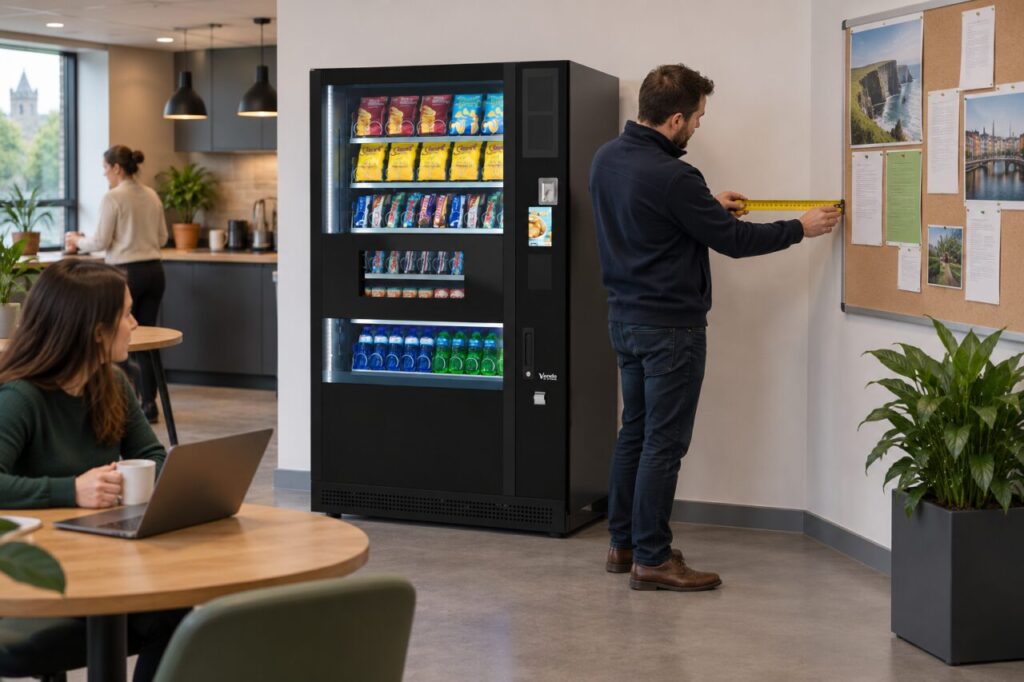
Observe how the noticeboard is used
Find out what the board contains and when people stop to read it. A small decorative display is different from a shift roster, visitor instruction point or frequently updated staff announcement board. Watch a representative busy period if possible. Note whether people stand close, step back to read, take photographs or gather in groups to discuss the information.
Include the person who updates the board. They may need to open a glazed cover or reach its edges without leaning across equipment. Record these movements on a simple plan together with the intended machine position. The useful question is whether both activities remain comfortable and practical, not whether the wall looks tidy in an empty-room photograph.
Check the full vending interaction
Allow for approaching the machine, reading products, paying and collecting the purchase. Ask the supplier to demonstrate the actual arrangement rather than assuming every model uses the same collection height or control layout. The official SandenVendo G-Snack Evolution information illustrates why model-specific layouts matter: its central collection arrangement is part of the design being assessed.
Also include refill and service access. A position that works for a customer may still obstruct a service door or require the noticeboard user to move during routine work. Have the installer and building representative agree the necessary clearances for the selected equipment. Do not invent a universal gap or rely on a photograph of a different cabinet to approve the layout.
Compare small layout changes first
One option may be moving the noticeboard rather than changing the machine location. Another may be placing the machine on a different wall with a clearer approach. Check each alternative against building access, power, connectivity and the visibility of essential notices. Ask the responsible building team before relocating official information or attaching anything to the machine itself.
Use a temporary floor outline and a simple role-play with staff before the equipment arrives. One person reads the board while another follows the purchase route. A third represents a refill visit. This inexpensive exercise can reveal an awkward overlap that a two-dimensional drawing misses. Keep the test representative of actual users and avoid creating an obstruction during normal operations.
Review the arrangement after launch
When planning vending machines in Ireland, include nearby wall features in the site photographs sent for assessment. Show doors, noticeboard covers and the normal approach route, not just an empty corner. Explain any busy periods and whether the board’s content changes often enough to attract queues or groups.
After launch, ask both machine users and the noticeboard owner whether the arrangement works. Record specific difficulties, such as people standing in front of the collection area, instead of a vague complaint that the space feels busy. Refer any proposed equipment movement back to the authorised installer. A small, properly assessed adjustment can improve two everyday services without creating a new access problem.
Related guidance: Can the Vending Service Door Open? Check More Than the Customer Footprint.
Planning or reviewing vending at your site? Contact the team with your location, equipment details and the question you would like to resolve.