
Do vending machines take split payments?
Vending machine split payments depend on the controller, payment devices and settings in the particular cabinet. A coin slot beside a contactless reader tells you the machine offers two ways to pay. It does not tell you whether you can combine them for one item. Before inserting coins, read the instructions or ask the operator how the machine handles a partly paid purchase.
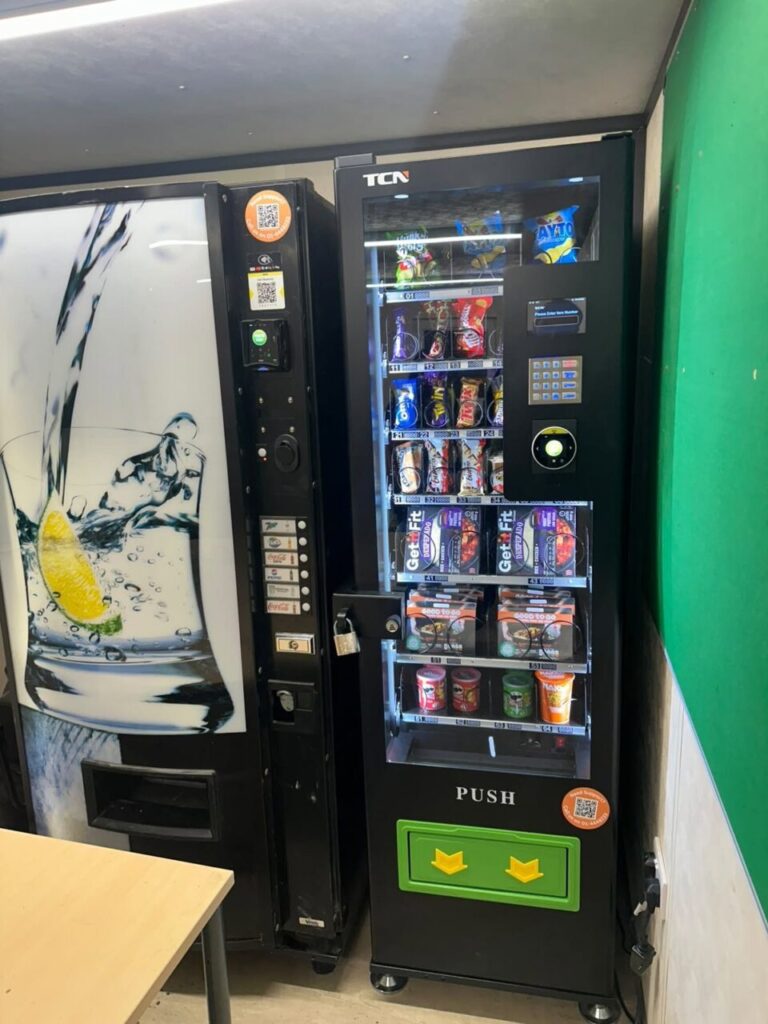
What counts as a split payment?
Suppose a snack costs €2.50. You have €1 in coins and want to pay €1.50 by card. That is a split payment because the two amounts settle the same purchase. Buying the snack by card and buying a drink with coins afterwards is two separate purchases. The machine may handle the second arrangement perfectly well even if it cannot handle the first.
A staff allowance introduces another distinction. Some workplaces want to cover a fixed amount while an employee pays the balance. That requires the service to recognise the allowance as well as collect the remaining amount. Ask whether the proposed scheme supports that particular combination. A demonstration with coins and a card cannot prove that a staff account and a personal bank card work together.
Check the machine before committing money
Look for a price and clear instructions showing when to select the product and when to pay. If the screen invites one payment method for the full price, use one method or choose a different item. If coins have already been credited, check the displayed balance and normal cancel or return control before starting a card transaction. Keep track of any change you receive.
Manufacturers can expose mixed payment as a configurable feature. For example, the Kit equipment instructions describe a configuration that requires mixed payments to be unavailable. That is a specific equipment example. Ask the supplier for the exact behaviour of the cabinet and reader you intend to use, including what the customer will see if the second part of payment fails.
Demonstrate the split you actually require
Give the installer a written test case with the two amounts. Start from an idle machine, make the purchase and record the item received. Check the total charged to the card as well as the coins retained or returned. If the amount due was €2.50 and the machine retained €1 cash, a €2.50 completed card charge would need investigation even if a product was delivered.
Discuss cancellation as a separate test. Ask what happens to a cash balance if a customer decides against finishing the purchase and how an operator finds the transaction. A short notice beside the machine can prevent confusion, but only if it describes the tested behaviour. Avoid putting “part-pay by card” on a workplace notice until the operator has demonstrated it on that cabinet.
Agree who handles payment questions
Ask which records the service team can check for cash, card and any staff balance. Keep the transaction time, price and selection together in a support query. If a person paid using two methods, record both amounts. The person reviewing the query can then determine whether the issue concerns the card payment, the unused cash or the missing product.
When comparing workplace snack machines, include the required payment combinations in the enquiry. Our MDB guide explains why the reader and controller must work together.