
Vending Maintenance Quotes: Separate Planned Visits from Fault Call-Outs
A vending maintenance proposal may describe a service package without making clear which activities happen on a schedule and which begin only after a fault is reported. Ask the provider to separate those two routes. It is easier to compare proposals when the same words describe the same responsibilities and expectations.
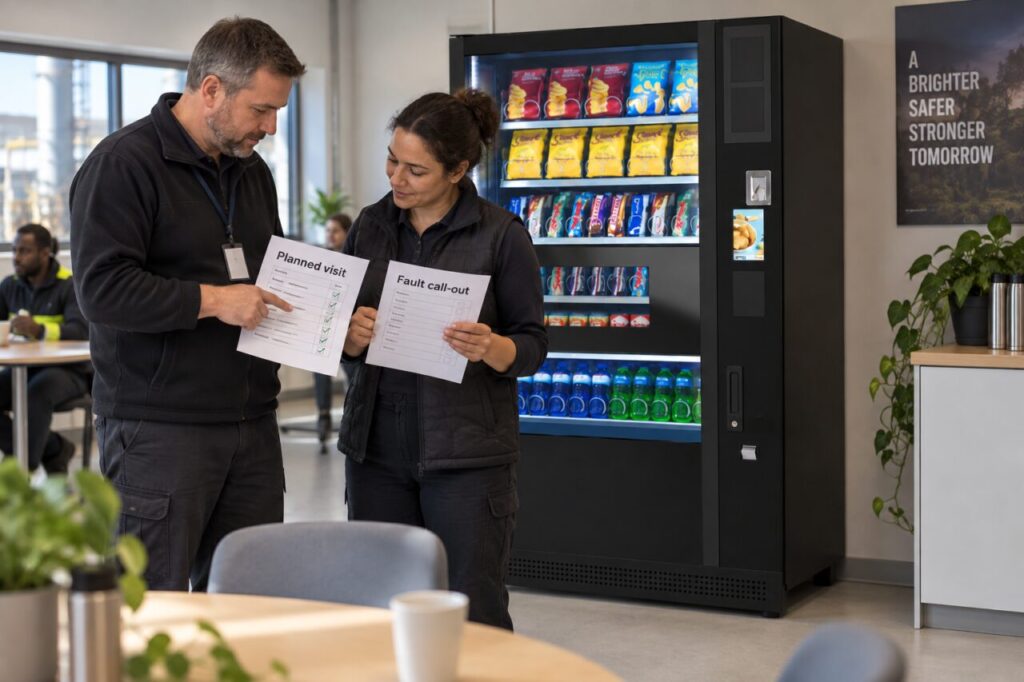
Do not assume that a planned visit includes every repair, or that a call-out arrangement includes routine inspections. The exact scope belongs in the supplied agreement. This guide helps you ask useful questions; it does not prescribe a maintenance interval or claim that a particular service package suits every machine.
Describe the planned work
Ask what the provider intends to do during a scheduled visit and how that work relates to the installed equipment. Request a clear description of the included tasks, the access needed and any preparation expected from the site. Keep technical work with appropriately trained personnel following the equipment’s instructions.
Find out how visits are arranged. A date that works for reception may conflict with deliveries or a busy staff break. Give the provider the relevant site constraints and identify who can confirm access. Agree how changes are communicated so a missed appointment does not disappear from the service record.
Define the fault-reporting route
Ask how an unexpected problem should be reported and which information helps the provider assess it. The site should have a clear contact route and machine reference. Avoid asking untrained staff to diagnose internal components or repeatedly operate faulty equipment merely to provide a more detailed description of the problem.
Distinguish acknowledgement, remote assessment and a physical visit when discussing response expectations. Those are different steps. Use the provider’s actual commitments and any stated conditions rather than turning an informal phrase such as rapid support into a guaranteed arrival time that has never been agreed in writing.
Compare scope consistently
Put planned work and reactive support in separate rows when reviewing offers. Ask which costs or activities may fall outside each part, and how additional work is authorised. A lower headline figure is difficult to interpret if one proposal includes activities that another treats separately or leaves for later agreement.
Keep equipment coverage visible too. If several machines are on site, identify which units the quote covers. An arrangement for one cabinet should not silently become an expectation of support for every machine in the building. Record any future additions through the provider’s normal process rather than relying on assumptions.
Ask for a usable service record
After a visit, the site needs a concise record of the work completed and any follow-up required. Ask how that information will be supplied and who receives it. Keep unresolved items separate from completed tasks so the next contact can understand the situation without repeating the entire conversation.
Our article on remote alert responsibilities explains another route by which an issue may become visible. An alert does not by itself prove that a repair visit has been booked. Confirm who reviews the notification and how it enters the agreed maintenance process.
When planning vending equipment and service, compare the whole arrangement: routine work, unexpected problems, access and records. Keep the final scope available to facilities staff and the authorised operator. Revisit it when equipment or working hours change so the service assumptions continue to match the actual site.
Discuss your service requirements with our team before choosing a maintenance arrangement.