
Vending Product Changes: Update the Selection List Before Customers Buy
Changing a vending product is more than placing a different pack in the same position. The customer should still be able to connect the visible item with the selection information and expected price. Before the revised range is released for use, check how the replacement is identified and who is responsible for updating each relevant piece of information.
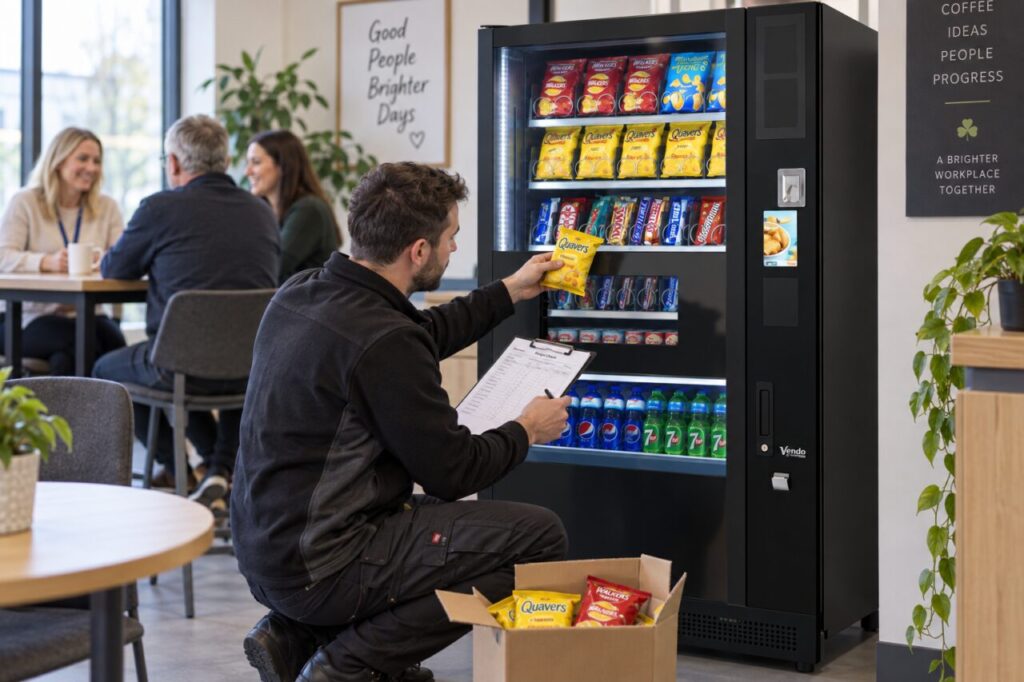
Identify the exact replacement
Record the product name, flavour and pack size, rather than writing only the brand or category. Similar packaging can make two different items easy to confuse. Ask the authorised operator to confirm the replacement is suitable for the equipment. Do not assume that a pack belongs in a position simply because it looks close in size to the previous product.
Keep the range decision linked to the actual stock being supplied. A proposal discussed in an email can differ from the pack that arrives. Compare them before the change proceeds. When planning vending product options, agree how substitutions will be communicated so the site is not learning about a new item only after a customer raises a query.
Check the customer's route to selection
Look at the machine from the normal customer position. Can a person identify the intended product and understand which selection applies to it? Check any printed list or other customer-facing range information used at the site. Information outside the machine can become outdated even when the operator has correctly arranged the product inside it.
Have the authorised person confirm the relevant price and selection details using the equipment’s supported process. Do not provide staff with improvised programming instructions or assume every machine uses the same interface. The important outcome is consistency between the visible product, the information used to choose it and the arrangement the operator has actually configured.
Keep product information specific
Avoid carrying over descriptions from the old item without checking the replacement. A different flavour or size may have different information on its packaging. Where customers need product details before purchase, follow the operator’s established process and refer to the actual manufacturer’s information. Do not infer dietary suitability from the pack colour, brand name or the previous selection.
If the change is temporary, record that clearly in the range notes. Give the site contact an accurate explanation of what is available now without promising a return date that has not been confirmed. Temporary substitutions still need the same clear identification as permanent changes. A short expected duration is not a reason to leave misleading information in place.
Use the guide to selection numbers and products when reviewing the customer journey. Keep the practical focus on the customer’s ability to choose correctly. Any test purchase or verification should follow the operator’s agreed procedure rather than assuming that a successful visual check proves the whole arrangement works.
Confirm completion and keep a record
Record the date the change was implemented and the person who confirmed the customer-facing information. Keep a brief note of the old and new items so a later query can be understood in context. This is particularly useful when the same selection position has held several products over time and a customer reports a purchase after the change.
Tell colleagues who handle customer questions what changed and where to send an unresolved query. They do not need access to machine controls to provide a useful response. They need an accurate current description and a route to the responsible operator. Avoid giving different informal explanations across shifts or leaving the previous product name on a noticeboard.
Review early feedback for signs of confusion, such as repeated questions about the expected flavour or item. Investigate the information presented before assuming customers are simply selecting incorrectly. A controlled product change helps preserve trust in the range and gives the operator a clearer record of what was offered at the time of a purchase.
Discuss a suitable vending range and how changes should be managed.