
Changing a Vending Product: Who Approves the Replacement Range?
A replacement snack can be a small operational change with a noticeable effect on customers. The new packet may differ in size, ingredients, price or how it fits the machine. A clear approval process helps the site and operator respond to supply changes without quietly changing the agreed offer.
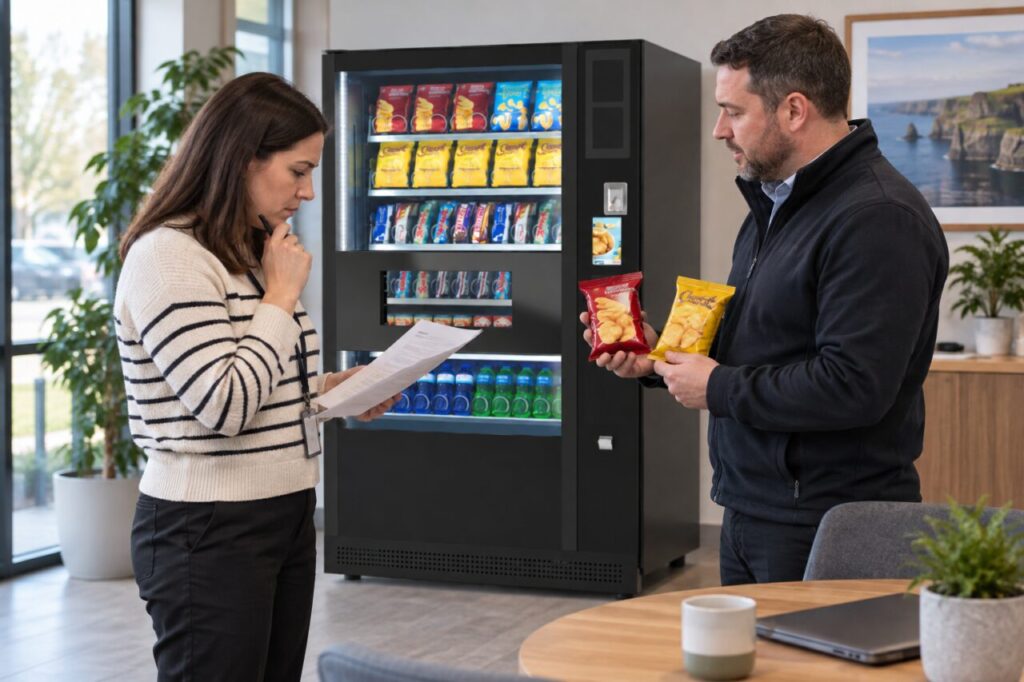
The process does not need to involve a lengthy meeting for every ordinary refill. It should distinguish routine replenishment from a change that needs somebody to review the new product and its implications.
Define the agreed starting range
Keep a current list of products or agreed categories, depending on the service arrangement. Where a specific item matters, include enough detail to distinguish its pack size and variant. A brand name alone may cover several different products.
Ask who maintains that list and where the operator and site contact can find it. If the range has already evolved through verbal requests, use the next review to establish the current position. This gives future substitutions a clear reference rather than relying on different people’s memories.
Identify what makes a change material
Discuss which changes require site approval. Examples to consider include a different product category, a noticeable price change or a replacement that no longer meets a stated customer preference. The precise boundary should follow the arrangement agreed with the supplier.
Do not assume a similar-looking packet has the same ingredients or characteristics. Review the information for the exact replacement. If a dietary claim is relevant, ask the supplier for reliable product information instead of transferring a claim from the previous item to the new one.
Check machine suitability separately
Customer approval does not establish that a packet works in the machine. Ask the operator to confirm compatibility with the intended selection and whether a configuration change or test is needed. Product choice and mechanical suitability are separate checks.
Our product-range demonstration guide explains why a representative pack matters. A product should not be adopted merely because it fits a broad category in a catalogue. Keep the approved item and the selection plan aligned when the change is made.
Give one person a clear decision
Nominate the site contact who can approve a proposed replacement and a cover contact for their absence. Ask the operator to send the information needed for the decision: current item, proposed item, reason, price implications where relevant and whether the change is temporary.
Avoid copying a large group into every minor request without assigning responsibility. That can slow the decision while leaving nobody accountable. If an urgent supply problem requires a temporary arrangement, agree the boundaries in advance rather than improvising a new policy during a refill.
Review the result with customers in mind
After the replacement is introduced, check that selection information reflects what is actually available. Look at customer response and availability during a representative period. A temporary replacement should have a review point so it does not become permanent by accident.
Maintain a simple change record showing the decision date, the approved item, the selection affected and the review point. Record a temporary substitute as temporary. If the original product returns, check the current pack again rather than assuming nothing has changed since its previous supply. This keeps the physical range and the written record consistent.
Keep the outcome in the range record, including any return to the previous product. Our vending solutions provide a starting point for discussing flexible product requirements. Contact the team with your site’s preferences and decision process so the operator can propose changes that are clear, workable and appropriate for the people using the machine.