
Comparing Vending Proposals: Build a Scorecard Before Choosing a Supplier
When several vending proposals arrive, the cheapest total is not always the easiest offer to compare. One may include installation, another may assume that your team handles stocking, and a third may leave support arrangements open. A short scorecard helps you compare the same requirements before deciding which proposal deserves a closer conversation.
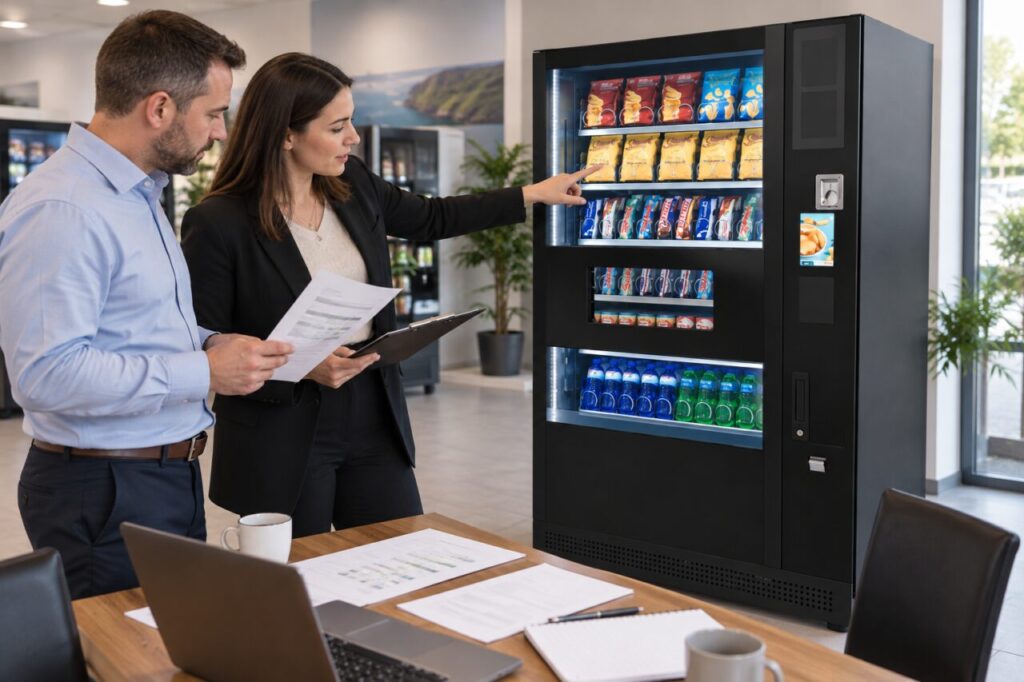
Start with the needs of your actual site. The purpose is to make differences visible, not to produce a scientific-looking number that hides uncertain assumptions. Keep the original quotations beside the comparison so every assessment can be traced to a written answer.
Separate essentials from preferences
List the conditions a proposal must meet to be usable. These might include fitting the agreed position, accommodating your intended products and providing a suitable payment arrangement. Ask the supplier to confirm each essential requirement before awarding points for attractive extras.
Then list preferences such as a particular appearance or a reporting format. A proposal should not compensate for an unresolved essential requirement simply by scoring well on optional features. Our guide to essential vending features can help structure that conversation, if you are still deciding what matters most.
Compare a common scope
Use separate rows for equipment, delivery, positioning, setup, training, replenishment and ongoing support. Mark each row included, excluded or awaiting clarification. Where a supplier bundles several services, ask what the bundle actually covers rather than assuming that similar package names mean the same work.
Include your own responsibilities in the comparison. A proposal that requires daily attention from your staff is different from one with an agreed managed service. Record who provides access, approves stock changes and receives fault reports. Those operational differences can matter long after the purchasing decision has been made.
Agree the weighting in advance
For an illustrative internal scorecard, you might give suitability more weight than appearance and service clarity more weight than optional reporting. These are choices for your organisation, not universal industry percentages. Agree them before reviewing the final offers so the scoring does not simply justify a favourite supplier.
Keep an evidence note beside each score. A demonstrated feature, a written commitment and an unanswered assumption should not receive identical treatment. Use an explicit unresolved label where information is missing. That makes the next supplier discussion shorter and prevents a blank answer from quietly becoming a positive score.
Test the leading proposal
Ask the leading supplier to walk through a normal customer purchase and a realistic service problem. For example, who receives a report when a selection is unavailable, and what happens next? Check the proposed process against the people and opening hours at your workplace.
If a demonstration changes your understanding, update the scorecard and note why. Keep the earlier version so colleagues can see the effect of new evidence. Do not treat a polished presentation as a substitute for confirming the exact equipment and service being offered in writing.
Record the decision and remaining questions
Finish with a short explanation of the chosen proposal, the main trade-offs and any conditions that still need resolving. Assign a person to each outstanding question and confirm the final scope before placing an order. Keep this record with the accepted quotation for the eventual handover.
Our vending equipment and service options provide a starting point for a site-specific comparison. Use the scorecard to explain your priorities clearly, while leaving room for the supplier to recommend a configuration that suits the actual setting.
To discuss a proposal for your workplace, send us your site requirements.